Nvidia flags Taipei night-market evening with Jensen, Lex Fridman
Synopsis
Chip giant Nvidia spotlighted an informal Taipei evening featuring chief executive Jensen Huang and AI podcaster Lex Fridman at the city's night markets, the latest in a series of high-profile leadership appearances in Taiwan, the hub of Nvidia's advanced GPU manufacturing base.
Key Takeaways
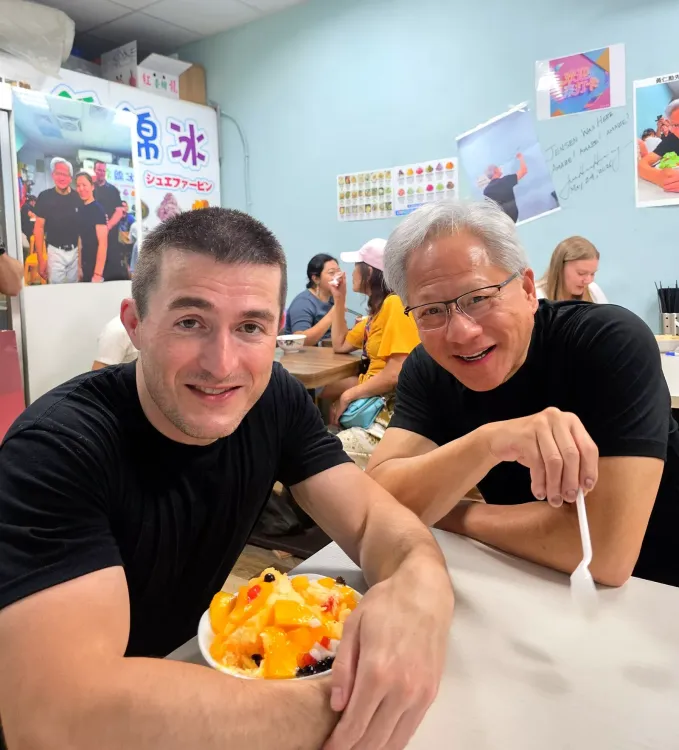
Nvidia posted on 3 June 2026 about an evening in Taipei with CEO Jensen Huang and podcaster Lex Fridman .
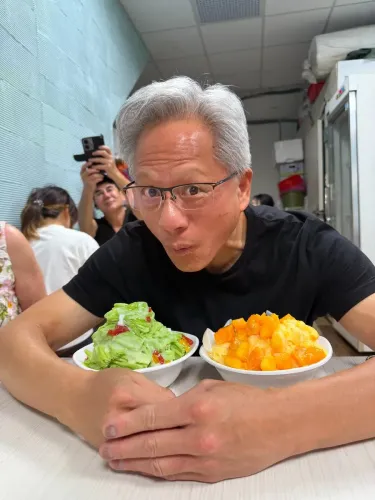
The corporate handle called it 'one of the best evenings in Taipei', framed around night-market food.
Taipei remains central to Nvidia's supply chain via TSMC , which fabricates its most advanced AI accelerators.
Huang previously delivered the Computex keynote in Taipei in 2023 .
The post did not confirm whether a long-form Fridman interview with Huang was recorded.
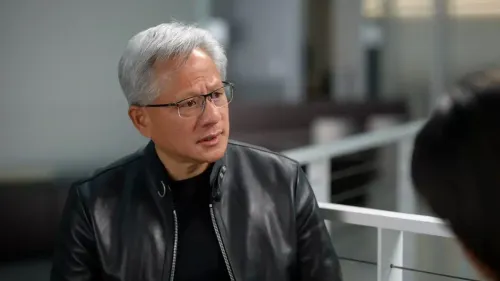
Chip giant Nvidia on 3 June 2026 spotlighted an informal evening in Taipei featuring chief executive Jensen Huang and artificial-intelligence podcaster Lex Fridman, framing a night-market outing as one of the company leadership's most memorable recent engagements. The post, accompanied by a single image, used a light, conversational tone rare for the corporate handle.
'Some of the best conversations happen over great food,' the company wrote, adding that '@lexfridman + Jensen + night markets' made for 'one of the best evenings in Taipei.' The dispatch did not specify the venue, the duration of the visit, or whether a long-form interview was recorded.
Context
Jensen Huang, who co-founded Nvidia in 1993, has become one of the most closely watched executives in global technology as demand for the company's graphics processing units has exploded alongside the generative-AI boom. Lex Fridman, a researcher associated with the Massachusetts Institute of Technology, hosts a widely followed long-form interview programme on artificial intelligence, robotics and science, and has previously hosted leading figures across the technology industry.
Taipei is a recurring stop on Huang's calendar. He delivered the keynote at Computex in the city in 2023, outlining Nvidia's AI platform roadmap and touring local manufacturing partners. Night-market visits by visiting executives have become an informal staple of high-profile trips to the Taiwanese capital.
Policy backdrop
Nvidia's most advanced AI accelerators are fabricated by Taiwan Semiconductor Manufacturing Company (TSMC), the world's largest contract chip manufacturer. The partnership deepened through successive advanced process nodes at 7 nm and below from 2018 onward, anchoring Nvidia's supply chain firmly on the island.
That dependence has assumed sharper geopolitical weight as Washington has tightened export controls on advanced chips destined for China, pressing AI hardware leaders to both diversify capacity and secure their most sensitive manufacturing. Executive visits to Taipei frequently coincide with supply-chain reviews and technology showcases, even when public messaging stays informal.
Stakeholders and impact
For the global semiconductor ecosystem, every visible signal from Nvidia's leadership in Taiwan is parsed for cues on capacity, road-mapping and partner relationships. Hardware developers, hyperscale cloud customers and equipment suppliers across Asia track such appearances for hints on the cadence of next-generation accelerator launches.
For Indian readers, the engagement matters because domestic cloud providers, AI start-ups and government-backed compute initiatives depend on the same Nvidia GPU pipeline that runs through Taiwanese foundries. Any disruption — commercial or geopolitical — at that node ripples quickly into Indian data-centre build-outs and AI deployment timelines.
A conversation between Huang and Fridman, should it surface as a recorded interview, would also feed into the broader public discourse on the trajectory of artificial general intelligence, model scaling and the chip industry's responsibility in shaping AI safety.
What's next
Industry watchers will track whether the Taipei evening yields a long-form podcast release, and whether Huang's trip aligns with fresh announcements from TSMC on capacity expansion or Nvidia's participation in upcoming Taiwan policy forums. The next Computex cycle will be a natural marker for any roadmap signalling that flows from this round of engagements.
For now, the post serves as a reminder that the social geography of the AI hardware industry — its dinners, its night markets, its quiet meetings — continues to run through Taipei, even as governments worldwide push to diversify where the world's most strategic chips are made.
Point of View
Intensified by US export controls on China, makes every executive visit a quietly watched signal for the global AI hardware market. Pairing that with a podcaster of Lex Fridman's reach extends Nvidia's narrative power beyond financial analysts into the broader AI-policy conversation. Expect such soft-power optics to become a regular feature of how chip leaders manage both supply chains and public perception.
NationPress
16 Oct 2026
Frequently Asked Questions
Who is Jensen Huang?
Jensen Huang is the co-founder and chief executive of Nvidia Corporation, which he started in 1993. He leads the company's strategy in graphics processing units, data centres and AI infrastructure.
Why does Nvidia's leadership frequently visit Taipei?
Taipei is central to Nvidia's supply chain because its most advanced AI accelerators are fabricated by Taiwan Semiconductor Manufacturing Company. Executive visits often align with supply-chain reviews, partner meetings and major industry events such as Computex.
Did Nvidia announce a Huang-Fridman podcast?
No. The post only described an informal evening in Taipei and did not confirm whether any long-form interview was recorded or scheduled for release.
How does Nvidia's Taiwan strategy affect India?
Indian cloud providers, AI start-ups and government compute initiatives rely on Nvidia GPUs manufactured in Taiwan. Any disruption to that pipeline can directly affect Indian data-centre build-outs and AI deployment timelines.