Nvidia flags Jensen Huang's Taipei night-market evening with Lex Fridman

Synopsis
Chip giant Nvidia's official X handle highlighted an informal Taipei evening featuring chief executive Jensen Huang and AI podcaster Lex Fridman at the city's night markets. The brief post carried no business detail but lands amid intense focus on Nvidia's Taiwan-anchored supply chain, US export controls on advanced AI chips and the company's deepening engagement across Asia.
Key Takeaways
Nvidia's corporate X account flagged CEO Jensen Huang meeting podcaster Lex Fridman in Taipei .
The post described night markets and shared food, with no business specifics disclosed.
Taipei is central to Nvidia because TSMC fabricates its most advanced AI chips.
The visit comes amid US export controls on advanced AI accelerators and CHIPS Act subsidies.
Analysts will watch Nvidia's next earnings call for Taiwan supply-chain signals.
India's semiconductor mission in Gujarat and Assam tracks such Nvidia-Taiwan engagements closely.
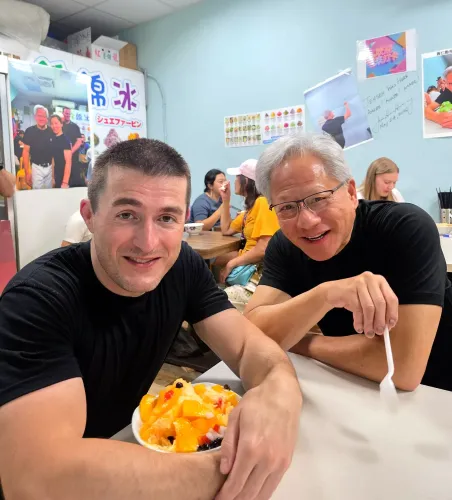
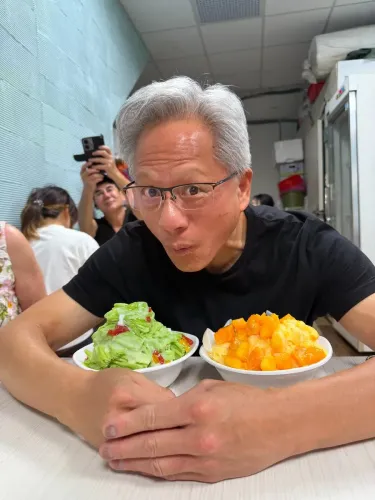
Chip giant Nvidia on Tuesday publicly flagged an informal evening in Taipei featuring chief executive Jensen Huang and artificial-intelligence podcaster Lex Fridman, posting from its official corporate handle on X that the two had spent time together at the city's well-known night markets.
The post, written in the company's voice rather than Huang's personal one, read: 'Some of the best conversations happen over great food. Jensen + @lexfridman + night markets = the best evening in Taipei.' The brief, image-free message did not specify the venue, the topics discussed or whether the meeting was tied to any formal corporate engagement.
Context
Jensen Huang is the founder and chief executive of Nvidia, the US-headquartered company that has emerged as the dominant supplier of graphics processing units and data-centre accelerators powering the current wave of generative artificial intelligence. Lex Fridman, an AI researcher associated with the Massachusetts Institute of Technology, hosts a widely followed long-form podcast featuring scientists, entrepreneurs and policy figures.
Taipei holds particular significance for Nvidia because the company's most advanced chips are fabricated by Taiwan Semiconductor Manufacturing Company, or TSMC, the world's largest contract foundry. Huang is a frequent visitor to the island, where he regularly meets supply-chain partners and appears at industry events.
Policy backdrop
The casual social post lands against a far weightier policy canvas. The US CHIPS and Science Act of 2022 authorised tens of billions of dollars in subsidies aimed at reducing American dependence on Taiwanese semiconductor production, even as Nvidia's manufacturing relationship with TSMC, which dates to the early 2000s, continues to underpin its flagship AI product lines.
Washington has also progressively tightened export controls on advanced AI chips bound for China, restrictions that have repeatedly forced Nvidia to redesign products for that market. Visits by Nvidia leadership to Taipei are watched closely by analysts for any signal on advanced process nodes, capacity allocation or geopolitical posture.
Stakeholders and impact
For US technology firms, Taiwan remains the indispensable node in the AI hardware stack. Taiwanese foundries, in turn, depend on demand from companies such as Nvidia to justify multi-billion-dollar investments in cutting-edge fabrication plants. AI researchers and developers, including Fridman's largely global audience, follow Huang's public movements for cues about the trajectory of model training infrastructure.
Indian stakeholders have a stake too. India's nascent semiconductor mission, anchored by fabrication and assembly projects in Gujarat and Assam, is courting both Taiwanese expertise and US design leaders. Nvidia has separately announced India-focused AI infrastructure partnerships over the past two years, making the company's signalling on its Taiwan footprint relevant to New Delhi's strategic calculations.
What's next
The next concrete read on Nvidia's Taiwan posture will likely come from its upcoming earnings call and product roadmap announcements, where executives typically address supply-chain capacity and customer demand. Market watchers will also track any fresh US export-control announcements affecting advanced AI accelerators, as well as Fridman's podcast feed for a possible long-form conversation with Huang emerging from the Taipei meeting.
For now, the company has chosen to project a deliberately informal image of its chief executive abroad, a reminder that even night-market dinners by a chief executive of a trillion-dollar chipmaker are read as soft signals in an increasingly contested global technology landscape.
Point of View
The company reinforces its continued centrality to Taiwan's chip ecosystem at a moment when Washington is pushing diversification through the CHIPS Act. The choice to share an informal, food-centric vignette also softens the optics of a deeply geopolitical relationship, a pattern visible across major US technology firms navigating the US-China-Taiwan triangle.
NationPress
16 Oct 2026
Frequently Asked Questions
Why was Jensen Huang in Taipei?
Nvidia's post did not state a specific reason. Huang visits Taipei frequently because Nvidia's most advanced chips are manufactured there by TSMC, and he regularly meets supply-chain partners and attends industry events on the island.
What is Nvidia's relationship with TSMC?
Nvidia designs its GPUs and AI accelerators but relies on Taiwan Semiconductor Manufacturing Company, or TSMC, to fabricate them. The partnership dates to the early 2000s and underpins Nvidia's current AI product lines.
How does this matter for India?
India's semiconductor mission, with fabrication and assembly projects in Gujarat and Assam, is courting both Taiwanese manufacturing expertise and US design leaders such as Nvidia, which has announced India-focused AI infrastructure tie-ups.
Will there be a Lex Fridman podcast with Jensen Huang?
Nvidia's post did not confirm any podcast recording. It described only an informal evening at Taipei's night markets, though Fridman has previously hosted technology leaders on his show.