Nvidia Powers Sweden's Sferical One AI Supercomputer Launch
Synopsis
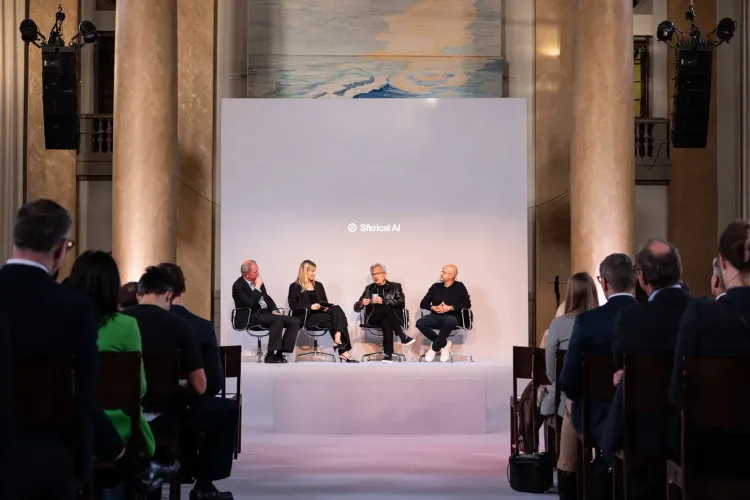
Nvidia and CEO Jensen Huang joined Wallenberg Investments, Spotify founder Daniel Ek, and Sferical AI's Jenny Nordlöw to celebrate the launch of Sferical One, a shared AI supercomputer powered by Nvidia GPUs in Sweden, designed to give researchers and businesses broader access to large-scale AI compute.
Key Takeaways
Sferical One is a new shared AI supercomputer launched in Sweden , powered by Nvidia GPUs.
Nvidia CEO Jensen Huang attended the launch alongside Marcus Wallenberg of Wallenberg Investments and Spotify founder Daniel Ek .
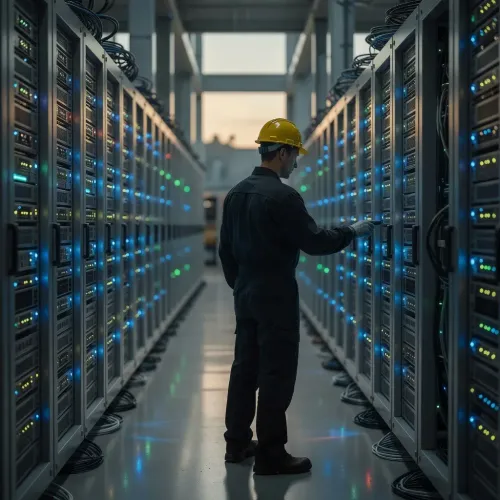
The system is designed as a shared resource to give AI researchers and businesses access to large-scale compute without building private infrastructure.
The Wallenberg family's involvement signals Sweden's traditional industrial capital backing AI infrastructure as a strategic asset.
The launch fits Nvidia's broader strategy of deploying localised shared AI supercomputers across Europe, a pattern in place since 2023 .
Operational metrics and user uptake of Sferical One will determine whether the shared-access model accelerates Nordic AI development at scale.
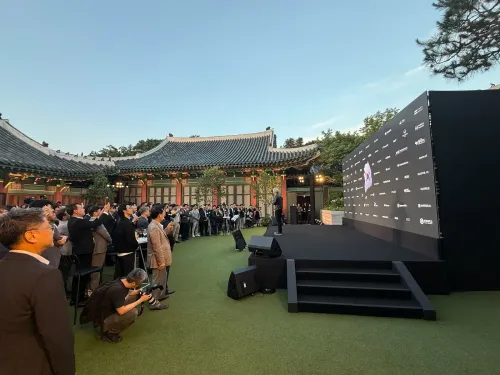
An idea, as Nvidia put it bluntly, 'can only go so far without the computing power to test it' — and on Thursday, 15 October 2026, that conviction became steel and silicon in Sweden. Chip giant Nvidia announced the launch of Sferical One, a shared AI supercomputer powered by Nvidia GPUs, celebrating the milestone alongside a constellation of European technology and investment heavyweights.
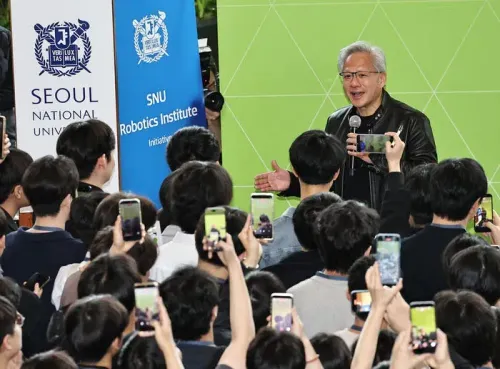
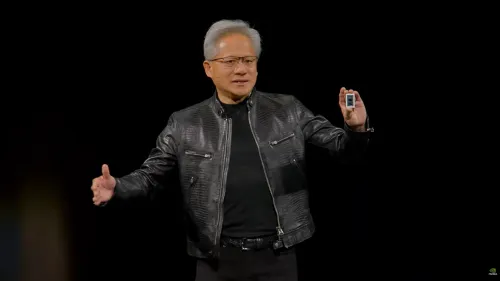
Nvidia founder and CEO Jensen Huang joined Marcus Wallenberg of Wallenberg Investments, Spotify founder Daniel Ek (posting as @eldsjal), and Jenny Nordlöw of Sferical AI for the announcement. The supercomputer is designed as a shared resource — meaning researchers and businesses across Sweden can tap into serious AI compute without needing to build their own data centres.What Sferical One means for Sweden's AI ambitions
Shared AI supercomputers flip the old model: instead of every institution raising capital for its own cluster, they pool access to a single, powerful system. For smaller research groups and startups, that difference is existential. Sferical One is built precisely to lower that barrier in the Nordic market, where industrial depth — Wallenberg Investments has stakes across Swedish heavy industry — meets a vibrant digital startup culture exemplified by Spotify.
The involvement of Marcus Wallenberg signals something beyond a routine tech investment. The Wallenberg family has been a cornerstone of Swedish industrial capital for over a century, and their backing of an AI supercomputer project suggests Sweden's traditional business establishment is betting that compute infrastructure is the next great industrial asset — not just a utility, but a strategic edge.
Nvidia's European compute push builds momentum
This is not Nvidia's first move into shared European AI infrastructure. Since 2023, the company has steadily partnered with investors, governments, and enterprises across the continent to deploy localised supercomputing capacity — a deliberate strategy to make large-scale AI accessible beyond the hyperscalers. The Sferical One launch fits neatly into that pattern: a nationally anchored machine, backed by credible local capital, running on Nvidia silicon.
The Swedish flag emoji in Nvidia's post is not incidental. It marks a national inflection point — the moment a Nordic country gains a dedicated shared AI supercomputer of its own, powered by the world's leading GPU architecture. For European AI sovereignty advocates, announcements like this carry real weight: compute that stays on the continent, governed by local institutions.
The road from idea to breakthrough just got shorter
The core message Nvidia chose to lead with — that ideas stall without compute — is a deliberate argument about where the real bottleneck in AI development sits today. Hardware access, not imagination, is the constraint. Sferical One is Nvidia's answer, in partnership with Swedish capital, to that specific problem.
With operational metrics and user uptake still to emerge as the system goes live, the real test for Sferical One will be whether shared access translates into measurable research velocity and commercial breakthroughs for Swedish firms. If it does, expect the model to replicate across the Nordics — and fast.
Point of View
Century-old Wallenberg money and a globally recognised tech founder in Daniel Ek — to drive adoption without requiring every end-user to fund their own hardware. This localised supercomputer model is a direct response to Europe's AI sovereignty push, giving nations compute capacity that sits outside the direct control of US hyperscalers. For Nvidia, every shared-infrastructure deal deepens GPU lock-in at a national or regional level, creating durable revenue streams. The bigger question is whether shared-access models can truly democratise frontier AI research or simply shift the gatekeeping one layer up — from the chip to the cluster operator.
NationPress
16 Oct 2026
Frequently Asked Questions
What is Sferical One?
Sferical One is a shared AI supercomputer launched in Sweden by Sferical AI, powered by Nvidia GPUs. It is designed to give researchers and businesses shared access to large-scale AI computing power, removing the need for each organisation to build its own infrastructure.
Why did Jensen Huang attend the Sferical One launch?
Jensen Huang, founder and CEO of Nvidia, attended the Sferical One launch in Sweden because Nvidia's GPUs power the supercomputer. His presence underscores Nvidia's strategic commitment to expanding shared AI infrastructure across Europe.
Who is Marcus Wallenberg and why is he involved in Sferical One?
Marcus Wallenberg is a prominent Swedish investor and chairman of Wallenberg Investments, one of Sweden's most influential industrial holding groups. His involvement in Sferical One signals that Sweden's traditional capital establishment is treating AI compute infrastructure as a major long-term industrial asset.
What is Nvidia's strategy in Europe for AI computing?
Since 2023, Nvidia has pursued a strategy of partnering with European investors, governments, and enterprises to deploy localised shared AI supercomputers. The goal is to make large-scale AI compute accessible across the continent without relying solely on global hyperscalers.
How does a shared AI supercomputer benefit smaller research groups?
A shared AI supercomputer allows multiple organisations to access powerful computing resources without each needing to raise capital for private hardware. This dramatically lowers the barrier for smaller startups and academic research groups to run large AI models and experiments.