Nvidia Sustainability Head Highlights AI Efficiency Gains on Podcast
Synopsis
Nvidia has highlighted a podcast appearance by its Head of Sustainability Josh Parker on Shift Key, where he argued that accelerated computing drives major energy efficiencies and helps lower global emissions — a message aimed at regulators and data-centre operators scrutinising AI's growing electricity footprint.
Key Takeaways
Josh Parker , Head of Sustainability at Nvidia , appeared on the Shift Key podcast to discuss accelerated computing and emissions reduction.
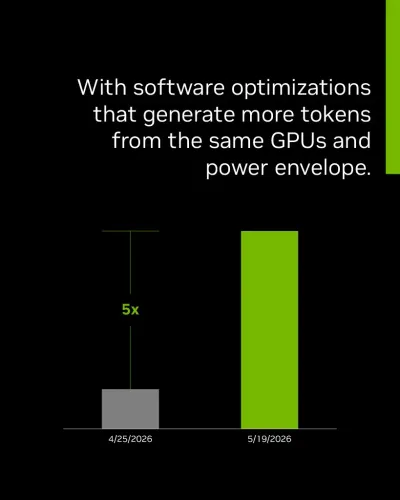
Nvidia frames specialised GPU-based accelerators as delivering higher performance per watt than traditional CPU systems, reducing energy intensity of AI workloads.
The company has included accelerated computing in its sustainability reports every year since 2020 .
Rapid expansion of generative AI has intensified regulatory and public scrutiny of data-centre electricity demand globally.
Key stakeholders include data-centre operators, AI developers, and environmental regulators in the EU and the United States.
Nvidia's next sustainability report and appearances at major AI or climate conferences are the next milestones to watch.
Chip giant Nvidia on Thursday, 28 May 2026 spotlighted how accelerated computing is being positioned as a tool to reduce global emissions, sharing that Josh Parker, the company's Head of Sustainability, recently appeared on the Shift Key podcast to make the case for energy-efficient AI infrastructure.
Context
Parker's appearance on the Shift Key podcast — an industry series focused on energy transition and technology — centred on the argument that accelerated compute hardware delivers significantly greater performance per watt compared with traditional CPU-based systems. Nvidia's post described the conversation as a showcase of 'how accelerated compute is driving massive efficiencies which are actively helping to lower global emissions.'
As Head of Sustainability at one of the world's most influential semiconductor companies, Parker oversees Nvidia's corporate environmental strategy, making his public communications closely watched by data-centre operators, AI developers, and environmental regulators alike.
Policy Backdrop
Nvidia has included accelerated computing in its annual corporate sustainability reports since 2020, consistently framing specialised GPU-based hardware as a route to lower energy intensity relative to general-purpose processors. The company's position is that running AI workloads on purpose-built accelerators consumes less electricity per unit of computation than equivalent CPU-based deployments.
This narrative has gained urgency as the rapid global expansion of generative AI workloads has drawn intense scrutiny over data-centre electricity demand. Industry bodies, regulators, and climate advocates have increasingly questioned whether the AI boom is compatible with national and corporate net-zero commitments — a tension Nvidia and its peers are actively working to address through efficiency messaging.
Stakeholders and Impact
Data-centre operators building out AI infrastructure are among the most directly affected audience for Nvidia's sustainability claims, as energy costs and regulatory compliance pressures shape procurement decisions. AI developers deploying large-scale model training and inference workloads are similarly attentive to performance-per-watt metrics that affect both operating costs and carbon footprints.
Environmental regulators in major markets — including the European Union and several United States federal agencies — are watching the sector closely, with disclosure requirements around data-centre energy use tightening in multiple jurisdictions. Nvidia's public positioning through forums like the Shift Key podcast feeds directly into that regulatory conversation.
What's Next
Observers will watch for Nvidia's next corporate sustainability report, which is expected to include updated metrics on energy efficiency gains attributable to its accelerator platforms. Any disclosures at major AI or climate conferences in the coming months will also be scrutinised for quantitative backing to the efficiency claims Parker outlined in the podcast.
Whether the industry's 'performance-per-watt' argument satisfies regulators and climate advocates — or whether absolute energy consumption from AI growth outpaces efficiency gains — remains the central question shaping the broader debate around AI and net-zero pathways.
Point of View
Not just developers. The 'accelerated compute as climate solution' framing is increasingly a standard industry posture, but Nvidia's market dominance gives its version outsized influence in setting sector-wide expectations. Whether this soft-power messaging translates into measurable, verified emission reductions will determine its long-term credibility with regulators.
NationPress
11 Oct 2026
Frequently Asked Questions
Who is Josh Parker at Nvidia?
Josh Parker is the Head of Sustainability at Nvidia, responsible for the company's corporate environmental strategy and energy-efficiency initiatives.
What is the Shift Key podcast?
Shift Key is an industry podcast series that covers the energy transition and the role of technology in addressing climate challenges; Parker appeared on it to discuss Nvidia's accelerated computing approach.
How does Nvidia claim its chips reduce emissions?
Nvidia argues that its GPU-based accelerators deliver significantly more computation per unit of electricity compared with traditional CPU systems, lowering the energy intensity — and therefore the carbon footprint — of AI workloads.
Why is AI energy consumption a concern in 2026?
The rapid global expansion of generative AI has sharply increased data-centre electricity demand, prompting regulators and climate advocates to question whether AI growth is compatible with net-zero commitments.
When will Nvidia release its next sustainability report?
Nvidia has not announced a specific date, but observers expect the next corporate sustainability report to include updated metrics on energy efficiency gains; disclosures at upcoming AI and climate conferences are also anticipated.