Sam Altman backs Demis Hassabis proposal on AI

Synopsis
OpenAI CEO Sam Altman publicly backed a proposal by Google DeepMind CEO Demis Hassabis on 14 July 2026, calling it 'a thoughtful proposal' on X. The rare cross-lab endorsement signals potential alignment between two of the world's most influential AI leaders on an unspecified but notable AI-related initiative.
Key Takeaways
Sam Altman , chief executive of OpenAI , publicly called a proposal by Demis Hassabis of Google DeepMind 'a thoughtful proposal' on 14 July 2026 .
The endorsement represents a rare moment of visible cross-lab alignment between two leading frontier AI organisations.
Both Altman and Hassabis previously co-signed the March 2023 statement on AI extinction risk from the Center for AI Safety .
OpenAI was founded in December 2015 ; DeepMind was founded in 2010 and acquired by Google in 2014 .
The specific content of the Hassabis proposal has not been independently detailed at the time of publication.
Regulators, policymakers, and AI researchers globally will monitor whether the endorsement leads to formal joint positions or coordinated governance proposals.
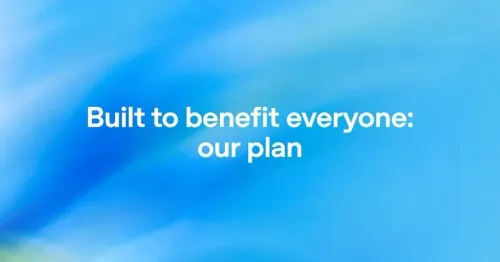
OpenAI chief executive Sam Altman on Tuesday, 14 July 2026 publicly endorsed a proposal put forward by Demis Hassabis, co-founder and chief executive of Google DeepMind, calling it 'a thoughtful proposal' in a post on X. The brief but pointed remark, accompanied by an image, signals a rare moment of cross-lab alignment between two of the most influential figures in frontier artificial intelligence.
Context
Altman's post read simply: 'this is a thoughtful proposal from demis' — a characteristically understated but deliberate public signal. In the tightly watched world of frontier AI, a sitting chief executive of one leading lab openly commending a proposal from the chief of another carries significant weight. Hassabis co-founded DeepMind in 2010; the London-based lab was acquired by Google in 2014 and later restructured as Google DeepMind.
Altman co-founded OpenAI in December 2015 as a nonprofit with an explicit mission to ensure artificial general intelligence benefits all of humanity. Both men have long operated in parallel, often as competitors, but have occasionally found common ground on safety and governance questions.
Policy Backdrop
The exchange occurs against a well-established pattern: executives at frontier AI companies routinely evaluate one another's public proposals on model evaluation, safety standards, and governance frameworks. These interactions have intensified as competition between independent labs and those embedded inside large technology firms has grown sharper.
Both Altman and Hassabis signed the March 2023 statement on AI extinction risk issued by the Center for AI Safety, a notable instance of cross-institutional consensus. DeepMind published early work on AI safety and ethics from 2015 onwards, including establishing its own internal ethics board, while OpenAI has pursued a series of safety commitments and voluntary frameworks in the years since.
The specific content of the Hassabis proposal referenced in Altman's post has not been independently detailed in the public domain at the time of publication.
Stakeholders and Impact
The audience for this kind of inter-lab endorsement extends well beyond Silicon Valley. AI regulators, policymakers, and standards bodies in jurisdictions ranging from the European Union to India closely monitor public statements from lab leaders for signals about emerging industry consensus. When two leading figures converge on a proposal, it can accelerate voluntary norm-setting even in the absence of formal regulatory mandates.
For the broader AI research community, public alignment between OpenAI and Google DeepMind on any substantive question is notable given the competitive dynamics between the two organisations. Researchers, developers, and enterprise customers who depend on both ecosystems will be watching for any follow-on joint statements or coordinated positions.
What's Next
The immediate question is whether Hassabis will respond publicly and whether other frontier lab leaders — at Anthropic, Meta AI, xAI, or elsewhere — will weigh in on the proposal. Any subsequent joint position papers, calls for government action, or coordinated submissions to standards bodies would mark a meaningful escalation from a single social-media endorsement to structured inter-lab cooperation. Observers will also watch whether the proposal surfaces in upcoming AI governance forums or regulatory consultations in major markets including India, where the government has been developing its own AI policy framework.
Point of View
Which is actively building its AI regulatory posture, convergence between OpenAI and Google DeepMind on any substantive framework carries direct relevance to how domestic standards may be benchmarked. The post is short, but its implications for the broader AI governance conversation are not.
NationPress
14 Jul 2026
Frequently Asked Questions
What did Sam Altman say about Demis Hassabis on X?
Sam Altman posted on X on 14 July 2026 that a proposal by Demis Hassabis is 'a thoughtful proposal,' publicly endorsing the Google DeepMind chief's idea without specifying its full details in the post.
Who is Demis Hassabis?
Demis Hassabis is the co-founder and chief executive of Google DeepMind, a London-based AI research lab founded in 2010 and acquired by Google in 2014. He is known for breakthroughs including AlphaGo and is one of the most prominent figures in global AI research.
What is the relationship between OpenAI and DeepMind?
OpenAI and Google DeepMind are two of the world's leading frontier AI research organisations. They operate largely as competitors but have occasionally found common ground on AI safety issues, including co-signing a 2023 statement on AI extinction risk.
Why does Sam Altman endorsing a Demis Hassabis proposal matter?
Public endorsements between chiefs of rival AI labs are rare and carry weight with regulators, policymakers, and researchers who look to inter-lab consensus as a signal of emerging industry norms, particularly on safety and governance.
What is Sam Altman's role at OpenAI?
Sam Altman is the co-founder and chief executive of OpenAI, the San Francisco-based AI research company founded in December 2015 with a mission to develop safe artificial general intelligence for the benefit of humanity.