CM Bhajanlal's Urban Service Camps Resolve 1.5 Lakh Cases in Rajasthan
Synopsis
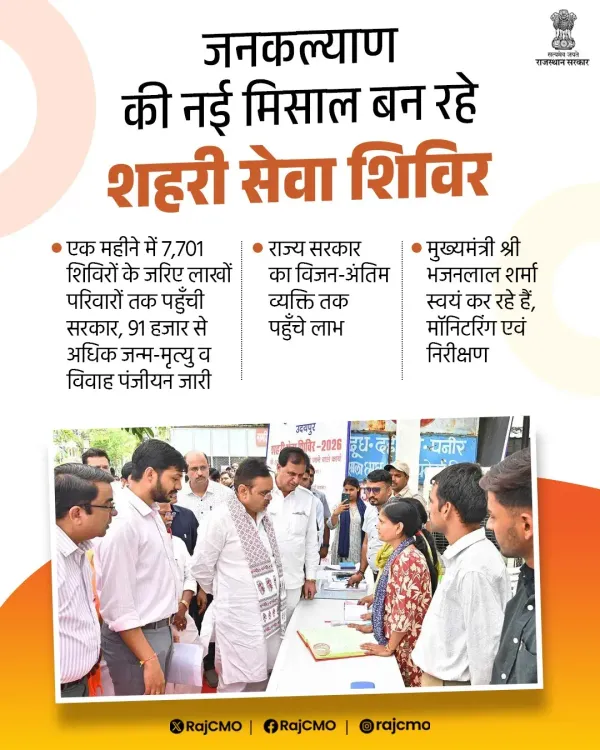
Rajasthan's Chief Minister Bhajanlal Sharma-led government held 7,701 urban service camps from 12 June to 13 July 2026, resolving over 1.54 lakh civic cases covering property leases, name transfers, building maps, civil registration certificates, and EWS documents across the state.
Key Takeaways
7,701 urban service camps were held across Rajasthan between 12 June and 13 July 2026 .
38,494 property lease deeds (patte) were issued during the camp drive.
12,163 name transfers and 6,811 building map cases were resolved.
91,599 birth, death, and marriage registration certificates were distributed to residents.
5,644 EWS certificates were issued under the 103rd Constitutional Amendment framework.
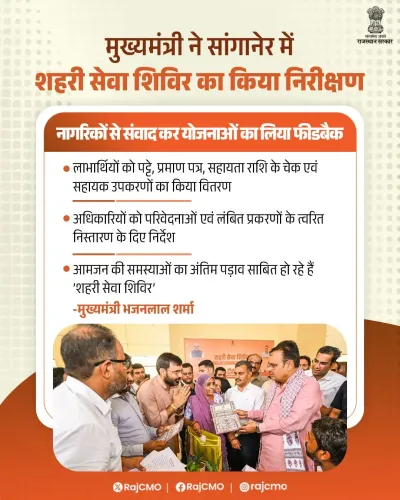
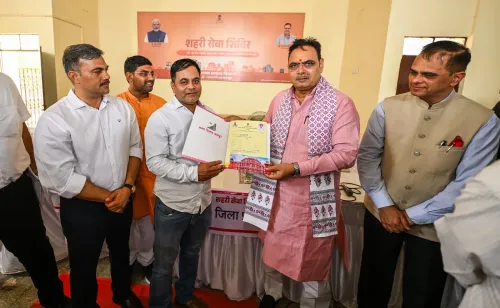
CM Bhajanlal Sharma conducted personal inspections and collected direct beneficiary feedback throughout the initiative.
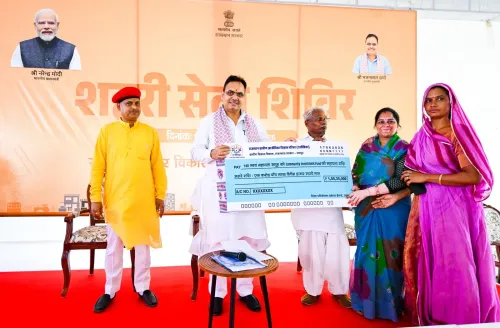
The Chief Minister's Office of Rajasthan announced on 14 July 2026 that urban service camps held across the state under Chief Minister Bhajanlal Sharma have resolved over 1.5 lakh civic cases between 12 June and 13 July 2026, delivering property titles, building plan approvals, and welfare certificates directly to residents at the camp level.
Context
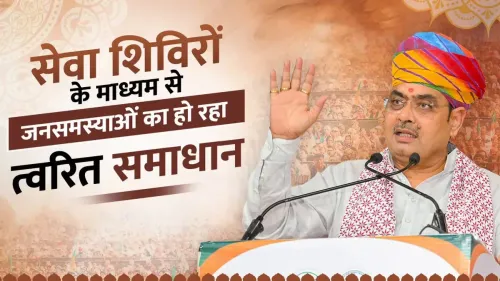
A total of 7,701 urban service camps (shehri seva shivir) were organised across Rajasthan over the roughly one-month window. The camps operated as single-window outlets, allowing urban residents to apply for and receive civic documents without navigating multiple government offices. The initiative is framed under the state government's stated goal of reaching the last beneficiary — antim vyakti tak pahunchane — with the benefits of welfare schemes.
The official post from the Rajasthan CMO states that 38,494 property leases (patte), 12,163 name transfers, and 6,811 building map cases were resolved during the period. Additionally, 91,599 birth, death, and marriage registration certificates were issued, along with 5,644 Economically Weaker Section (EWS) certificates.
Policy Backdrop
EWS certificates are issued under the framework established by the 103rd Constitutional Amendment, which came into effect in 2019 and extended reservation benefits to economically weaker sections of society. Their issuance through camp mode is significant because delays in obtaining these documents have historically blocked eligible applicants from accessing educational and employment quotas.
Single-window civic camps are a well-established administrative tool used by state governments across India to clear backlogs in municipal and revenue departments. The Rajasthan government's urban variant targets property records, building regulations, and civil registration — three areas that urban residents most frequently need for housing loans, legal transactions, and identity documentation.
Stakeholders and Impact
The primary beneficiaries are urban property owners who needed lease deeds or name transfers formalised, residents requiring birth, death, or marriage certificates for legal and administrative purposes, and EWS applicants seeking certificates for reservation benefits. Collectively, the camps serviced over 1,54,711 individual cases across all categories during the month-long drive.
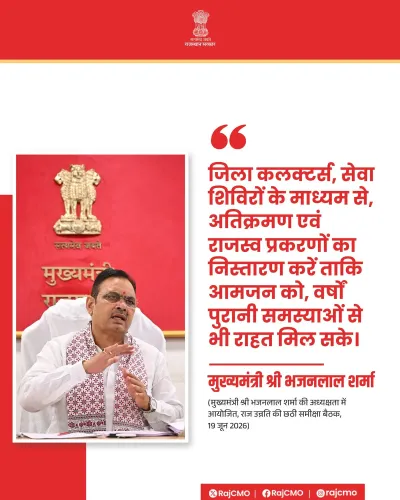
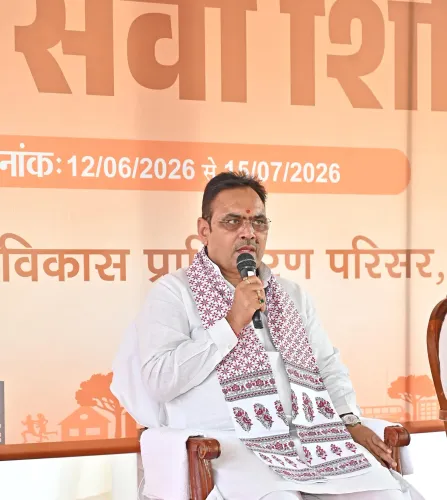
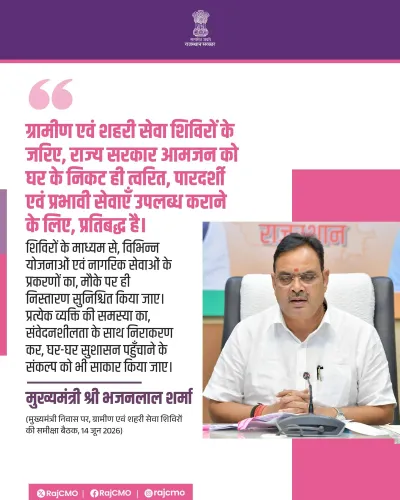
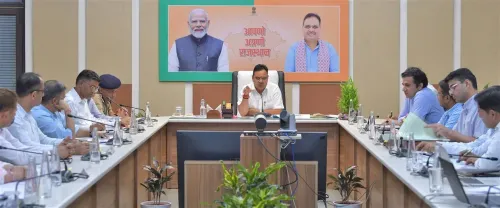
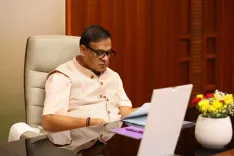
CM Bhajanlal Sharma has been personally conducting periodic inspections of the camps, according to the CMO's post. He has been gathering direct feedback from beneficiaries and has issued clear instructions to officials that every eligible person must receive scheme benefits promptly and effectively through the camp mechanism.
What's Next
With the 13 July 2026 phase concluded, the state government has not yet announced whether the urban camp model will be extended or expanded. Observers of Rajasthan's administrative outreach will watch for announcements on whether the format is replicated in rural areas or integrated with the state's ongoing digitisation of land records. The personal involvement of CM Bhajanlal Sharma in monitoring the camps signals that civic service delivery is likely to remain a visible political priority for the BJP government in Rajasthan in the months ahead.
Point of View
700 camps and 1.54 lakh disposals in a single month — positions it as one of the more ambitious single-window civic outreach exercises seen at the state level in recent years. Chief Minister Bhajanlal Sharma's visible personal monitoring is a deliberate political signal: the BJP government in Jaipur is keen to demonstrate administrative responsiveness ahead of future electoral cycles. The focus on property records and EWS certificates also addresses two of the most litigation-prone and backlog-heavy areas of urban governance, suggesting a strategic prioritisation rather than a purely ceremonial exercise. Whether the momentum translates into systemic reform of municipal record-keeping, or remains a periodic camp-based intervention, will define the initiative's long-term impact.
NationPress
14 Jul 2026
Frequently Asked Questions
What are the Rajasthan urban service camps (shehri seva shivir)?
Rajasthan's urban service camps are single-window government outreach events where residents can obtain civic documents — including property leases, name transfers, building map approvals, and civil registration certificates — without visiting multiple offices. The state held 7,701 such camps between 12 June and 13 July 2026.
How many cases were resolved in Rajasthan's urban service camps in 2026?
Over 1,54,711 cases were resolved across all categories: 38,494 property leases, 12,163 name transfers, 6,811 building map cases, 91,599 civil registration certificates, and 5,644 EWS certificates, according to the Chief Minister's Office of Rajasthan.
What is an EWS certificate and why was it issued at these camps?
An EWS (Economically Weaker Section) certificate is a document that allows eligible individuals to claim the 10% reservation introduced by the 103rd Constitutional Amendment in 2019. It is required for access to reserved seats in education and government employment. The Rajasthan camps issued 5,644 such certificates to reduce the backlog among eligible applicants.
Is CM Bhajanlal Sharma personally overseeing the urban service camps?
Yes. According to the Rajasthan CMO's official post, Chief Minister Bhajanlal Sharma has been personally conducting periodic inspections of the camps, interacting with beneficiaries, and directing officials to ensure prompt delivery of scheme benefits to every eligible person.
Will Rajasthan's urban service camp model be extended to rural areas?
No official announcement has been made yet on extending the camp model to rural areas. Policy observers expect the state government may announce such expansion or integration with land-record digitisation efforts in future budget or municipal-level meetings.