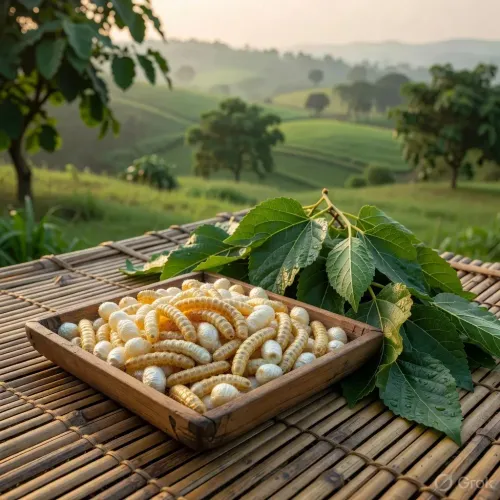
Silk predates Silk Road: Cocoons found in Uzbekistan 2,000 years early
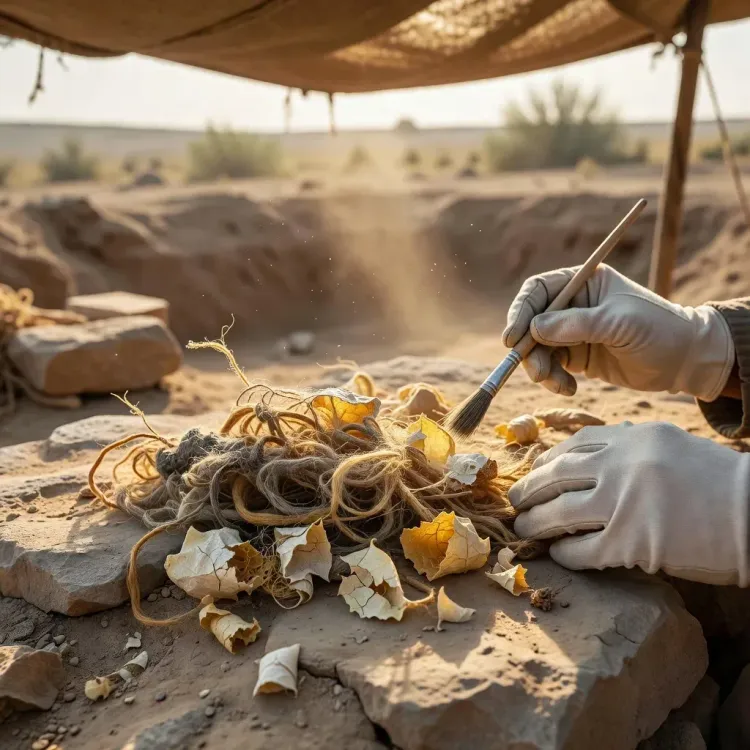
Synopsis
Chinese scientists have found silkworm cocoons and mulberry trees in Uzbekistan dating back more than 2,000 years before the Silk Road opened — directly challenging the established narrative that China exclusively exported silk knowledge westward from the 2nd century BC.
Key Takeaways
Silkworm cocoons and mulberry trees were found in Uzbekistan more than 2,000 years before the Silk Road formally opened in the 2nd century BC .
The research was conducted by the Chinese Academy of Sciences ' Institute of Vertebrate Paleontology and Paleoanthropology and published in Science Advances .
Researcher Zhou Xinying is among the authors of the study challenging the traditional timeline of sericulture's spread.
Traditional scholarship holds that sericulture originated in China between 8,500 and 5,000 years ago and spread westward only after Zhang Qian 's diplomatic mission in 138 BC .
Evidence was recovered near the Surkhan River in Uzbekistan , with artefacts cross-referenced at the Tashkent State Museum .
The find raises the possibility of earlier undocumented trade routes or independent silk development in Central Asia , potentially involving South Asia or trans- Himalayan corridors.
Chinese scientists have unearthed archaeological evidence in Uzbekistan showing that silkworm cocoons and mulberry trees existed in Central Asia more than 2,000 years before the Silk Road formally opened in the 2nd century BC — a discovery that challenges long-held assumptions about the origins and spread of sericulture. The findings, published in the journal Science Advances, were led by researchers from the Chinese Academy of Sciences' Institute of Vertebrate Paleontology and Paleoanthropology.
What the discovery reveals
Traditional scholarship has placed the origins of sericulture and silk-reeling technology in China, dating back 8,500 to 5,000 years ago, with the knowledge spreading westward only after Zhang Qian — the Han dynasty diplomat and explorer — opened the overland trade corridor in 138 BC. That corridor ran from Chang'an (present-day Xian) through Gansu province and the Xinjiang Uygur Autonomous Region, eventually connecting Central Asia, West Asia, and the Mediterranean. The new Uzbekistan find pushes the presence of silk-related biological material in the region far beyond that timeline.
Where the evidence was found
The silkworm cocoons and mulberry tree remnants were recovered from a site near the Surkhan River in Uzbekistan, with artefacts later cross-referenced against collections at the Tashkent State Museum. Researchers associated with the Chinese Academy of Sciences led the analysis, according to the published study. The geographic positioning of the find — situated between the Himalayas and the broader Central Asian steppe — raises new questions about whether silk knowledge may have travelled through South Asia or via independent domestication routes predating formal diplomatic contact.
Why it matters
The discovery, authored in part by researcher Zhou Xinying, directly contests the dominant narrative that silk technology was a closely guarded Chinese export disseminated exclusively through the Silk Road. If sericulture existed in Uzbekistan millennia before Zhang Qian's mission, it implies either an earlier, undocumented transmission route or a parallel development of silk knowledge in the region. Either scenario would significantly reframe the economic and cultural history of ancient trade between East Asia and Central Asia.
The competitive backdrop of ancient silk history
The Silk Road has long served as a cornerstone of historical narratives connecting China to the wider world, and archaeological claims touching on its origins carry considerable scholarly and geopolitical weight. Previous discoveries across South Asia and the Himalayas have hinted at more complex early trade networks, but direct biological evidence of silk production materials in Central Asia at this scale is rare. The Science Advances publication lends the findings peer-reviewed credibility that is likely to prompt responses from historians and archaeologists globally.
What's next
Scholars will now scrutinise the dating methodology and the precise species identification of the cocoon remains to assess whether the evidence points to domesticated Bombyx mori silkworms or wild relatives. Independent verification from institutions outside China will be critical to establishing consensus. The findings open a broader research agenda into pre-Silk Road connectivity across Central Asia — one that could reshape how the ancient world's most valuable textile trade is understood.
Point of View
And the species identification of the cocoon remains — wild versus domesticated silkworm — will determine whether this rewrites history or merely complicates it.
NationPress
23 Oct 2026
Frequently Asked Questions
What did scientists find in Uzbekistan related to the Silk Road?
Chinese scientists found silkworm cocoons and mulberry tree remnants in Uzbekistan that predate the Silk Road by more than 2,000 years. The discovery was published in the journal Science Advances by researchers from the Chinese Academy of Sciences' Institute of Vertebrate Paleontology and Paleoanthropology.
Why does the Uzbekistan silk discovery matter historically?
It directly challenges the established view that China exclusively developed and exported sericulture technology westward via the Silk Road from the 2nd century BC. If silk-related biological material existed in Central Asia millennia earlier, it suggests undocumented trade routes or independent silk development in the region.
Who opened the Silk Road and when?
Han dynasty diplomat and explorer Zhang Qian is credited with opening the Silk Road after being sent as an envoy to the western regions in 138 BC. The route ran from Chang'an (present-day Xian) through Gansu and Xinjiang to Central Asia, West Asia, and the Mediterranean.
Where exactly were the silkworm cocoons found in Uzbekistan?
The cocoons and mulberry tree remnants were recovered from a site near the Surkhan River in Uzbekistan, with artefacts cross-referenced against collections at the Tashkent State Museum, according to the published study.
What happens next following this silk archaeology discovery?
Scholars will scrutinise the dating methodology and species identification of the cocoon remains to determine whether they belong to domesticated Bombyx mori silkworms or wild relatives. Independent verification from institutions outside China will be essential before a new historical consensus can be established.