Giriraj Singh backs silk farmer training at Bhimtal CSB centre
Synopsis
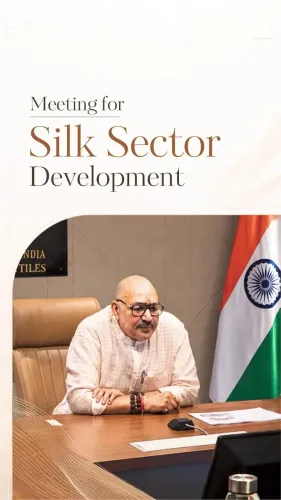
Union Textiles Minister Giriraj Singh lauded a three-day training at the Central Silk Board's Bhimtal centre, where farmers learn scientific silkworm rearing and oak tasar nursery preparation — part of India's push to modernise sericulture and cut reliance on imported raw silk.
Key Takeaways
A three-day farmer training programme is underway at the Central Silk Board's Regional Sericulture Production Research Centre, Bhimtal, Uttarakhand .
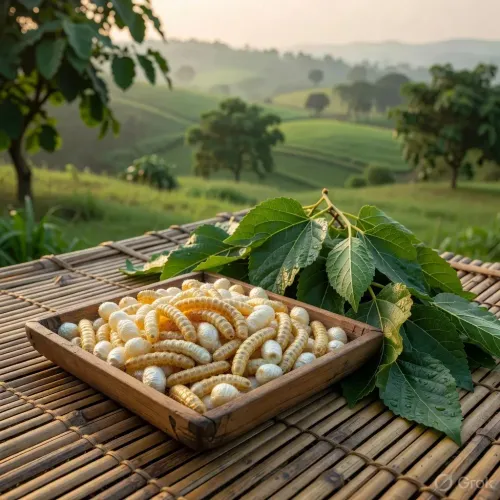
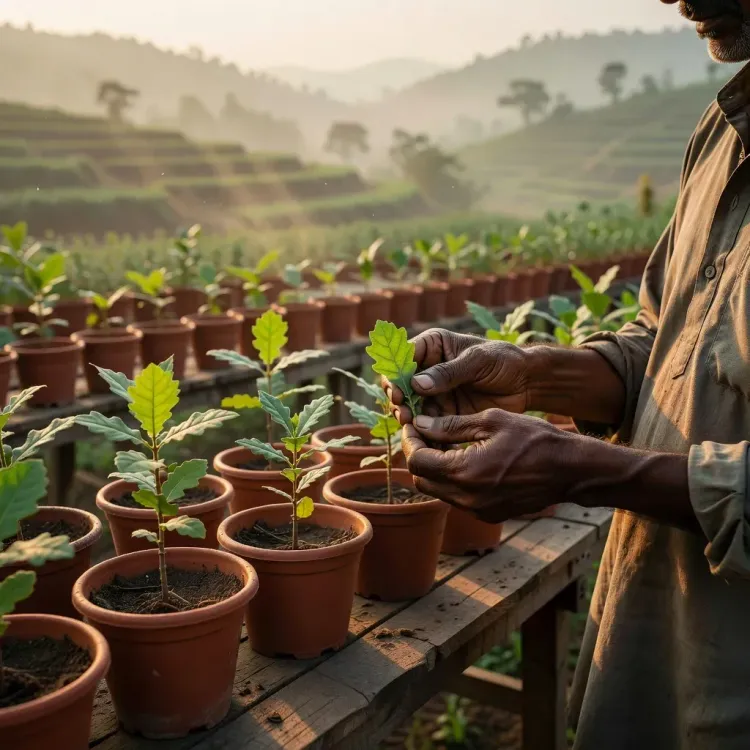
Training covers silkworm rearing techniques and plant nursery preparation for oak tasar silk .
Union Textiles Minister Giriraj Singh described it as a critical initiative to connect farmers with scientific silk-production methods.
The Central Silk Board , established under the Central Silk Board Act of 1948 , operates the Bhimtal centre as part of its national sericulture research network.
The programme aligns with the Silk Samagra scheme (launched 2017) , which funds technology dissemination and farmer capacity-building in sericulture.
Oak tasar silk cultivation targets Himalayan and forested regions to expand vanya silk production beyond traditional mulberry belts and support rural incomes.
A three-day hands-on training programme at the Central Silk Board's Regional Sericulture Production Research Centre in Bhimtal, Uttarakhand is putting scientific silk-farming skills directly into the hands of local cultivators — and Union Textiles Minister Giriraj Singh is calling it a milestone push for the sector.
Posting on 17 October 2026, Singh described the programme as a critical initiative connecting farmers to modern techniques, from silkworm rearing to preparing plant nurseries for oak tasar silk. 'रेशम कीटपालन से लेकर ओक तसर रेशम के लिए पौधों की नर्सरी तैयार करने तक का व्यावहारिक प्रशिक्षण' ['Practical training from silkworm rearing to preparing plant nurseries for oak tasar silk'], he wrote, underscoring the programme's breadth.
Bhimtal's oak tasar belt and why it matters
Bhimtal sits in the Kumaon hills of Uttarakhand — terrain that is naturally suited to oak tasar silk, a variety of vanya (wild) silk produced by the Antheraea proylei silkworm, which feeds on oak leaves. Unlike conventional mulberry silk, oak tasar thrives in forested, hilly ecosystems, making it a livelihood option for communities far outside the traditional sericulture belts of Karnataka, West Bengal, and Assam.
The Central Silk Board, established under the Central Silk Board Act of 1948 and operating under the Ministry of Textiles, runs the Bhimtal centre as part of its nationwide network for sericulture research and extension. The Himalayan region has been a particular focus of recent ministry strategy, as India works to reduce its dependence on imported raw silk — a structural vulnerability the sector has long carried.
Silk Samagra's training pipeline
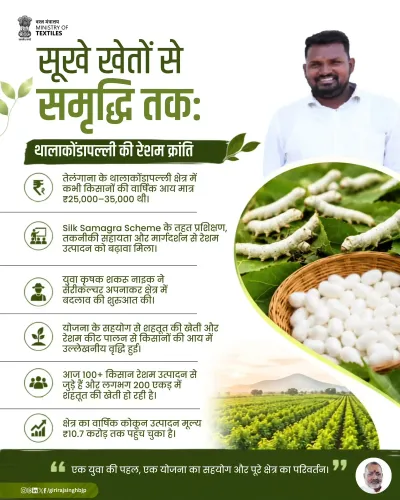
Farmer training events like this one sit squarely within the architecture of Silk Samagra, the central sector scheme launched in 2017 to modernise sericulture through technology transfer, quality improvement, and rural income support. The scheme has channelled funds into demonstration units, seed organisations, and exactly the kind of hands-on, centre-based training Singh highlighted.
The logic is straightforward: productivity in Indian sericulture has historically lagged global benchmarks because smallholder farmers lack access to improved rearing methods. Getting them into a lab-and-field setting — learning nursery preparation, disease management, and post-cocoon handling — compresses years of trial-and-error into days of structured instruction. Skill. Speed. Scale.
Rural incomes woven into the textile agenda
The Ministry of Textiles has consistently framed sericulture as a rural employment anchor, particularly for women and tribal communities in states like Uttarakhand, Jharkhand, and Odisha where oak and eri silk traditions run deep. Singh's post reinforces that the ministry sees scientific training — not just subsidies — as the lever that converts smallholder potential into sustained production gains.
India is already the world's second-largest producer of raw silk. Closing the yield gap with China, however, demands exactly the kind of grassroots technical upgrading that a Bhimtal training camp represents — one farm, one rearing cycle, one nursery plot at a time.
Point of View
Reducing the sector's historical concentration in southern and eastern states. Within the Silk Samagra framework, highlighting centre-based training also implicitly makes the case for continued scheme funding at a time when central textile allocations face competing priorities. The Bhimtal event is small in itself, but it is a data point in a larger ministerial effort to demonstrate that productivity gains in sericulture are achievable through extension, not just investment.
NationPress
17 Oct 2026
Frequently Asked Questions
What is the Central Silk Board and where is the Bhimtal centre?
The Central Silk Board is a statutory body established in 1948 under the Ministry of Textiles to promote sericulture research and development across India. Its Regional Sericulture Production Research Centre in Bhimtal, Uttarakhand, focuses on oak tasar silk research and farmer training in the Himalayan region.
What is oak tasar silk and why is it important?
Oak tasar is a variety of wild silk produced by silkworms that feed on oak leaves, suited to hilly and forested ecosystems in states like Uttarakhand. It provides livelihood opportunities for communities outside traditional mulberry silk belts and is a key focus of India's vanya silk expansion strategy.
What is the Silk Samagra scheme?
Silk Samagra is a central sector scheme launched in 2017 by the Ministry of Textiles to modernise sericulture through technology transfer, quality improvement, and farmer training. It funds demonstration units, seed organisations, and capacity-building programmes like the Bhimtal training camp.
Why is India investing in sericulture farmer training?
India is the world's second-largest raw silk producer but faces a productivity gap partly because smallholder farmers lack access to modern rearing techniques. Hands-on training in scientific methods aims to raise yields, reduce dependence on imported raw silk, and support rural incomes.
What did Giriraj Singh say about the Bhimtal training programme?
Singh called it a critical initiative to connect farmers with scientific silk-production methods. He specifically noted that practical training ranging from silkworm rearing to preparing plant nurseries for oak tasar silk would enhance farmer skills and promote silk production in the region.