SpaceX Starship test flight deploys Starlink V3 satellites as shares slide 2.68%
Synopsis
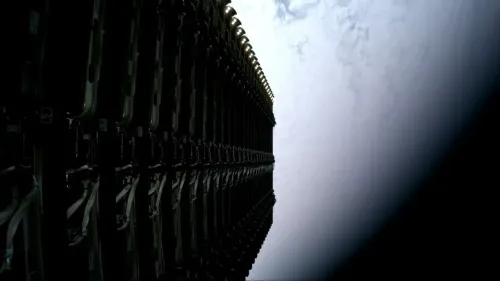
SpaceX's Starship completed its second V3 test flight on 25 July, deploying next-generation Starlink V3 satellites for the first time and recovering an intact upper-stage heat shield — a milestone the company has never achieved before. The booster's landing burn only partially succeeded, but the mission still represents a meaningful step toward the reusable, high-frequency launch cadence Musk's space ambitions require.
Key Takeaways
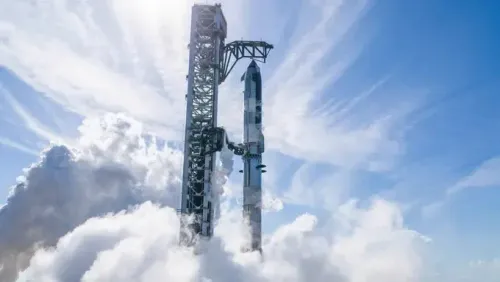
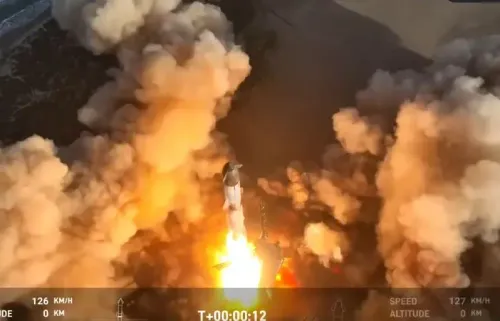
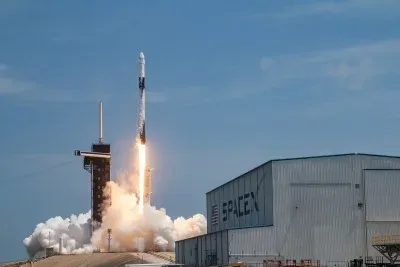
SpaceX launched Starship on a test flight on 25 July from Starbase, South Texas at 5:51 pm local US time .
This was the second flight of the Starship and Super Heavy V3 vehicles and the first to deploy Starlink V3 satellites.
The Super Heavy booster made a 'hard splashdown' in the Gulf of Mexico after only a subset of engines successfully reignited for the landing burn.
The upper stage achieved a 'soft splashdown' in the Indian Ocean , landing intact and providing the first-ever views of an intact heat shield.
A single Raptor engine was reignited in space, demonstrating a key capability for future orbital missions.
SpaceX shares fell 2.68% to $115.07 on Friday despite the mission's technical milestones.
SpaceX launched its Starship vehicle on a test flight on Friday, 25 July, successfully deploying next-generation Starlink V3 satellites for the first time, even as the company's stock slipped 2.68% to $115.07. The mission marked the second flight of the Starship and Super Heavy V3 vehicles, and a significant milestone in CEO Elon Musk's broader ambitions for space infrastructure and Starlink expansion.
Key Developments from the Flight
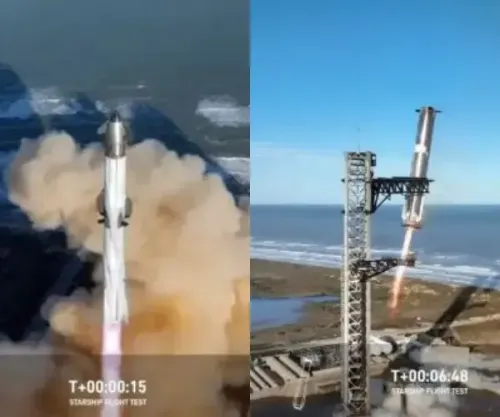
The Super Heavy booster separated from the Starship spacecraft approximately two minutes after liftoff, having ignited all 33 Raptor engines to propel the vehicle toward near-orbital speeds. SpaceX chose not to attempt a midair catch of the booster on this mission, opting instead for a controlled splashdown in the Gulf of Mexico.
The booster attempted to relight its engines for the landing burn, but only a subset successfully ignited, resulting in what SpaceX described as a 'hard splashdown.' The upper stage, however, achieved a 'soft splashdown' in the Indian Ocean, coming to rest intact and providing, according to the company, 'critical views of an intact heat shield for the first time.'
What SpaceX Said
SpaceX acknowledged the booster landing was not perfect, noting that the engine relight for the landing burn only partially succeeded. The company separately confirmed that the vehicle reignited a single Raptor engine during an in-space demonstration — a core capability it will require for future orbital missions. The Super Heavy booster lifted off from SpaceX's Starbase facility in South Texas at 5:51 pm local US time on Friday.
Why This Mission Matters
The Starship system is central to Musk's long-term plans, including lunar missions and the build-out of large-scale space infrastructure underpinning the Starlink communications network. Validating in-space engine relight capability and recovering an intact upper-stage heat shield are both prerequisites for the reusable, high-frequency launch cadence that Starlink's global expansion demands.
Notably, the development programme has not been without turbulence. SpaceX reported an engine failure at liftoff during an aborted launch attempt the previous week, and the broader path to operational Starship flights has seen repeated setbacks, malfunctions, and delays.
Stock Slide Amid Test Progress
Despite the technical progress, SpaceX shares fell 2.68% on Friday to close at $115.07. The decline reflects investor caution around the pace and consistency of the Starship programme, particularly following the aborted attempt just days earlier. This comes amid a broader market scrutiny of high-capital aerospace ventures where development timelines routinely exceed initial projections.
What Comes Next
With the first Starlink V3 satellite deployment now completed, SpaceX will look to build on the intact upper-stage recovery data to refine heat-shield performance ahead of future orbital missions. The company's ability to achieve reliable booster recovery — whether via splashdown or the intended midair catch — will be closely watched in subsequent test flights.
Point of View
But it is a known and iterative problem. What investors appear to be pricing in is schedule risk: an aborted attempt last week followed by a partial booster failure this week signals that the gap between 'test milestone' and 'operational cadence' remains wide. For Starlink V3's commercial rollout, that gap is the number that matters most.
NationPress
23 Oct 2026
Frequently Asked Questions
What happened during SpaceX's Starship test flight on 25 July?
SpaceX launched its Starship vehicle from Starbase, South Texas on 25 July, successfully deploying next-generation Starlink V3 satellites for the first time. The Super Heavy booster made a hard splashdown in the Gulf of Mexico after a partial engine relight failure, while the upper stage landed softly and intact in the Indian Ocean.
Was the Starship booster landing successful?
Not fully. SpaceX said the booster 'attempted to relight its engines for the landing burn,' but only a subset successfully ignited, resulting in a 'hard splashdown' in the Gulf of Mexico. SpaceX chose not to attempt a midair catch on this mission.
Why did SpaceX shares fall despite the test flight?
SpaceX shares fell 2.68% to $115.07 on Friday. The decline reportedly reflects investor concern over the programme's consistency, coming just days after an aborted launch attempt due to an engine failure at liftoff.
What is the significance of the upper stage's intact recovery?
The Starship upper stage came to rest intact in the Indian Ocean, providing what SpaceX described as 'critical views of an intact heat shield for the first time.' This data is essential for refining heat-shield performance ahead of future orbital and lunar missions.
How does this flight fit into SpaceX's broader goals?
This was the second flight of the Starship and Super Heavy V3 vehicles. Validating in-space engine relight, satellite deployment, and heat-shield integrity are all prerequisites for the high-frequency, reusable launch cadence that underpins Musk's Starlink expansion and planned lunar missions.