SpaceX shares fall below $135 IPO price after Starship abort
Synopsis
SpaceX's historic $86 billion IPO has hit its first major credibility test: shares fell below the $135 listing price within weeks of debut, after a Starship engine failure forced an automatic abort. With the stock touching $124 in after-hours trade and engine replacements needed before the next attempt, the market is repricing execution risk at one of the world's most-watched aerospace companies.
Key Takeaways
SpaceX shares closed at $131.11 on 17 July , falling below the $135 IPO price for the first time.
The stock dropped 3.08% on the day and fell as low as $124 in after-hours trading.
The decline marks a fifth consecutive losing session since the 12 June listing, which raised approximately $86 billion .
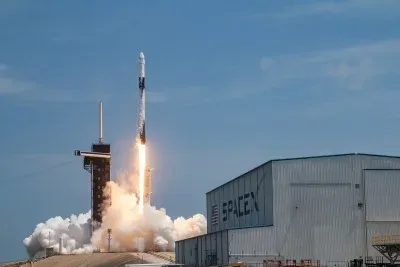
The Starship launch from Starbase, South Texas was automatically aborted when engines failed to ignite during the window opening at 6:45 pm ET .
Elon Musk confirmed on X that two Raptor engines will be replaced; the next attempt is expected early the following week.
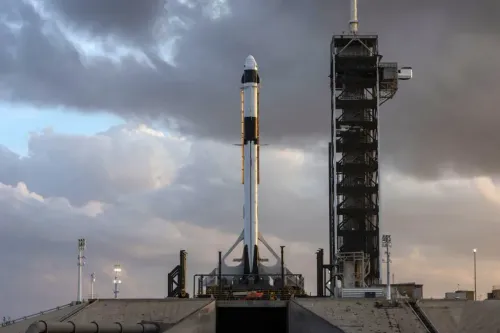
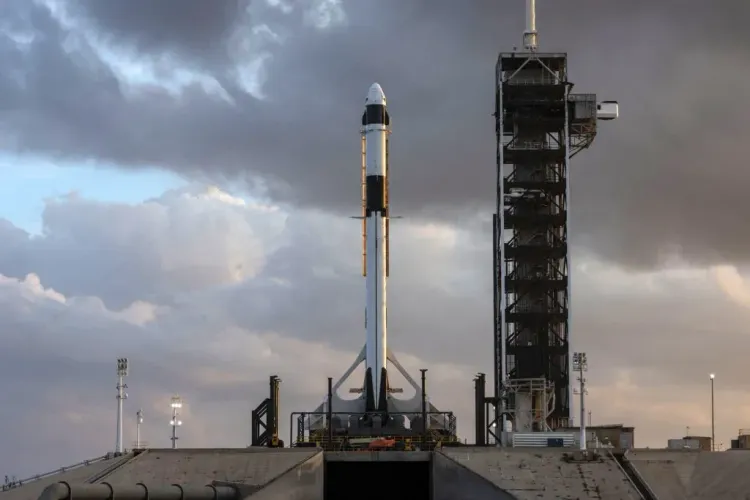
This was the 13th Starship test flight and the second for the upgraded V3 variant, which stands roughly 400 feet tall.
SpaceX shares closed below their initial public offering (IPO) price for the first time on 17 July, after the aerospace company aborted the planned launch of its Starship rocket, deepening a losing streak that has now stretched to five consecutive sessions since the stock's market debut.
The Stock's Slide
Shares settled at $131.11, a decline of 3.08% for the day, slipping beneath the IPO price of $135. The selling pressure intensified in after-hours trading, with the stock touching as low as $124 following news of the aborted launch. The decline extends a run that began shortly after SpaceX's 12 June listing — an event that raised approximately $86 billion and was widely reported as the largest IPO in history.
What Triggered the Abort
The Starship test flight — the 13th in the programme's history and the second for the upgraded V3 variant — was scheduled to lift off from SpaceX's Starbase facility in South Texas during a 90-minute launch window that opened at 6:45 pm ET on Thursday. Minutes into the window, the company announced it was 'standing down for the day' after the launch sequence was automatically aborted during engine ignition.
SpaceX chief executive Elon Musk later posted on X that the abort was triggered automatically when several engines failed to start. 'Some of the engines didn't start, triggering an automatic launch abort. Now offloading propellant. Next launch attempt hopefully in a few days,' Musk wrote. In a follow-up post, he said two Raptor engines would be removed and replaced, with the next attempt most likely early the following week.
Context: A Pattern of Engine Trouble
The abort is not an isolated setback. The previous V3 test flight in May achieved liftoff, but multiple engines on the rocket's lower stage failed to reignite, causing the vehicle to fall into the Gulf of Mexico before completing its mission. The Starship stands approximately 400 feet tall and is central to SpaceX's ambitions for deep-space travel and NASA's Artemis lunar programme.
Market Implications
For investors, the abort compounds concerns about execution risk at a company whose valuation was priced on ambitious launch cadences. The stock's breach of its IPO price within weeks of listing is a notable signal in a market that had greeted the debut with considerable enthusiasm. Analysts will now watch whether the next launch attempt — and its outcome — can stabilise sentiment, or whether further slippage below the IPO price accelerates institutional selling.
Point of View
Reliable launch cadences; two consecutive V3 flights with engine failures challenge that narrative directly. The deeper risk is that institutional investors who anchored at $135 may not wait for the next launch window to decide whether to cut exposure. If the next Starship attempt also encounters propulsion issues, the stock's floor becomes genuinely unclear, and the gap between SpaceX's valuation story and its engineering reality will be harder to paper over.
NationPress
16 Oct 2026
Frequently Asked Questions
Why did SpaceX shares fall below the IPO price?
SpaceX shares fell to $131.11 on 17 July, below the IPO price of $135, after the company aborted the planned Starship launch due to engine ignition failures. The drop marked the fifth straight losing session since the stock's 12 June debut.
What caused the Starship launch abort?
The launch was automatically aborted when several engines failed to start during the ignition sequence at the Starbase facility in South Texas. SpaceX CEO Elon Musk confirmed on X that two Raptor engines would be removed and replaced before the next attempt.
When is the next Starship launch attempt?
According to Elon Musk's post on X, the next launch attempt is most likely to take place early the following week, after two Raptor engines are removed and replaced.
How significant was the SpaceX IPO?
SpaceX's 12 June listing raised approximately $86 billion, making it widely reported as the largest IPO in history. The stock's fall below its $135 IPO price within weeks of debut has drawn significant market attention.
What happened on the previous Starship V3 test flight?
The previous V3 test flight in May achieved liftoff, but multiple engines on the rocket's lower stage failed to reignite, causing the vehicle to fall into the Gulf of Mexico before completing its mission — indicating a recurring propulsion challenge.