Tibetan Plateau instability to worsen floods and disasters, study warns

Synopsis
A peer-reviewed study in Nature Communications finds the Tibetan Plateau — Asia's water tower — is becoming dangerously unstable, with glacier melt and rising soil moisture set to trigger escalating geological disasters through 2100, threatening nearly two billion people across South and East Asia.
Key Takeaways
A study published on August 21 in Nature Communications warns the Tibetan Plateau is trending toward increasing environmental instability through the end of this century.
Lead author Chen Xiaosong of Beijing Normal University said intensifying glacier melt and rising soil water will 'constantly trigger' geological disasters from now to 2100 .
The research analysed the plateau's soil moisture system from 2000 to 2024 , a system linked to water and climate patterns affecting nearly two billion people across South and East Asia .
The findings were published days before a catastrophic flash flood hit the Nepal-China border , killing hundreds.
India is specifically identified as a nation that 'will definitely be affected', though country-level impact analysis is still ongoing.
Major river systems fed by the plateau — including those flowing through India , China , and Southeast Asia — face heightened long-term flood and disaster risk.
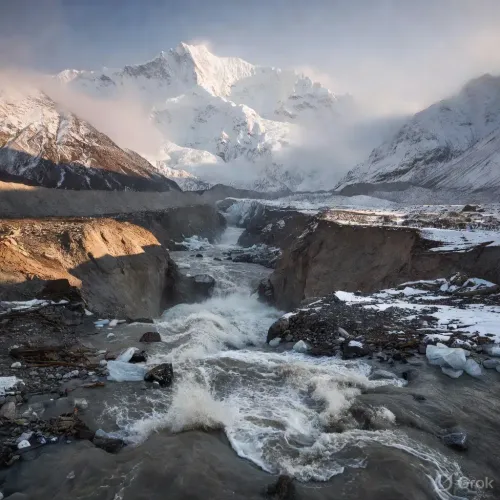
The Tibetan Plateau, long called Asia's water tower, is moving toward a more unpredictable and unstable future, according to a peer-reviewed study published on August 21 in Nature Communications. The research, led by scientists at Beijing Normal University, used entropy analysis to measure the accumulation of chaos and disorder within the plateau's complex environmental system — and the findings carry stark implications for nearly two billion people across South and East Asia.
What the research found
The study examined the plateau's soil moisture system from 2000 to 2024, a variable that is tightly coupled with water and climate patterns downstream. By quantifying entropy — a measure of disorder in complex systems — the research team tracked how the region's environmental stability has been eroding over time. The results point to a sustained and accelerating trend of instability through the end of this century.
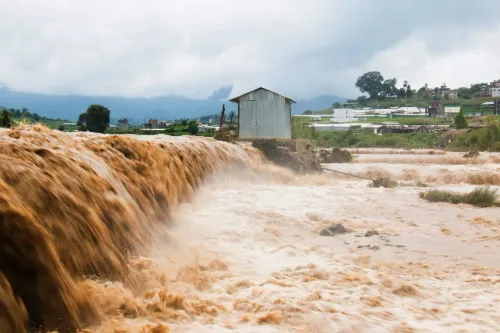
The findings were released just days before a catastrophic flash flood struck the Nepal-China border, killing hundreds and leaving widespread devastation in its wake — a grim real-world illustration of the risks the study had flagged.
Why it matters
Chen Xiaosong, a physicist at the school of systems science at Beijing Normal University and lead author of the study, said on Thursday that from now to the end of this century, 'the increase of soil water and the intensification of glacier melting [in the Tibetan Plateau] will constantly trigger such geological disasters.' The warning spans a broad geography: countries along the Himalayas face heightened exposure to floods, landslides, and related catastrophes.
India is among the nations most at risk. Chen stated that 'India will definitely be affected, but the specific impacts still require further analysis and research.' The plateau's water systems feed major river basins — including the Ganges, Brahmaputra, Yangtze, and Mekong — making its instability a transboundary crisis in the making.
The competitive backdrop
The Tibetan Plateau sits at the intersection of competing geopolitical interests, with China, India, and several Southeast Asian nations all dependent on its water flows. Climate-driven changes to the plateau's hydrology have already prompted disputes over dam construction and water diversion. A more volatile plateau adds scientific urgency to negotiations that have historically been driven by politics rather than data.
The study also arrives as climate variability linked to El Niño and La Niña cycles intensifies monsoon patterns across the region, compounding the instability documented by Chen's team. The interplay between the Walker circulation and plateau dynamics is an area researchers say requires further investigation.
What's next
The research team has called for deeper, region-specific modelling to quantify impacts on individual countries, particularly India. As glacier melt accelerates and soil saturation increases, early-warning infrastructure and cross-border disaster-response frameworks across the Himalayas will face their most serious stress test yet. Governments and international climate bodies will be watching whether this study accelerates multilateral action on plateau monitoring and flood preparedness.
Point of View
And data showing accelerating instability strengthens the scientific case for binding multilateral monitoring agreements that neither government has been eager to sign. The near-simultaneous Nepal-China border flash flood is not proof of the study's thesis, but it is a stark illustration of the human cost when early warnings go unheeded. As climate attribution science matures, the legal and diplomatic liability for downstream nations failing to act on credible plateau research will only grow.
NationPress
28 Aug 2026
Frequently Asked Questions
What did the Tibetan Plateau study in Nature Communications find?
The study, published on August 21 in Nature Communications , found that the Tibetan Plateau is becoming increasingly unstable, with rising soil moisture and accelerating glacier melt expected to trigger more frequent geological disasters through the end of this century. Researchers used entropy analysis to measure the build-up of disorder in the plateau's environmental system from 2000 to 2024 .
Why is the Tibetan Plateau called Asia's water tower?
The Tibetan Plateau is called Asia's water tower because its glaciers and soil moisture feed the headwaters of major river systems — including the Ganges, Brahmaputra, Yangtze, and Mekong — that sustain nearly two billion people across South and East Asia . Disruptions to the plateau's hydrology therefore have cascading effects on water security, agriculture, and disaster risk across the continent.
Will India be affected by Tibetan Plateau instability?
Yes. Lead researcher Chen Xiaosong of Beijing Normal University stated that ' India will definitely be affected', though he noted that specific impact assessments require further analysis. India is downstream of several major river systems originating on the plateau, making it highly exposed to increased flooding and glacial lake outburst events.
What was the Nepal-China border flash flood mentioned in the study's context?
A catastrophic flash flood struck the Nepal-China border just days after the study's publication on August 21 , killing hundreds and causing widespread devastation. While the flood was not directly cited as a result of the study's findings, its timing underscored the real-world risks that researchers had warned about.
Who led the Tibetan Plateau stability research?
Chen Xiaosong , a physicist at the school of systems science at Beijing Normal University , led the research team. The study examined entropy changes in the plateau's soil moisture system over a 24-year period from 2000 to 2024 and was published in the peer-reviewed journal Nature Communications .