Trump renames AI 'Superintelligence' at UN, rejects global regulation
Synopsis
At the UN General Assembly, Trump didn't just give a speech — he tried to rebrand a technology. Dropping 'artificial' for 'Superintelligence,' rejecting international AI governance as a 'globalist scheme,' and framing the AI race as a winner-takes-all contest with China, Trump's address signals a unilateral, nationalist turn in US technology policy with global consequences.
Key Takeaways
President Donald Trump announced on 22 September that the US will replace 'artificial intelligence' with 'Superintelligence' in all government documents.
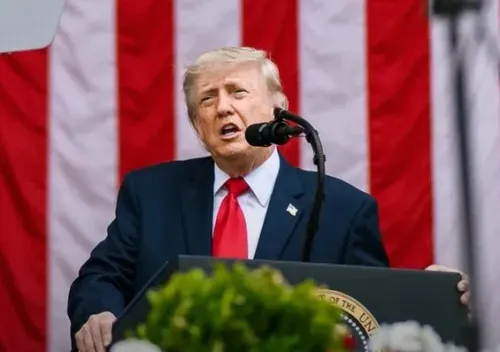
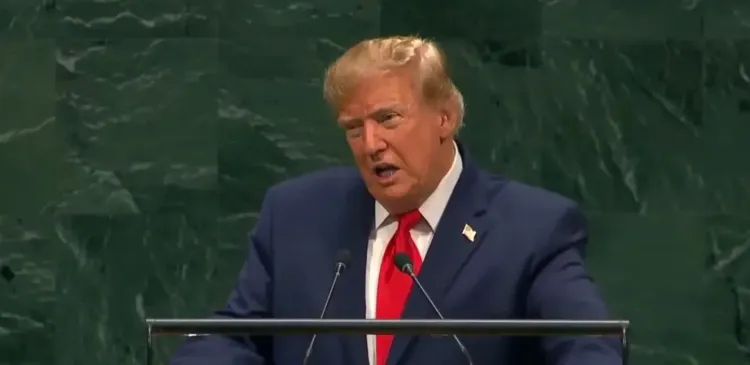
The declaration was made during Trump's address to the United Nations General Assembly in New York .
Trump rejected international AI governance frameworks, calling them a 'globalist scheme' to control the technology.
He dismissed existential-risk warnings about AI, comparing them to past climate-change predictions.
Trump framed the AI race as a geopolitical contest, claiming the US leads China 'by a lot' and pledging to maintain that advantage.
No executive order or agency directive has been issued; implementation details remain unspecified.
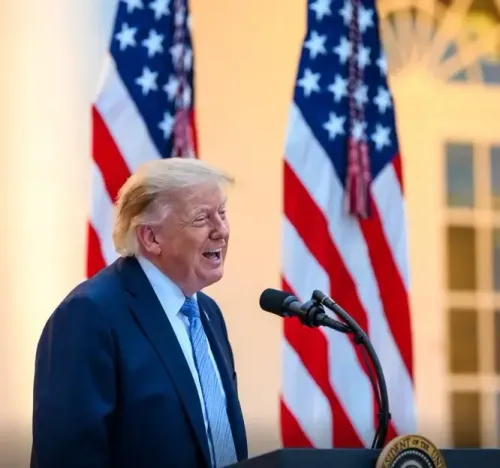
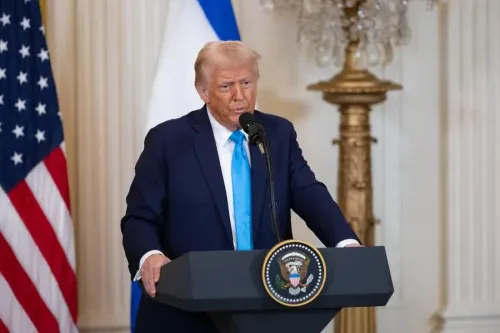
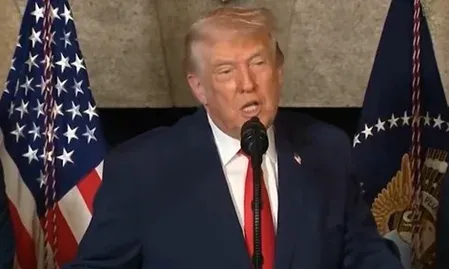
US President Donald Trump on Tuesday, 22 September declared that his administration would replace the term 'artificial intelligence' with 'Superintelligence' across all government documents, arguing that the word 'artificial' misleadingly implied the technology was fake. The announcement came during his address to the United Nations General Assembly in New York, where he also flatly rejected international efforts to govern AI development.
The Terminology Shift
Trump unveiled the rebranding in unambiguous terms, stating: 'From this point forward, all of United States documents, and hopefully the world's, will be changed to use the much more accurate term Super as opposed to Artificial.' He framed the shift as a correction of record, not a cosmetic change, adding: 'So, it's Superintelligence. In other words, welcome to the new world of Superintelligence-SI.'
Notably, Trump did not explain how the change would be implemented across federal agencies, whether it would require an executive order, or whether 'Superintelligence' would apply to all existing AI systems or only the most advanced frontier models. The practical scope of the directive thus remains unclear.
Rejection of Global AI Governance
In a sharp dig at multilateral frameworks, Trump dismissed proposals for an international AI regulatory body as a 'globalist scheme' designed to control the technology's development. 'The United States also totally rejects any attempt to construct a globalist scheme to control for the artificial intelligence being spoken of so much now,' he said, signalling that Washington intends to chart its own regulatory course.
This position places the US at odds with ongoing United Nations and European Union-led efforts to establish shared AI governance standards — a friction point that had already surfaced at the G20 and Bletchley Park AI Safety Summit in prior years.
Dismissing Existential Risk Warnings
Trump also pushed back against scientists and technologists who have cautioned that advanced AI systems could pose existential risks to humanity. He compared such warnings to earlier predictions about climate change, accusing their proponents of repeatedly stoking fear. 'Every major new technology brings challenges, and Superintelligence is no exception,' he said, while maintaining that the administration would use the Department of Justice and other law enforcement agencies to intervene when necessary — stopping short of pre-emptive regulatory curbs.
AI as Geopolitical Contest
Trump cast the race to dominate advanced AI as the defining geopolitical competition of the era, drawing an explicit link between technological leadership and global power. 'Whoever wins AI, you have to remember this. And now I say, whoever wins SI, whoever wins Superintelligence wins,' he said. He claimed the United States currently leads China and all other nations by a significant margin and vowed to preserve that edge. 'We're leading now over China by a lot and everyone else and we're going to keep it that way,' Trump said.
He also ruled out any restraints on AI's growth trajectory, comparing its potential impact to that of the Industrial Revolution and the internet. 'I'm not going to stifle growth of something that will be bigger than the Industrial Revolution,' he added.
What Happens Next
The administration has yet to issue any executive order or agency directive formalising the terminology change, and no timeline has been provided. Observers will watch whether major federal departments — including the Department of Defense, National Security Agency, and White House Office of Science and Technology Policy — adopt 'Superintelligence' in official communications, or whether the declaration remains rhetorical. Internationally, no country has indicated it will follow Washington's lead on the rebrand.
Point of View
On its own, largely symbolic — but the policy signals around it are anything but. By rejecting multilateral governance at the UN podium, Trump is explicitly choosing a unilateral technology posture at the precise moment when AI's societal stakes are highest. The irony is that the US regulatory vacuum he is reinforcing could ultimately benefit the very Chinese competitors he claims to be outpacing. And without a credible domestic framework — the DOJ pledge is vague at best — the 'Superintelligence' rebrand risks being remembered as a rhetorical flourish that preceded, rather than prevented, the next AI governance crisis.
NationPress
23 Sept 2026
Frequently Asked Questions
Why did Trump rename artificial intelligence 'Superintelligence'?
Trump argued that the word 'artificial' inaccurately implied the technology was fake or simulated, and that 'Superintelligence' was a more accurate label for what he described as a real and potentially transformative force. He made the declaration at the UN General Assembly on 22 September.
Will other countries adopt the term 'Superintelligence'?
Trump expressed hope that other nations would follow Washington's lead, but no country has indicated it will do so. The announcement was made at the UN General Assembly, where the US also rejected international frameworks for AI governance.
What is Trump's position on regulating AI internationally?
Trump flatly rejected any multilateral AI regulatory framework, describing such proposals as a 'globalist scheme' to control the technology's development. This puts the US at odds with ongoing UN and EU-led AI governance efforts.
How does Trump view the AI competition with China?
Trump framed AI — or 'Superintelligence' as he now calls it — as the defining geopolitical contest of the era, claiming the US leads China by a significant margin. He said 'whoever wins Superintelligence wins,' and pledged to preserve America's technological edge.
Has the US government officially adopted the term 'Superintelligence' yet?
As of 22 September, no executive order or agency directive has been issued to formalise the change. Trump did not specify how the terminology shift would be implemented across federal departments or whether it would cover all AI systems or only advanced models.