US rejects global AI governance, backs 'innovation sovereignty' model
Synopsis
The Trump administration has drawn a clear line in the sand: no global AI governance body, no state-directed supply chains, and no UN oversight of artificial intelligence. By rallying 20-plus countries around its 'innovation sovereignty' doctrine at the Pax Silica Summit, Washington is actively building a rival bloc to multilateral AI regulation — setting up a governance fault line that could define the next decade of tech geopolitics.
Key Takeaways
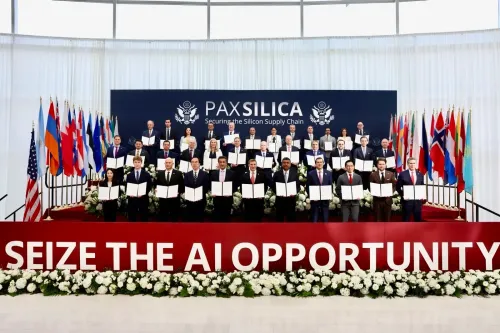
The Trump administration rejected global AI governance frameworks at the second Pax Silica Summit in Washington on 25 June .
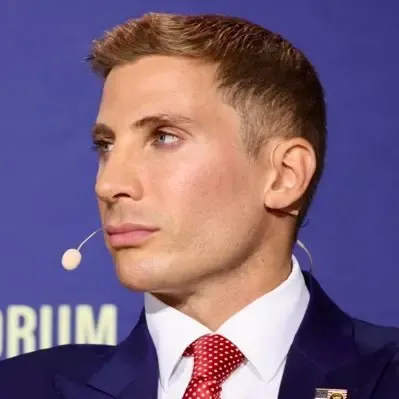
Under Secretary Jacob Helberg unveiled the Declaration on AI Opportunity , promoting 'innovation sovereignty' over restrictive regulation.
Deputy Secretary Christopher Landau explicitly criticised AI governance efforts at the United Nations and the World Artificial Intelligence Cooperation Organisation .
More than 20 countries now support the US-led AI Opportunity initiative.
The US position frames private enterprise and free-market partnerships — not multilateral bodies — as the rightful architects of AI's future.
The Trump administration on Thursday, 25 June formally rejected international efforts to establish a global governance framework for artificial intelligence, unveiling instead a doctrine it calls 'innovation sovereignty' — a free-market alternative to multilateral AI oversight. The announcement was made at the second Pax Silica Summit in Washington, where senior US officials introduced the Declaration on AI Opportunity and rallied more than 20 countries to its banner.
The Declaration on AI Opportunity
Under Secretary of State for Economic Growth, Energy, and the Environment Jacob Helberg unveiled the declaration, arguing that governments must reframe their relationship with AI. 'The declaration reflects a simple but important idea. Governments should not approach AI primarily through the lens of restriction. We should approach it through the lens of opportunity,' Helberg said.
He drew a sharp distinction between what he termed 'digital sovereignty' — the pursuit of end-to-end national control over technology supply chains — and the US-preferred concept of innovation sovereignty. 'The real measure of sovereignty in the AI age is not the ability to recreate yesterday's technologies. It's not even the ability to recreate today's technologies. It is the ability to contribute to tomorrow's breakthroughs,' he said.
Washington's Case Against Global AI Oversight
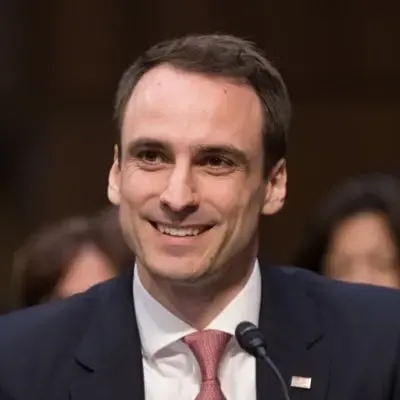
Deputy Secretary of State Christopher Landau went further, directly targeting multilateral bodies. 'We must dispel the myth of AI global governance developing in organisations like the United Nations and the so-called World Artificial Intelligence Cooperation Organisation,' Landau said.
Landau credited the private sector — not governments — with driving US technological leadership. 'The United States is a free market capitalist nation. Our strength comes from the freedom of free people and the most dynamic private sector the world has ever produced,' he said, adding that 'governments didn't build the frontier of technology here. Our companies did.'
He argued that when the US partners with like-minded free-market nations, 'no state-directed rival can keep pace' — a framing widely read as a pointed reference to China's state-led AI model.
What 'Innovation Sovereignty' Means in Practice
According to Helberg, innovation sovereignty means creating conditions 'for entrepreneurs to build, for researchers to discover, companies to invest, workers to thrive, and trusted partners to specialise, collaborate, and compete together at the technological frontier.' The concept underpins both the AI Opportunity Declaration and the broader Pax Silica initiative, which he described as 'an ecosystems-based vision.'
Notably, the initiative explicitly promotes partnership over self-sufficiency — a direct counter to industrial policy trends in the European Union, China, and several emerging economies that have pursued varying degrees of domestic AI stack control.
Strategic Context and What Comes Next
Artificial intelligence has become a central axis of great-power competition, with governments worldwide investing heavily in computing infrastructure, semiconductor manufacturing, energy capacity, and critical minerals. Policymakers increasingly treat AI leadership as a determinant of economic growth, military capability, and national security.
The US position — consolidating a coalition of more than 20 countries around a pro-innovation, anti-regulatory framework — marks a significant counter-move to UN-led and multilateral AI governance efforts that have gained traction in Europe and parts of the Global South. How India and other major emerging economies respond to the Pax Silica framework will be closely watched in the months ahead.
Point of View
' the Trump administration is not merely opting out of multilateralism — it is actively delegitimising it. The 20-country coalition is the real story: if it holds, it fractures the global AI governance conversation into two competing blocs, one market-led and US-anchored, the other regulatory and increasingly EU- or China-adjacent. For countries like India, which straddle both camps, the pressure to pick a lane is about to intensify.
NationPress
24 Sept 2026
Frequently Asked Questions
What did the US announce at the Pax Silica Summit on 25 June?
The Trump administration unveiled the Declaration on AI Opportunity at the second Pax Silica Summit in Washington, rejecting global AI governance frameworks and promoting a doctrine of 'innovation sovereignty' through free-market partnerships. More than 20 countries were reported to be backing the initiative.
What is 'innovation sovereignty' as defined by the US?
Under Secretary Jacob Helberg described innovation sovereignty as creating conditions for entrepreneurs, researchers, companies, and workers to advance AI at the technological frontier through trusted international partnerships — as opposed to building every layer of the technology supply chain within national borders.
Which global bodies did the US criticise?
Deputy Secretary Christopher Landau specifically called out the United Nations and the World Artificial Intelligence Cooperation Organisation, urging countries to reject what he called the 'myth' of AI global governance developing in those institutions.
How does the US position differ from the EU or China's approach?
The US explicitly opposes both state-directed AI development (associated with China) and multilateral regulatory frameworks (associated with the EU's AI Act and UN-led processes). Washington instead favours a coalition of free-market economies collaborating without centralised oversight.
Why does this matter for countries like India?
India engages with both US-aligned technology partnerships and multilateral forums, making the emerging split in global AI governance directly relevant to its strategic choices. As Washington consolidates a rival bloc to UN-led oversight, emerging economies will face growing pressure to align with one framework or the other.