Should We Take Associate Nations Lightly in T20 WC? Rajput Questions
Synopsis
UAE head coach Lalchand Rajput urges the cricket world to recognize the talent of associate nations showcased in the 2026 Men's T20 World Cup. He advocates for greater support and opportunities for these teams to thrive on the global stage.
Key Takeaways
Associate nations are proving their worth on the international cricket stage.
Increased match exposure is crucial for their development.
ILT20 is vital for talent growth in UAE cricket.
Training facilities play a significant role in player performance.
Recognition and support for these teams are essential for the sport's growth.
New Delhi, Feb 17 (NationPress) The head coach of the United Arab Emirates (UAE), Lalchand Rajput, has urged the cricketing community to pay attention to the achievements of associate nations in the 2026 Men's T20 World Cup. He emphasized that these teams have certainly earned their place on the international stage.
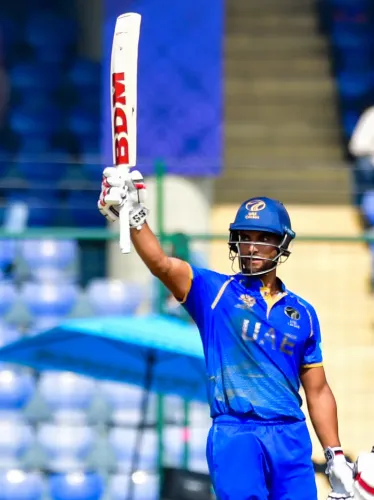
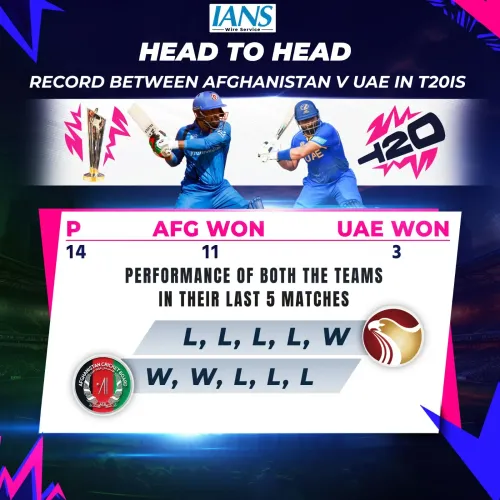
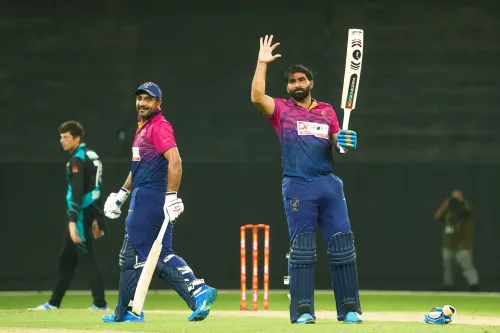
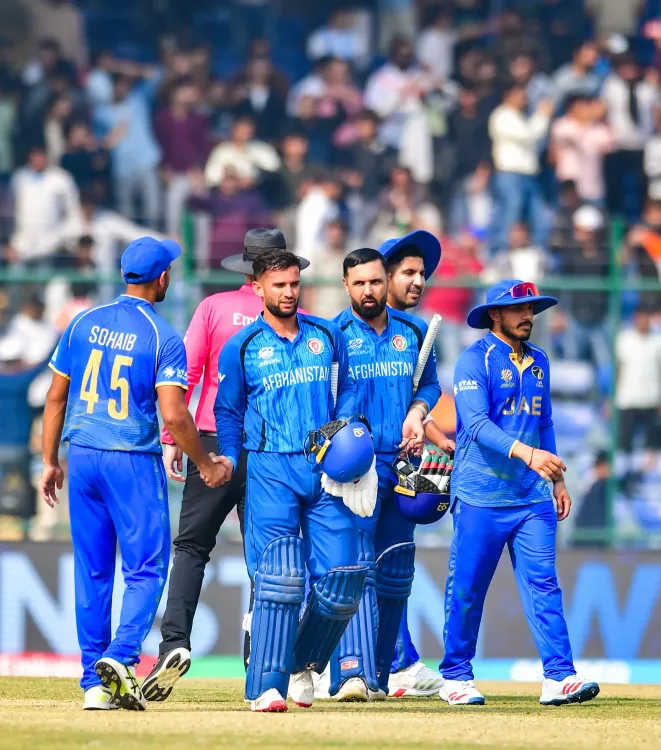
UAE will return home after their Group D match against South Africa at the Arun Jaitley Stadium on Wednesday, but they can take pride in their victory over Canada and their commendable performances against New Zealand and Afghanistan.
“I’m not surprised by the performances of associate teams as they consistently compete against one another and display their skills. This platform allows associate nations to showcase their abilities, and it's encouraging to see the growth of cricket globally,” Rajput stated during the pre-match press conference on Tuesday.
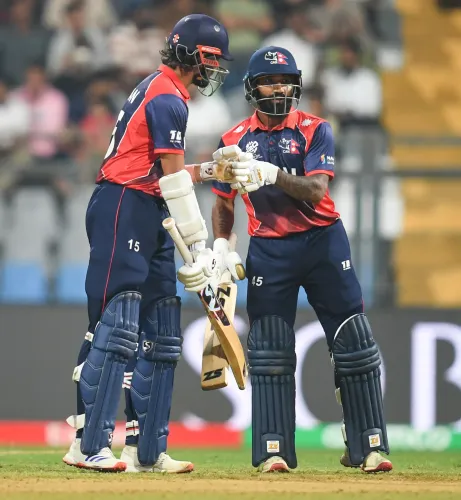
Other associate teams have also made headlines - Nepal nearly upset England, and the Netherlands came close to defeating Pakistan. The USA pushed both India and Pakistan to their limits, while Scotland challenged the West Indies and England. Italy achieved their inaugural T20 World Cup victory against Nepal and posed a threat to England with their bowling.
Despite their struggles, Canada, Namibia, and Oman have shown flashes of brilliance, albeit without any wins thus far. “The associate nations are signaling that they should not be underestimated. This tournament has featured closely contested matches, and I hope that next time we will see even better matchups with these teams coming in better prepared,” Rajput added.
The former opener for India, who managed the victorious 2007 Men’s T20 World Cup team, noted that no amount of practice can replicate the pressure of a live match, especially when a team is under stress or chasing a target.
“Yes, associate teams need more game time. Without match experience, they won't encounter those high-pressure situations. No matter how much they practice, situations like being 80-5 or needing 30 runs in the last two overs can only be felt during actual games.”
“The more matches they play against strong teams, and the more challenging situations they face – even if they win just 1 out of 5 games – it will build their confidence for future encounters,” he emphasized.
“It’s crucial to have more matches, and the ICC is working towards that by expanding this T20 World Cup to include 20 teams. This growth will encourage more associate nations to realize the opportunity to showcase their skills at the World Cup,” Rajput elaborated.
Following the T20 World Cup, the UAE will focus on qualifying for the 2027 Men’s ODI World Cup. Currently, they sit at the bottom of the World Cricket League 2 standings, trailing behind the USA.
“The calendar poses challenges for associate nations, as they play among themselves due to financial constraints related to TV rights and sponsorships primarily favoring the top 10 teams. This limits their opportunities for additional matches,” he explained.
“This World Cup will undoubtedly demonstrate that associate nations are capable of success, which should lead to increased funding and more match opportunities. We have about 16 games left to qualify for the ODI World Cup, and this qualification process spans two to three years.”
“In between, we also engage in T20 matches, but players can retire or face injuries, adding to our challenges. However, we are progressing, and I am confident that this tournament will motivate our players and encourage them to train harder, knowing that the world is watching,” Rajput stated.
“T20 is a format where complacency can be harmful. Any team can win on a given day, which allows players to exhibit fearless cricket, a style that many associate nations embrace. T20 is a favored format for most players, while 50-over matches are more demanding.”
“As I mentioned, Test-playing nations engage in various three-day and four-day domestic matches. This poses a challenge for players who need to adapt to batting for longer periods. We are working to address this,” Rajput remarked.
“In the UAE, I initiated red-ball cricket for two days, as players were primarily accustomed to T10 and T20 formats, helping them learn to play longer innings.”
“In T20, they only get 120 balls, so the top batsmen play aggressively. In a 50-over format, players need to withstand early wickets and adapt to batting for 20 or 30 overs.”
Asked about the appeal of T20 cricket for associate nations, Rajput articulated why the shorter format suits teams lacking deep domestic infrastructure. He mentioned that he introduced red-ball cricket to a group more familiar with T10 and T20 formats as the UAE head coach.
“The lack of two-day or three-day formats is a gap we need to fill for better performance in the 50-over format. We're striving to incorporate two-day matches into our domestic circuit to help players learn to build substantial innings.”
“Even bowlers who play T20 and T10 must adjust to bowling ten overs in a 50-over game, which is quite different from bowling four overs.”
Rajput also acknowledged the pivotal role of the UAE-based ILT20 in developing talent for the national team, underscoring how the ICC Academy facilities have benefitted the squad.
“The ILT20 has significantly aided UAE players by allowing them to compete alongside top players, and it’s only three years old. Players like Waseem, Alishan, Haider Ali, and Junaid have all emerged as products of ILT20, boosting their confidence as they face higher-quality opposition.”
“We have excellent training facilities, ensuring that players remain motivated to perform at their best,” he concluded.
Point of View
We believe that the performances of associate nations in the 2026 Men's T20 World Cup highlight the growing competitiveness in cricket. This shift calls for increased recognition and support for these teams, ensuring that they continue to develop and enhance the sport on a global level.
NationPress
4 Oct 2026
Frequently Asked Questions
Why are associate nations important in T20 cricket?
Associate nations bring diversity and competitiveness to T20 cricket, showcasing emerging talent and expanding the game's global appeal.
What challenges do associate nations face in international cricket?
Associate nations often struggle with limited funding, fewer opportunities for matches, and the need for more match experience against stronger teams.
How does the ILT20 impact UAE cricket?
The ILT20 provides UAE players with valuable experience and exposure by competing alongside top international talent, enhancing their skills and confidence.
What is the significance of the ICC Academy for UAE players?
The ICC Academy offers excellent training facilities that help UAE players hone their skills and prepare for high-level competition.
How can associate nations improve their performance?
Associate nations can enhance their performance by increasing match exposure, focusing on long-format games, and fostering competitive environments.