Cricket Australia Confirms Day-Night Test for 2029-30 Ashes Series

Synopsis
Cricket Australia's CEO Todd Greenberg reiterates the commitment to host a day-night Test in the upcoming 2029-30 men's Ashes series, despite doubts raised by England's Joe Root. The format aims to enhance viewership and maintain tradition in Test cricket.
Key Takeaways
Cricket Australia plans to include a day-night Test in the 2029-30 Ashes series.
Todd Greenberg confirmed no formal request from England to drop the format.
The pink-ball Test has proven successful in engaging audiences.
Current broadcasting agreements necessitate at least one pink-ball Test each summer.
The historic 150th Test between Australia and England will also be played under lights.
New Delhi, March 11 (NationPress) The CEO of Cricket Australia (CA), Todd Greenberg, has confirmed the organization's plan to incorporate a day-night Test into the 2029–30 men's Ashes series, countering recent speculation that the match had been excluded.
In the latest Ashes series hosted in Australia, a day-night Test took place in Brisbane, leading to an impressive eight-wicket win for the home side. England's performance in such matches on Australian grounds has been dismal; they have participated in four pink-ball Tests, suffering defeats in each by considerable margins. Earlier this season, England's Joe Root even expressed doubts about the necessity of including a day-night Test in the Ashes, given the high level of interest typically surrounding this historic rivalry.
Amidst this discussion, CA's chief executive, Todd Greenberg, clarified that no formal request had been made by England to eliminate the day-night format from the series.
"They haven't asked for its removal. Thankfully, our next encounter isn't until 2029, giving me some time to resolve this matter. It is part of our broadcasting contracts, and it plays a significant role in our summer cricket calendar (and) has proven successful in this country," Greenberg stated during an interview on SEN radio.
"We have demonstrated its success in Adelaide. It certainly proved effective last year in Brisbane. Our intention is to maintain at least one pink-ball Test each summer. If we need to collaborate with our colleagues at the ECB to facilitate better preparation or practice matches, we will engage in that dialogue when necessary," he added.
The current broadcasting agreement of the governing body, which extends through 2031, mandates at least one pink-ball Test every summer in Australia. These matches consistently attract large television audiences, cementing their status as a pivotal aspect of the domestic Test schedule.
When asked if England should brace themselves for another pink-ball Test on their upcoming Ashes tour to Australia, Greenberg made the board's stance clear, asserting, "That is certainly our expectation, yes."
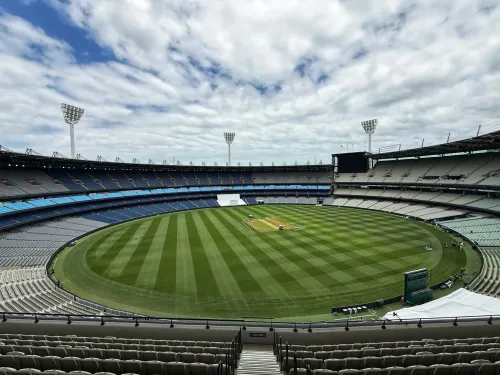
Greenberg shared these thoughts as he marked the countdown to the 150th anniversary Test between Australia and England, which is set to occur next March at the Melbourne Cricket Ground. This historic match will also feature the pink ball.
Interest in this event has already been substantial. Cricket Australia has initiated its first-ever ticket ballot for the occasion and anticipates crowds of over 90,000 in attendance during the first three days. Despite some critics questioning the choice to celebrate such a landmark with a day-night Test, Greenberg believes that this format will enhance, rather than detract from, the event's allure.
"The ticket sales convey a powerful message that people are eager to attend. The timing is favorable for viewers in England as well. Since it isn't school holidays at that time, I hope families can finish their school day and leave work early to make it to the venue," he noted.
"This also serves as a tribute to the 150 years of Test matches between Australia and England, and we must continue to challenge ourselves and adapt. I am not suggesting that every Test match should be a pink-ball game, but pink balls certainly have their place in this country. Anyone opposed to this format needs to consider that we could have double the viewership during a specific session compared to normal, and that is something we cannot ignore," Greenberg concluded.
Point of View
Cricket Australia's commitment to the day-night Test format signifies an evolution in the Ashes series. The governing body is keen on maintaining audience engagement while respecting traditions in cricket. The dialogue with the ECB shows a willingness to collaborate, reflecting a balanced approach to modernizing the game without alienating traditionalists.
NationPress
6 Oct 2026
Frequently Asked Questions
What is the significance of the pink-ball Test?
The pink-ball Test format has been designed to attract larger audiences and enhance viewing experiences, particularly in terms of broadcast timing for international viewers.
Why was the day-night Test debated?
England's Joe Root questioned the necessity of a day-night Test during the Ashes due to the high interest traditionally associated with the series, prompting discussions on the format's relevance.
When is the next Ashes series scheduled?
The next Ashes series is scheduled for the 2029-30 season, with a day-night Test planned as part of the fixtures.
How has the pink-ball Test performed in Australia?
The pink-ball Test has consistently drawn strong television audiences, with successful matches held in cities like Adelaide and Brisbane, enhancing its reputation.
What is the future of pink-ball Tests in Australia?
Cricket Australia intends to continue hosting at least one pink-ball Test each summer, as per their broadcasting agreements.