India U15 footballers impress at FIFA festival in Baku, veteran coaches back long-term push
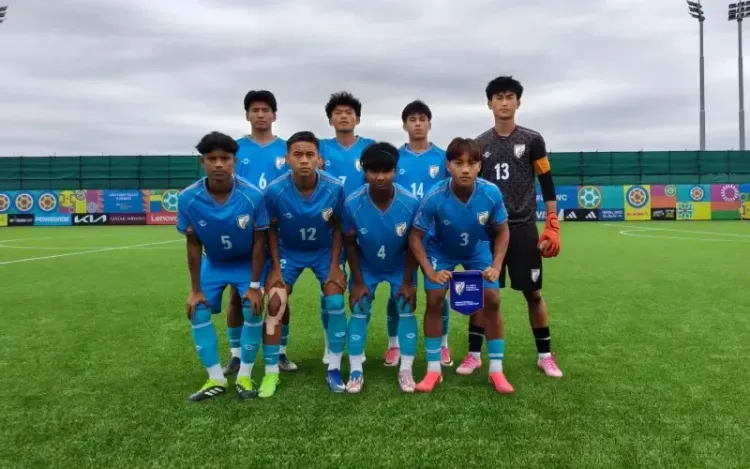
Synopsis
India's Under-15 footballers have turned heads at the inaugural FIFA U15 World Cup & Festival in Baku — winning four of seven matches and earning rare praise from veterans like Shabbir Ali, Sanjoy Sen, Sankarlal Chakraborty and Armando Colaco. The bigger message from these coaches: the talent is visible, but 30-to-40-match seasons and coaching continuity under Bibiano Fernandes are non-negotiable if this moment is to mean anything long-term.
Key Takeaways
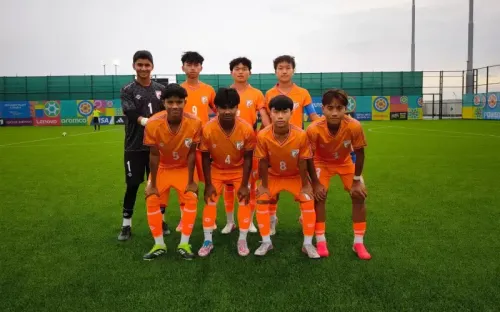
India's U15 Blue Colts have played 7 matches at the inaugural FIFA U15 World Cup & Festival in Baku, Azerbaijan .
Under coach Bibiano Fernandes , India won four matches — against Laos , Cameroon , Bahrain , and Trinidad and Tobago — drew one and lost two.
They finished third in Group K and are now competing in Tier C of the tournament phase; next opponents are Afghanistan .
Veteran coaches Shabbir Ali , Sanjoy Sen , Sankarlal Chakraborty , and Armando Colaco praised the team's performance and Fernandes' coaching.
Sanjoy Sen urged that players compete in 30 to 40 matches per season for sustained mental and technical growth.
Armando Colaco called for coaching continuity, saying the squad 'must be kept for a longer period to get the best results in the future.'
India's Under-15 footballers have drawn widespread praise from veteran coaches after a promising run at the inaugural FIFA U15 World Cup & Festival in Baku, Azerbaijan, with experienced figures urging sustained development and competitive exposure to build on the gains made in October 2026.
India's Campaign at a Glance
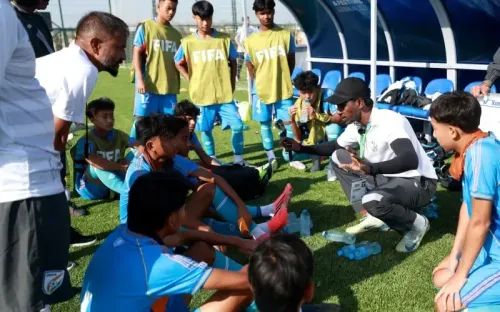
Played in an 8v8 format with two 20-minute halves, the festival is structured around development and exposure rather than the traditional 90-minute match. The Blue Colts, under head coach Bibiano Fernandes, competed in Group K and then the tournament phase, accumulating valuable international experience across seven matches.
India began the group stage with wins over Laos and Cameroon, drew with Grenada, defeated Bahrain, and then lost to Senegal. They finished third in Group K before advancing into Tier C of the tournament phase. In Tier C, they suffered a 1-2 defeat against Honduras, then bounced back with a 3-2 victory over Trinidad and Tobago. Their next fixture is against Afghanistan.
Veteran Coaches Weigh In
Former India coach Shabbir Ali was generous in his assessment, saying: 'Very good performance. We have to give credit to the coach as well as the players and support staff.'
Former national team coach Sanjoy Sen argued that the abbreviated format should not detract from the achievement. 'Whether it is 8v8, it doesn't matter, but our performance under Bibiano has been really good so far,' he said. Sen, however, stressed that meaningful progress depends on volume — he believes these players should ideally compete in 30 to 40 matches per season. 'When you play many matches, mentally you will be much more stronger, then you can face any challenges,' he explained.
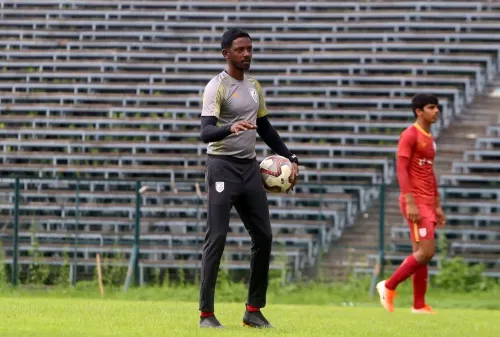
Veteran coach Sankarlal Chakraborty singled out Fernandes for praise, noting how the head coach 'controlled the kids and made them play football with a wonderful game plan in every single match.' Former Goa coach Armando Colaco added a note of caution alongside his praise, urging continuity by saying the boys under Bibiano 'must be kept for a longer period to get the best results in the future.'
Why This Experience Matters
The Baku festival represents a rare opportunity for Indian youth footballers to test themselves against peers from Africa, the Caribbean, South America, and Asia in a single tournament window. Notably, the development-focused format — shorter pitches, fewer players, condensed halves — is designed by FIFA specifically to accelerate technical skill acquisition at the junior level, making the exposure arguably more transferable than a conventional youth fixture.
This comes amid broader efforts by the All India Football Federation (AIFF) to strengthen the grassroots and youth pipeline, a priority that has gained urgency as India prepares to co-host the FIFA World Cup 2026 alongside the United States and Canada — and looks to build domestic momentum from that platform.
What Comes Next
Beyond the Afghanistan match, the more pressing question for Indian football stakeholders is whether the institutional support — coaching continuity, competitive calendars, and adequate match exposure — will follow through. The chorus from veteran coaches is clear: the talent is there, but it will need sustained nurturing well after the festival ends.
Point of View
But the veteran coaches quoted here are making a subtler and more important point: results at this level are secondary to the pipeline. India's recurring problem in football has not been identifying talent at age 15 — it has been failing to sustain that talent through adequate competitive exposure. Sen's call for 30-to-40 match seasons is essentially a critique of existing club and league structures for youth players. Unless the AIFF and state associations back that prescription with structural change — more youth league fixtures, coaching continuity as Colaco urges, and proper monitoring of player development — Baku will be another encouraging data point that does not compound into anything bigger.
NationPress
29 Oct 2026
Frequently Asked Questions
What is the FIFA U15 World Cup & Festival in Baku?
It is the inaugural FIFA Under-15 World Cup & Festival held in Baku, Azerbaijan , played in an 8v8 format with two 20-minute halves, designed specifically for youth development and international exposure rather than conventional competitive football.
How has India performed at the FIFA U15 festival in Baku?
India's Blue Colts, coached by Bibiano Fernandes , have played seven matches — winning four (Laos, Cameroon, Bahrain, Trinidad and Tobago), drawing one (Grenada), and losing two (Senegal, Honduras). They finished third in Group K and are competing in Tier C, with Afghanistan next.
What have veteran coaches said about India's U15 team?
Former India coaches Shabbir Ali , Sanjoy Sen , Sankarlal Chakraborty , and Armando Colaco all praised the team's performance and coach Bibiano Fernandes. Sen urged that players compete in 30 to 40 matches a season for proper development, while Colaco called for long-term coaching continuity.
Why is competitive match exposure so important for India's U15 players?
According to coach Sanjoy Sen, playing a high volume of matches — ideally 30 to 40 per season — builds the mental resilience needed to handle international challenges. Indian youth players historically have limited competitive fixtures, which restricts their development relative to peers from football-mature nations.
Who is Bibiano Fernandes?
Bibiano Fernandes is the head coach of India's Under-15 national football team. He has been widely praised by veteran coaches for his tactical preparation and player management at the Baku festival, with Armando Colaco specifically urging that he be retained for the long term to maximise development outcomes.