ISL shifts to club-led commercial model; home-away format returns in 2026-27
Synopsis
Indian football's power structure is shifting. The ISL's clubs are taking over commercial rights — broadcast and sponsorship — while the AIFF steps back to a regulatory role. With a full home-away season confirmed for 2026-27 and a broadcast RFP imminent, this is the most consequential restructuring in the league's history, and its success hinges entirely on what that broadcast deal delivers.
Key Takeaways
The AIFF and ISL Managing Committee announced a club-led commercial model on 8 July , transferring broadcast and sponsorship rights to the clubs.
The AIFF retains governance and regulatory oversight; clubs take charge of revenue generation.
A Request for Proposal (RFP) for a broadcast partner will be issued by the Managing Committee shortly.
The 2026-27 ISL season will feature a full home-and-away format, ending the truncated scheduling of recent editions.
The league calendar will align with FIFA international windows in September, October, November, and March, and accommodate AFC commitments of FC Goa and East Bengal .
The AIFF is writing to all 14 clubs to confirm participation in the upcoming season.
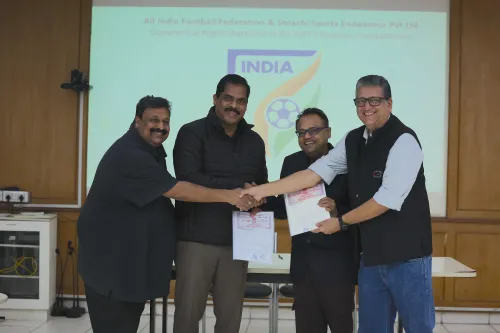
The All India Football Federation (AIFF) and the Indian Super League (ISL) Managing Committee on Wednesday, 8 July jointly announced a landmark restructuring of the league's operational framework, under which clubs will assume control of commercial rights — including broadcasting and sponsorship — while the AIFF retains governance and regulatory oversight. The announcement signals the most significant shift in ISL's administrative architecture since its inception.
The New Commercial Structure
Under the revamped model, the ISL Managing Committee will take charge of broadcast and sponsorship negotiations, effectively moving the league toward a club-ownership model for revenue generation. The AIFF, meanwhile, will continue to oversee governance, scheduling, and key operational matters.
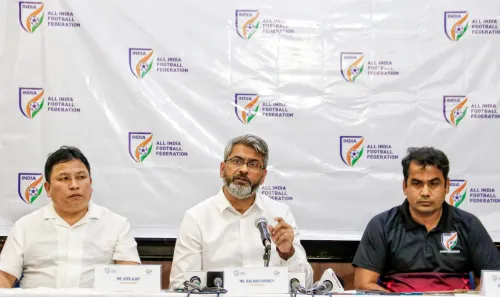
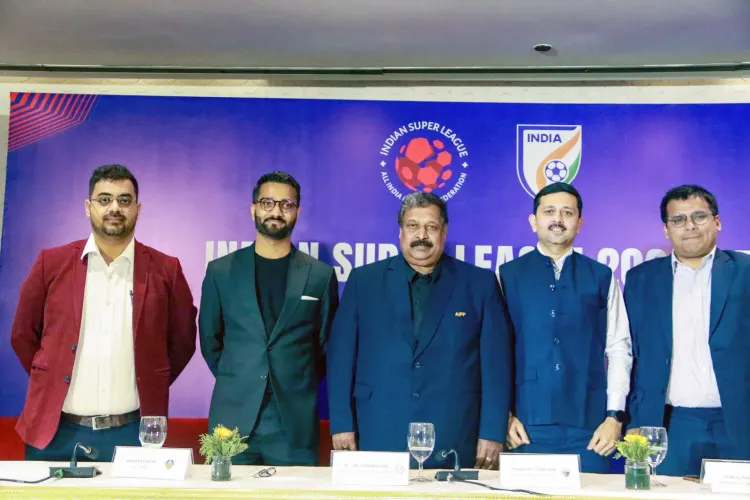
The joint press conference was attended by AIFF Deputy Secretary General M. Satyanarayan, Head of Competitions Akshay Rohatgi, FC Goa CEO Ravi Puskur, NorthEast United FC CEO Mandar Tamhane, and Sporting Club Delhi CEO Dhruv Sood.
'From our side, we are very committed to making this league one of the best in Asia. We are also keeping in mind the recent Supreme Court's order and the new National Sports Governance Act,' Satyanarayan said.
Why the Clubs Are Taking the Lead
NorthEast United FC CEO Mandar Tamhane explained the rationale, framing the shift as a long-term financial imperative. 'It will be a broadcast-driven model. We are moving towards a club-led model because both the clubs and the AIFF believe it is the right approach from the perspective of long-term commercial and financial sustainability,' he stated.
The Managing Committee will next issue a Request for Proposal (RFP) to appoint a broadcast partner and begin securing commercial sponsorships. The AIFF will simultaneously write to all 14 participating clubs to confirm their participation in the 2026-27 campaign.
Full Home-and-Away Format Returns
The 2026-27 ISL season will mark the return of a complete home-and-away league format, reversing the truncated scheduling that affected previous editions. FC Goa CEO Ravi Puskur welcomed the development: 'We will have a full-fledged season where every team will play their respective home and away games in a full quota rather than having to play a truncated format.'
The league calendar will be aligned with FIFA international match windows in September, October, November, and March, and will also accommodate the AFC club competition commitments of Indian representatives FC Goa and East Bengal.
National Team Access and Player Availability
Satyanarayan confirmed that discussions with clubs over player release periods for national duty are already underway. 'We have already had several rounds of discussions with the clubs and requested them to release players for a longer period for the 'National Interest.' The earlier we move forward with the process, the better we can plan the scheduling,' he said, adding that the joint club-AIFF governance model was expected to ease such coordination.
Stakeholder Backing and Early Signals
Sporting Club Delhi CEO Dhruv Sood, whose club is in its debut ISL campaign, noted that government support had already been forthcoming. 'In SC Delhi's first season, the Ministry did come forward and offered their full support to the league, with regard to the availability of stadiums. The AIFF also did their best to reduce the cost of the league,' he said.
This comes amid a broader regulatory backdrop, with the new National Sports Governance Act and a recent Supreme Court order shaping the context in which Indian football's stakeholders are recalibrating their structures. The broadcast RFP outcome and club confirmations in the coming weeks will be the first real test of the new model's commercial appeal.
Point of View
And the real question is whether 14 clubs, with divergent financial health and market sizes, can present a unified front to a broadcast partner. The RFP outcome will be the moment of truth. If the deal underdelivers, the governance gains of this restructuring will mean little.
NationPress
7 Oct 2026
Frequently Asked Questions
What is the new ISL club-led commercial model?
Under the new structure announced on 8 July, ISL clubs — through the Managing Committee — will control the league's broadcast and sponsorship rights, replacing the previous arrangement where the AIFF held greater commercial authority. The AIFF continues to oversee governance and regulatory matters.
When will the home-and-away format return to the ISL?
The full home-and-away format will return in the 2026-27 ISL season, with every team playing home and away fixtures across a complete schedule, ending the truncated formats used in recent editions.
What is the next step after this announcement?
The ISL Managing Committee will issue a Request for Proposal (RFP) to appoint a broadcast partner and begin securing commercial sponsorships. The AIFF will also write to all 14 clubs seeking confirmation of their participation in the 2026-27 season.
How does this affect the Indian national football team?
The AIFF has already begun discussions with clubs to secure longer player release windows for national duty. Officials expressed hope that the joint club-AIFF governance model would make such coordination easier going forward.
Which clubs and officials were present at the announcement?
The joint press conference featured AIFF Deputy Secretary General M. Satyanarayan, Head of Competitions Akshay Rohatgi, FC Goa CEO Ravi Puskur, NorthEast United FC CEO Mandar Tamhane, and Sporting Club Delhi CEO Dhruv Sood.