AIFF & ISL Clubs Chart Major Growth Roadmap with Genius Sports
Synopsis
The AIFF and ISL clubs met Genius Sports on April 23 to discuss a landmark commercial rights proposal featuring AI-driven officiating, a revenue-sharing model, and a roadmap to align Indian football with elite global leagues like the Premier League and Liga MX.
Key Takeaways
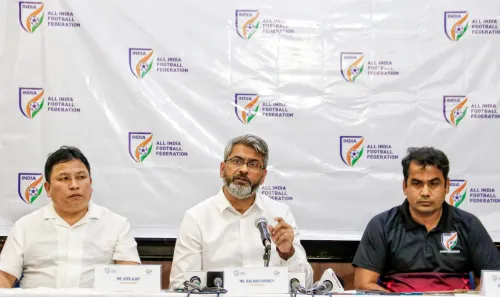
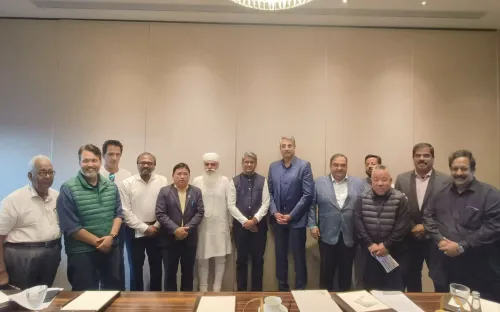
The AIFF held a meeting on April 23, 2025 in New Delhi with ISL club owners and Genius Sports to discuss commercial rights for the league.
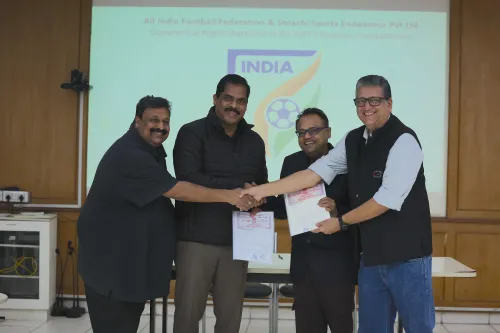
Genius Sports proposed a partnership integrating AI-driven officiating tools , data analytics, and digital platform upgrades for the ISL .
The company has existing partnerships with the Premier League , Nottingham Forest , Liga MX , and the LA Rams , lending credibility to its proposal.
A revenue-sharing model was proposed to ensure commercial growth benefits ISL clubs and is reinvested in the broader Indian football ecosystem.
Plans include improving production quality , strengthening club structures , and expanding the ISL's reach through structured international distribution .
No final agreement was reached; further negotiations between the AIFF , ISL clubs , and Genius Sports are expected to follow.
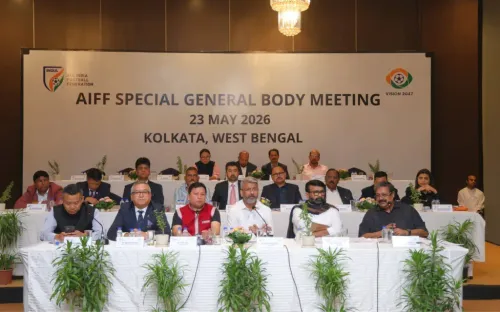
New Delhi, April 23: The All India Football Federation (AIFF) convened a high-stakes meeting on Thursday, April 23, bringing together owners and representatives of Indian Super League (ISL) clubs alongside global sports data company Genius Sports to evaluate a comprehensive proposal for the league's commercial rights — a move that could fundamentally reshape the future of professional football in India.
What Was Discussed at the AIFF-ISL Meeting
The central agenda revolved around a long-term strategic vision to transform the ISL into a globally competitive football property. Talks focused on commercial sustainability, deeper fan engagement, and structural upgrades that could bring Indian football closer to international standards.
Genius Sports presented a partnership-led framework that integrates technology, data analytics, and commercial expertise. The company drew comparisons with elite global competitions including the Premier League, Liga MX, the Belgian Pro League, Confederação Brasileira de Futebol (CBF), and the Swiss Football League — leagues where Genius Sports already has an operational footprint.
Technology and AI at the Core of ISL's Planned Upgrade
A defining highlight of the proposal was the role of artificial intelligence and advanced technology in strengthening the ISL's infrastructure. Genius Sports outlined scalable, AI-driven officiating tools designed to improve consistency and transparency in match operations — to be implemented in a phased and sustainable manner.
The company also referenced its proven track record across international sports ecosystems: officiating support for the Premier League, analytics partnerships with Nottingham Forest, and fan engagement innovations with the LA Rams. These capabilities, the AIFF noted in its official release, form the foundation for supporting Indian football's continued development.
Enhancements to digital platforms, production quality, and match operations were also central to the discussions, alongside plans to make the viewing experience more immersive and interactive for fans.
Revenue-Sharing Model and Commercial Sustainability
A proposed revenue-sharing model was a key element of the Genius Sports framework. The model is designed to ensure that future commercial growth directly benefits ISL clubs and is reinvested across the broader Indian football ecosystem — addressing long-standing concerns about financial disparity between clubs.
All parties at the meeting underscored the importance of a collaborative, long-term approach, which includes strengthening club structures and expanding the league's reach through more structured international distribution channels.
Why This Matters for Indian Football
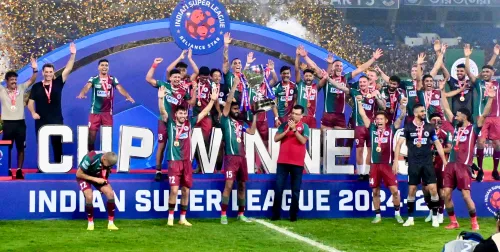
This meeting signals a critical inflection point for Indian football. The ISL, launched in 2014, has grown into the country's premier club competition but has often been critiqued for lagging behind Asian rivals in commercial value, global visibility, and officiating standards. A partnership with Genius Sports — which counts some of the world's most commercially successful leagues among its clients — could accelerate the ISL's maturation significantly.
Notably, Indian football's global ranking remains modest, and the AIFF has faced persistent pressure from FIFA and domestic stakeholders to professionalise league operations. This initiative, if executed effectively, could directly address those structural gaps.
The proposed framework also arrives at a time when Indian sports broadcasting and digital rights are seeing unprecedented commercial interest, making the timing of a robust commercial rights deal particularly significant.
What Happens Next
While no final agreement was announced following the April 23 meeting, all stakeholders expressed commitment to a collaborative path forward. The AIFF and ISL clubs are expected to continue deliberations with Genius Sports as the proposal moves through further evaluation. The outcome of these negotiations could set a landmark precedent for how Indian sports leagues structure their commercial and technology partnerships in the years ahead.
Point of View
A decade into its existence, still lacks the structural and technological backbone of a mature football league. The involvement of a company that services the Premier League and CBF raises genuine expectations, but Indian football has seen ambitious roadmaps before that stalled in execution. The real test will be whether the proposed revenue-sharing model genuinely empowers smaller clubs or merely consolidates influence at the top. If the AIFF can hold all stakeholders accountable to this framework, it could mark the ISL's true coming-of-age moment.
NationPress
24 Oct 2026
Frequently Asked Questions
What was the AIFF and ISL meeting on April 23 about?
The AIFF convened a meeting with ISL club owners and Genius Sports on April 23 to review a proposal for the league's commercial rights. Discussions centred on technology integration, AI officiating tools, fan engagement, and a long-term revenue-sharing model.
Who is Genius Sports and what is their role in the ISL?
Genius Sports is a global sports data and technology company that works with leagues like the Premier League, Liga MX, and the Belgian Pro League. They have proposed a partnership with the AIFF to modernise the ISL through data, AI, and commercial expertise.
What is the revenue-sharing model proposed for the ISL?
Genius Sports proposed a revenue-sharing framework designed to ensure that commercial growth from the ISL directly benefits clubs and is reinvested across the wider Indian football ecosystem. Specific financial terms have not yet been publicly disclosed.
How will AI be used in Indian Super League matches?
The proposal includes scalable, AI-driven officiating tools aimed at improving consistency and transparency in match decisions. These tools are planned to be introduced in a phased and sustainable manner across ISL operations.
What is the current status of the AIFF-Genius Sports deal?
No final agreement was announced after the April 23 meeting. All parties expressed commitment to a collaborative long-term approach, and further deliberations are expected before any formal deal is concluded.