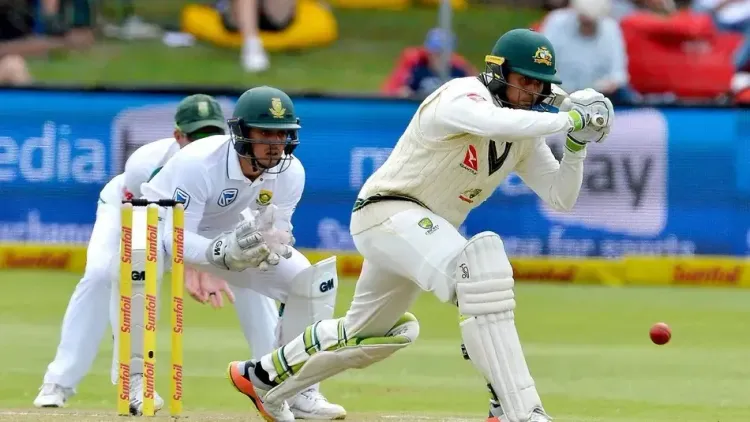
Khawaja reveals Australia used sandpaper in Port Elizabeth Test before Cape Town
Synopsis
Usman Khawaja's autobiography doesn't just revisit Cape Town — it goes a Test earlier. He reveals Australia used sandpaper in Port Elizabeth before the scandal broke, describes the huddle moment where a bowler said 'it's silly how much it's going,' and extends the admission to the 2017-18 Ashes. The question now: how much was known, and by whom?
Key Takeaways
Usman Khawaja revealed in his autobiography Sabr , released Tuesday , that Australia used sandpaper on the ball during the Port Elizabeth Test against South Africa in 2018 — a match before the Cape Town scandal .
Cameron Bancroft reportedly worked on the ball during the interval, producing reverse swing that helped Australia take four wickets for 28 runs in a single session.
Despite the doctored ball, Australia lost the match after AB de Villiers scored an unbeaten 126 off 146 and South Africa won by six wickets .
Khawaja also alleges ball manipulation during the 2017-18 Ashes in the Perth and Adelaide Tests.
Cricket Australia's post-Cape Town inquiry named Bancroft , Warner , and Smith ; Khawaja was not interviewed.
Then-coach Darren Lehmann reportedly advised Khawaja against speaking out, saying it would only 'make things worse.'
Former Australia batter Usman Khawaja has disclosed in his autobiography that the Australian team used sandpaper to alter the condition of the ball during the 2018 Test against South Africa in Port Elizabeth — a revelation that places the ball-tampering practice a match earlier than the infamous Cape Town scandal that resulted in bans for three players. The book, titled Sabr, was released on Tuesday.
What Khawaja Revealed About Port Elizabeth
Khawaja's account centres on the second Test at St George's Park, where Cameron Bancroft reportedly worked on the ball during the interval between sessions. According to Khawaja, Bancroft picked up the ball left on the field by umpires and prepared it before the players returned.
Writing in Sabr, Khawaja described the result vividly: 'The next session, we absolutely went through the South Africans. Bangers had walked onto the field after the break, picked up the ball that the umpires had left on the field, and given it a few twists and turns. The ball came up a treat. The shiny side was shiny and, thanks to sandpaper, the reverse side was really rough and dry.'
He added: 'Every time during the session the ball was passed to me at gully, I'd take a look and think, Wow, even I could reverse swing this ball.. It was ridiculous. The bowlers then went to work and bowled beautifully. Reversing it around corners. We got four wickets for 28 runs.'
South Africa had begun that session at 153 for two, with Dean Elgar and Hashim Amla building an 88-run partnership. The hosts eventually collapsed to lose four wickets for 28 runs in the final session of the second day — a dramatic shift Khawaja directly attributes to the doctored ball.
The 'Don't Do Anything Else' Huddle Moment
Khawaja recounts a telling exchange within the team huddle after a wicket fell: 'Guys, it's going heaps now. Just don't do anything else to it, because it's silly how much it's going,' a bowler reportedly said. Khawaja noted that most of the team laughed, adding that no further tampering was planned — the ball had already been doctored immediately after the break.
The former opener also recalled cautioning Bancroft about the level of scrutiny at international level, telling him 'this isn't Shield cricket' given the number of cameras covering the match.
AB de Villiers and Australia's Eventual Defeat
Despite the ball-tampering, Australia did not win the match. AB de Villiers produced an unbeaten 126 off 146 deliveries to help South Africa recover and build a match-winning lead. Khawaja described the innings as 'one of the great innings' and 'epic to watch, especially with how much reverse swing we were getting.'
Australia were bowled out for 239 in their second innings, with South Africa completing a six-wicket victory. Notably, South Africa's own bowlers generated reverse swing during the chase — reportedly after just 21 overs, compared to the 40 to 50 overs Australia had typically needed without tampering.
Khawaja wrote pointedly: 'In our second innings, their bowlers were reverse swinging it everywhere, and it started after about 21 overs. We didn't know what they were doing with the ball — all we knew was that they were better than us at getting it to go reverse. And we were using sandpaper!'
Fallout from Cape Town and the Internal Friction
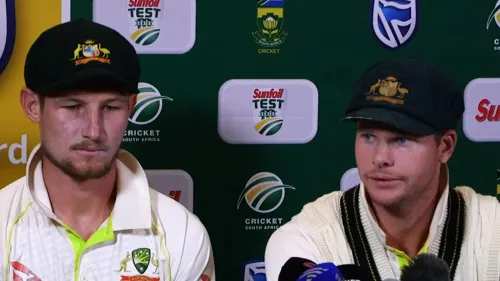
Khawaja's autobiography also revisits the aftermath of the Cape Town scandal, in which Cricket Australia's investigation identified Bancroft, David Warner, and Steven Smith as the three players with prior knowledge. Khawaja himself was not interviewed as part of that inquiry.
He recalled frustration when a bowler appeared on The Back Page TV show and flatly denied knowing anything about the ball-tampering. Khawaja wrote that Warner was 'seething' and texted him the clip.
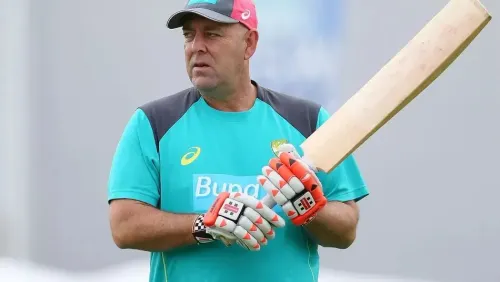
Khawaja also described approaching then-head coach Darren Lehmann at the hotel pool before the final Johannesburg Test, considering whether to speak publicly after the suspensions had been imposed. Lehmann reportedly told him: 'Uzzy, unfortunately, this affects everyone, mate, not just you. You can come out and say all this stuff, but will it really help anything? The punishments have already been handed down. If anything, it would only make things worse.'
Lehmann, who resigned before the Johannesburg Test, later said he had no recollection of Khawaja's dressing-room plea in Cape Town for the team to accept collective responsibility — though reports indicate he was not asked about the separate conversation at the hotel.
The 2017-18 Ashes Disclosures
Khawaja's revelations extend to the 2017-18 Ashes series, where he describes Australia working on the ball during the Perth and Adelaide Tests. He writes that the team discovered raising the flaps on the quarter seam of the pink ball created a 'rudder' effect that induced reverse swing — a technique he frames with the broader caveat: 'The whole world was doing whatever little they could to try and reverse swing the ball.'
The disclosures in Sabr add significant context to what was previously understood about Australia's ball-management practices across the 2017-18 season, raising questions about how widespread and systematic the approach was. With Khawaja now retired from international cricket, further responses from former teammates or cricket administrators are likely to follow.
Point of View
Which pinned culpability on just three individuals, looks increasingly narrow. The fact that Khawaja was never interviewed during that inquiry is itself a significant detail. With the main protagonists now retired and the bans long served, there is little formal accountability left to pursue — but the history of that era has just been substantially rewritten.
NationPress
10 Nov 2026
Frequently Asked Questions
What did Usman Khawaja reveal about the Port Elizabeth Test?
Khawaja revealed in his autobiography Sabr that Australia used sandpaper on the ball during the 2018 Port Elizabeth Test against South Africa, one match before the Cape Town scandal became public. He describes Cameron Bancroft working on the ball during the interval, producing reverse swing that resulted in four wickets for 28 runs in a single session.
What is Usman Khawaja's autobiography Sabr about?
Sabr is Khawaja's memoir, released on Tuesday, that covers his cricket career including his account of Australia's ball-tampering practices during the 2017-18 season. It includes new details about the Port Elizabeth Test, the Cape Town scandal fallout, and the 2017-18 Ashes series.
Who was involved in the Port Elizabeth ball tampering according to Khawaja?
According to Khawaja, Cameron Bancroft was the player who worked on the ball during the interval at Port Elizabeth. Khawaja's account implies broader team awareness, though Cricket Australia's original Cape Town inquiry named only Bancroft, David Warner, and Steven Smith as having prior knowledge of the tampering.
Did Australia win the Port Elizabeth Test despite the ball tampering?
No. Despite the reverse swing generated from the doctored ball, Australia lost the Port Elizabeth Test by six wickets. AB de Villiers scored an unbeaten 126 off 146 deliveries to anchor South Africa's recovery, and Australia were bowled out for 239 in their second innings.
What did Khawaja say about Australia's ball-tampering during the 2017-18 Ashes?
Khawaja writes that Australia also worked on the ball during the Perth and Adelaide Tests of the 2017-18 Ashes, using the raised flaps on the pink ball's quarter seam to generate reverse swing. He frames it with the broader claim that 'the whole world was doing whatever little they could to try and reverse swing the ball.'