Kolkata's wobbly Messi statue in Lake Town signals TMC's structural collapse
Synopsis
A 64-foot Messi statue in Kolkata's Lake Town — installed by a TMC minister now in ED custody — is wobbling dangerously, held upright by ropes after its framework screws came loose. With TMC's 15-year rule ended by the BJP, the crumbling tribute has become an accidental monument to a government critics say was grand in gesture and hollow in structure.
Key Takeaways
Kolkata's 64-foot Messi statue in Lake Town is reportedly swaying and has been tied with ropes to prevent collapse.
Inspections found screws in the primary framework had come loose; the South Dum Dum Municipality called a meeting to decide on reinforcement or removal.
The statue was installed by former TMC minister Sujit Bose , who has since been taken into custody by the ED in an alleged municipal recruitment scam.
The BJP ended TMC's 15-year rule in West Bengal this year, adding political weight to the statue's deteriorating condition.
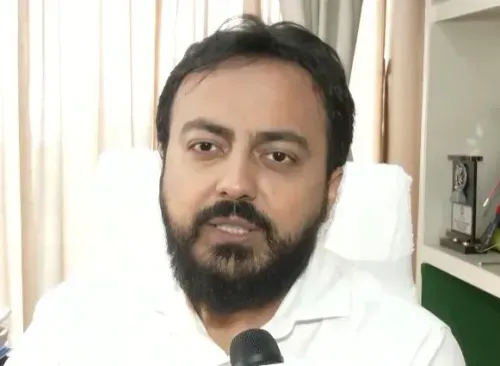
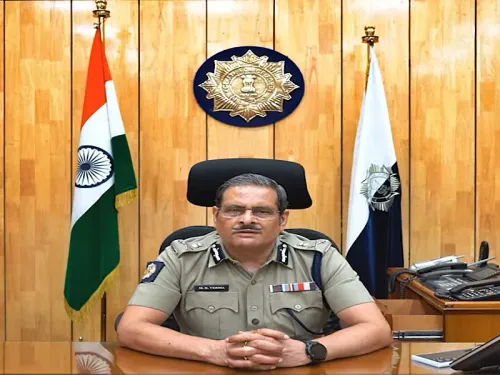
New Sports Minister Nisith Pramanik has reportedly promised action over the mismanaged December Messi stadium event and refunds for ticketholders who could not see the footballer.
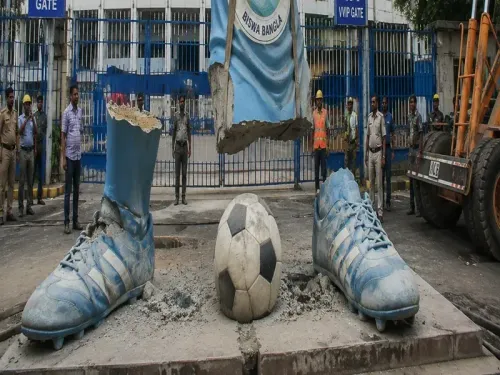
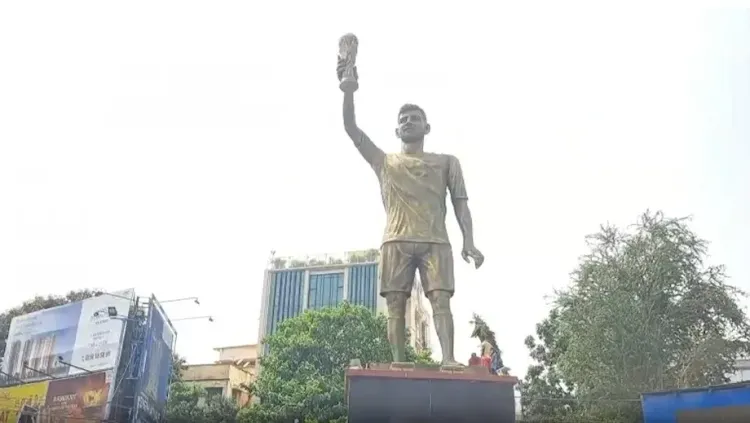
A 64-foot-tall statue of Lionel Messi in Kolkata's Lake Town neighbourhood has become an unlikely political metaphor — swaying in the wind, held upright by ropes, and now at the centre of a public safety crisis that critics are linking to the broader governance failures of the Trinamool Congress (TMC) government that was voted out of power in West Bengal this year.
Structural Deficiencies and Safety Concerns
Authorities who inspected the statue reportedly found that screws in the primary framework had come loose, leaving the structure at risk of collapse. The Lake Town police station received a formal complaint, and the South Dum Dum Municipality executive officer called a meeting to determine next steps. At the time of writing, the statue remains tied in ropes as a stopgap measure to prevent it from toppling onto pedestrians near a busy intersection.
Public works officials have described the structure's condition as critically poor, triggering discussions about whether it should be reinforced or removed entirely, according to reports.
The Statue's Origins and the Man Behind It
The statue was installed by Sujit Bose, a former minister in the TMC government. It was unveiled during Messi's visit to India in December as part of his 'GOAT India Tour', and quickly became a draw for football fans across Kolkata. Bose has since been taken into custody by the Enforcement Directorate (ED) in connection with an alleged municipal recruitment scam.
The Bharatiya Janata Party (BJP) ended TMC's uninterrupted 15-year rule in West Bengal this year with what is being described as an overwhelming mandate, making the statue's deteriorating condition all the more symbolically charged.
Chaos at the Stadium During Messi's Visit
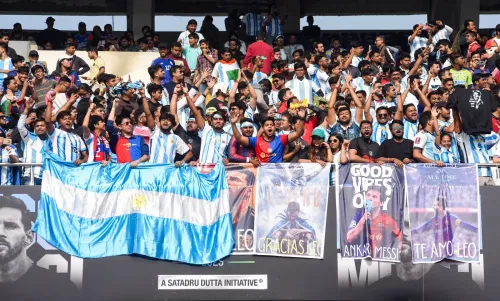
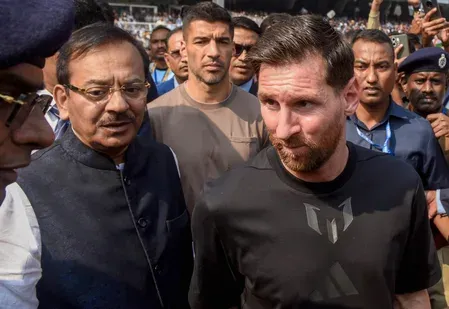
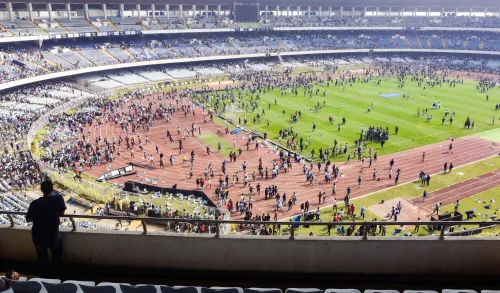
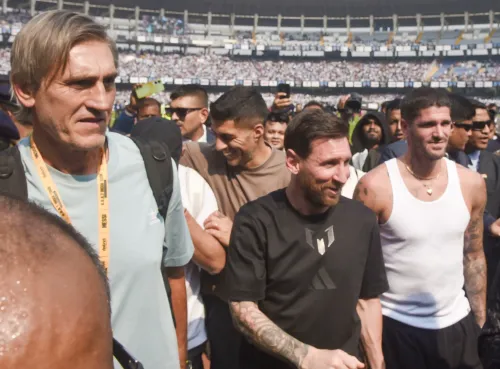
Messi's December appearance at Salt Lake Stadium in Kolkata was itself marred by serious mismanagement. The Argentine star was accompanied by Inter Miami teammates Luis Suarez and Rodrigo De Paul, but a large contingent of VIPs and officials reportedly surrounded Messi, blocking fans from even a brief sighting of him. Messi is said to have exited earlier than scheduled.
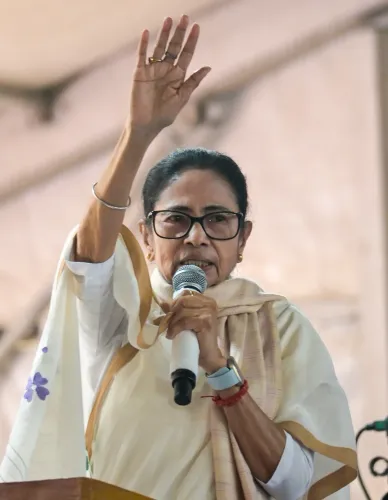
The frustration boiled over: seats were ripped up, the pitch was damaged, and crowds spilled into the streets outside the stadium. West Bengal's then Chief Minister said she was 'deeply disturbed and shocked' by the scenes. The state's new Sports Minister, Nisith Pramanik, has reportedly pledged to take action against those responsible for the chaos and promised to refund ticket money to fans who paid but were unable to see Messi.
A Metaphor That Has Stuck
For many residents, the statue's precarious state has become shorthand for the TMC era's approach to governance — large in ambition, weak in execution. 'Perhaps one reason for Mamata Banerjee's loss was that she let Messi's statue become a public safety hazard,' a Lake Town resident said, also describing the sight as a portrait of a 'wobbly regime.'
Critics argue the statue encapsulates a pattern of grand public gestures with little structural follow-through. The question now being asked by football fans and city planners alike is whether the statue can be salvaged — or whether it will quietly disappear, much like the government that commissioned it.
Point of View
Which is precisely why it deserves scrutiny beyond the symbolism. The real issue is accountability: a public structure on a busy intersection was apparently commissioned without adequate engineering oversight, and the official responsible is now in ED custody on unrelated charges. West Bengal's new government has an opportunity here — not just to fix or remove the statue, but to establish that public infrastructure spending will face genuine scrutiny. If Pramanik's promise of refunds and accountability over the stadium chaos is followed through, it sets a precedent. If it fades quietly, the statue will not be the only wobbly thing in the new dispensation.
NationPress
15 Oct 2026
Frequently Asked Questions
Why is the Messi statue in Kolkata's Lake Town considered dangerous?
Authorities found that screws in the statue's primary framework had come loose, leaving the 64-foot structure at risk of collapse near a busy intersection. A formal complaint was filed at the Lake Town police station, and the South Dum Dum Municipality called a meeting to decide on reinforcement or removal.
Who installed the Messi statue in Kolkata?
The statue was installed by Sujit Bose, a former minister in the Trinamool Congress government. Bose has since been taken into ED custody in connection with an alleged municipal recruitment scam.
What happened during Messi's visit to Kolkata in December?
Messi's appearance at Salt Lake Stadium was marred by mismanagement — VIPs crowded around him, blocking fans' view, and he reportedly left earlier than scheduled. Frustrated fans ripped up seats, damaged the pitch, and spilled into the streets. West Bengal's then Chief Minister described the scenes as 'deeply disturbing.'
How is the Messi statue connected to TMC's election defeat?
The Bharatiya Janata Party ended TMC's 15-year uninterrupted rule in West Bengal this year. Critics have drawn a symbolic link between the statue's poor construction and TMC's governance record — describing both as grand in appearance but lacking structural integrity.
What is the new West Bengal government doing about the statue and the stadium chaos?
Sports Minister Nisith Pramanik has reportedly said his government will act against those responsible for the mismanaged December stadium event and has promised refunds to fans who paid to see Messi but could not. The fate of the statue itself — reinforcement or removal — is under discussion by municipal authorities.