How Are the Ladakh Scouts Transforming Ice Hockey in India on Republic Day?
Synopsis
As India marks its 77th Republic Day, the Ladakh Scouts are leading an ice hockey revolution. Discover how this specialized mountain infantry regiment is not only excelling in the sport but also striving to expand its reach across the nation. Their story is one of dedication, ambition, and a vision for the future of ice hockey in India.
Key Takeaways
Ladakh Scouts are leading the ice hockey revolution in India.
They aim to expand the sport beyond Leh (Ladakh).
There are only two Olympic-size ice rinks in India.
Building ice rinks requires significant financial backing.
The Ladakh Scouts have made substantial contributions to national teams.
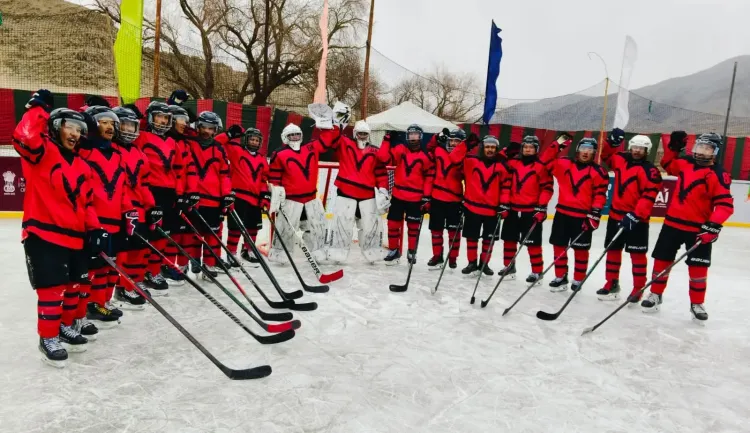
Leh, Jan 26 (NationPress) An ice hockey transformation is unfolding in India, led by the Ladakh Scouts, a specialized mountain infantry regiment of the Indian Army. On this 77th Republic Day, it’s the ideal moment to showcase their remarkable contributions to the sport of ice hockey.
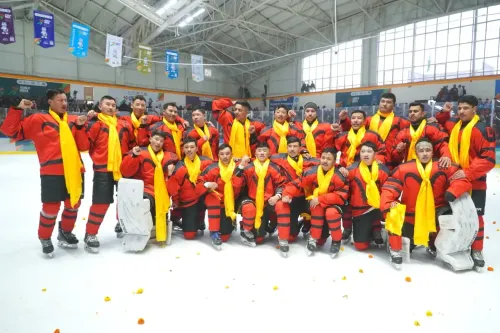
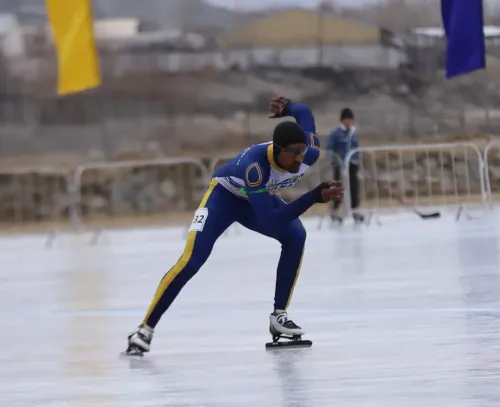
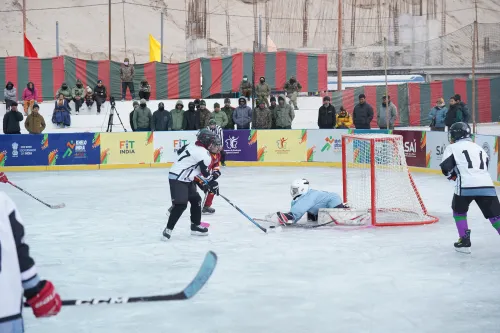
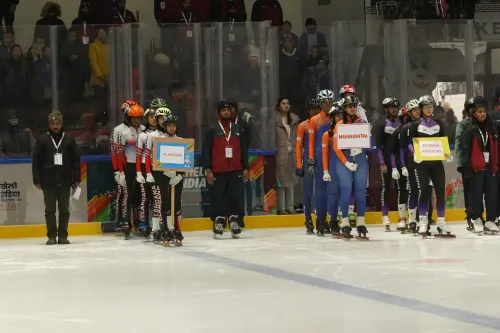
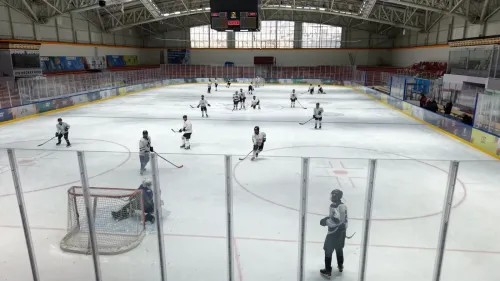
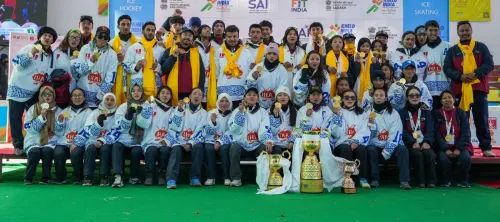
The inaugural segment of the sixth edition of the 2026 Khelo India Winter Games (KIWG) is taking place in Leh (Ladakh), featuring thrilling displays of ice hockey and ice skating. Once again, the representatives of the Army, comprising the Ladakh Scouts, are demonstrating their unmatched prowess in the event. The Army is set to face off against surprise entrants Chandigarh in the men’s final on Republic Day.
However, their achievements and dedication off the rink are even more significant than just a victory or a gold medal, which they have secured multiple times in the Khelo India Winter Games. Their mission is to elevate ice hockey's status in India, aiming to spread the sport beyond the snowy and mountainous terrains of Leh (Ladakh) into the plains and coastal regions.
Although precise records are scarce, it is believed that the Ladakh Scouts began their ice hockey journey in the late 1970s, initially playing just for enjoyment without proper surfaces or equipment.
It was in the late 1980s that they began to approach the sport with greater seriousness, constructing natural ice rinks and importing high-quality equipment (notably, contemporary ice hockey gear for each player can cost up to Rs 4 lakh).
In 2000, the regiment was officially recognized as a full infantry unit, which boosted their commitment to ice hockey.
Currently, there are merely two Olympic-size artificial ice rinks in India: one in Dehradun and the other in Leh (located at the indoor Nawang Dorjay Stobdan Stadium).
“To truly popularize ice hockey, we require more such rinks throughout the country. At present, the sport is predominantly limited to Leh (Ladakh). We must extend the sport to other parts of the nation to facilitate its growth,” stated Captain Parth Jagtap, a member of the Army team competing in the 2026 KIWG.
Captain Jagtap, who was awarded the Distinguished Award for Outstanding Sports and Academic Achievements last year in Mumbai, also praised Khelo India’s ongoing initiatives.
“Khelo India has significantly contributed to raising awareness about ice hockey through media coverage. It has also shed light on the vital steps needed to genuinely establish it as a popular sport in the country,” he added.
Building an ice rink is an expensive endeavor, with a basic rink costing around Rs 15 crore. An indoor stadium, capable of seating up to 5,000 spectators, can range from Rs 40 to 50 crore.
These substantial investments necessitate corporate sponsorship. If corporations like Reliance, Adani, and Tata step in, the landscape of ice hockey in India could rapidly evolve and extend beyond Leh (Ladakh).
The representatives from the Ladakh Scouts have reportedly proposed the idea of engaging corporate entities to aid in this initiative. While soldiers are tasked with safeguarding the borders, they occasionally take on responsibilities beyond their primary duties, showcasing their commitment.
Ice hockey serves as a prime example of this. Last year, the Ladakh Scouts provided last-minute funding for the national women’s team, which led to the Indian women's national team achieving its first-ever bronze medal at the IIHF Women’s Asia Cup in the UAE.
These actions clearly demonstrate that the Ladakh Scouts, affectionately known as the Snow Leopards or Snow Warriors, are serious about their mission. They are optimistic that their efforts will soon position India as a recognized name in the global ice hockey community.
Point of View
Both on and off the ice, showcases the potential of sports to unite communities and inspire the youth. As they aim to spread this winter sport beyond its traditional roots, it highlights the need for infrastructure and support to nurture talent across the nation.
NationPress
21 Sept 2026
Frequently Asked Questions
When did the Ladakh Scouts start playing ice hockey?
The Ladakh Scouts reportedly began playing ice hockey in the late 1970s, initially just for fun.
How many Olympic-size ice rinks are there in India?
Currently, India has two Olympic-size artificial ice rinks: one in Dehradun and one in Leh.
What is the cost of building an ice rink?
A basic ice rink can cost about Rs 15 crore, while an indoor stadium can range from Rs 40 to 50 crore.
How has Khelo India contributed to ice hockey?
Khelo India has raised awareness about ice hockey through media coverage and emphasized the steps needed to promote the sport in the country.
What achievements have the Ladakh Scouts made in recent years?
The Ladakh Scouts have won multiple gold medals in the Khelo India Winter Games and provided funding for the Indian women's national team, which secured its first bronze at the IIHF Women’s Asia Cup.