MCC clarifies dead-ball rule after conflicting Hundred decisions

Synopsis
Two contrasting dead-ball calls in The Hundred left fans baffled — so the MCC stepped in. The key distinction: Pooran deliberately withdrew his bat, satisfying the 'no attempt' condition; Kapp's instinctive prod counted as an attempt regardless of intent. Both umpires were right, and the MCC's clarification redraws the line between a dead ball and a fair one.
Key Takeaways
The MCC issued a dead-ball rule clarification on 14 August after two conflicting umpire decisions in The Hundred .
Umpire Mike Burns correctly ruled a dead ball on 6 August when Nicholas Pooran deliberately withdrew his bat after Liam Livingstone repeatedly aborted his run-up.
Umpire Mark Newell correctly ruled a fair ball when Marizanne Kapp instinctively prodded at a delivery — any 'attempt' to play the ball, even a reflex, negates a dead-ball call.
Under cricket law, two conditions must both be met for dead ball: the batter made no attempt to play, and had adequate reason for not being ready.
Law 41.10.1 places equal obligation on batters not to waste time and bowlers not to rush beyond their normal rhythm.
The Marylebone Cricket Club (MCC), the custodians of cricket's laws, on Friday, 14 August issued a formal clarification on the dead-ball rule after two umpires applied it differently during matches in The Hundred competition in England. The clarification centres on what constitutes 'attempting to play the ball' — the critical phrase that determines whether a delivery counts in the over.
The Two Contrasting Incidents
The first incident took place on 6 August during the MI London vs London Spirit clash. West Indies batter Nicholas Pooran and Spirit captain Liam Livingstone were locked in a cat-and-mouse exchange, with Livingstone aborting his run-up twice before finally delivering. Pooran, apparently anticipating another abort, withdrew his bat from the line of the ball — which then struck the stumps. Umpire Mike Burns ruled it a dead ball.
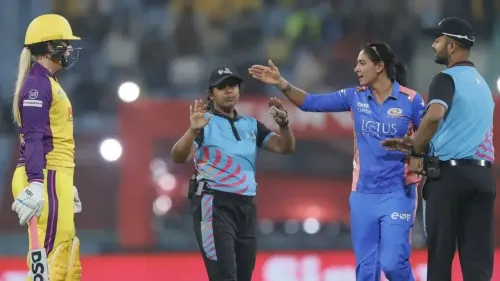
Three days later, a contrasting call emerged. London Spirit batter Marizanne Kapp appeared unprepared as Birmingham Phoenix's Linsey Smith bowled. Kapp looked up late but instinctively waved her bat at the delivery, making contact — not to score or defend, but as a reflex. Umpire Mark Newell ruled it a fair ball and counted it in the over.
What the MCC Law Actually Says
The MCC clarified that under the laws, 'either umpire shall call and signal Dead-ball when the striker is not ready for the delivery of the ball and, if the ball is delivered, does not attempt to play it. Provided the umpire is satisfied that the striker had adequate reason for not being ready, the ball shall not count as one of the over.'
Two conditions must both be met: the batter must not have attempted to play the ball, and there must be a justified reason for not being ready. The law uses the word 'attempting' — meaning even an instinctive prod counts as an attempt, regardless of whether bat meets ball.
Why Each Decision Was Correct
In Pooran's case, the MCC noted that he 'actively withdrew his bat from the line of the ball' — a deliberate act that satisfied the 'no attempt' condition. The disrupted rhythm of the over, caused by Livingstone's repeated run-up aborts, gave Pooran adequate reason not to be ready. Umpire Burns's dead-ball call was therefore correct.
In Kapp's case, her instinctive prod — even though unintentional — constituted an 'attempt to play the ball' under the law. That single act removed the possibility of a dead-ball ruling, making Newell's fair-ball decision equally correct.
The Broader Obligation on Batters and Bowlers
The MCC also cited Law 41.10.1, which states it is unfair for a batter to waste time and that 'in normal circumstances, the striker should always be ready to take strike when the bowler is ready to start his/her run-up.' Equally, bowlers cannot rush batters beyond what is normal. The MCC noted that in the Pooran-Livingstone exchange, umpire Burns 'would have been sensible to remind both players that the batter must not delay things and the bowler cannot overly rush things more than normal.'
With The Hundred continuing, the MCC's clarification is expected to guide umpiring decisions for the remainder of the tournament and beyond.
Point of View
Short-format environment is generating edge-case rulings at a faster rate than traditional formats, quietly pressuring the MCC to function as a real-time law interpreter rather than a once-a-decade legislator.
NationPress
30 Sept 2026
Frequently Asked Questions
What is the MCC dead-ball rule in cricket?
A dead ball is called when the striker is not ready for the delivery and does not attempt to play it, provided the umpire is satisfied there was adequate reason for not being ready. Both conditions — no attempt and a justified reason — must be met for the ball not to count in the over.
Why was the Nicholas Pooran delivery ruled a dead ball?
Pooran deliberately withdrew his bat from the line of the ball after Liam Livingstone's repeated run-up aborts disrupted the natural rhythm of the over. Because Pooran made no attempt to play the ball and had adequate reason not to be ready, umpire Mike Burns correctly called it dead.
Why was Marizanne Kapp's delivery counted as a fair ball?
Kapp instinctively prodded at the ball and made contact, which under cricket law constitutes 'attempting to play the ball.' The MCC clarified that the law refers to attempting — not actually hitting — so even a reflex action removes the possibility of a dead-ball ruling.
Were both umpires correct in their decisions?
Yes. The MCC confirmed that umpire Mike Burns was correct to call a dead ball in the Pooran case and that umpire Mark Newell was correct to rule a fair ball in the Kapp case. The two incidents turned on different facts, not different interpretations of the law.
What does Law 41.10.1 say about batters and bowlers?
Law 41.10.1 states it is unfair for a batter to waste time, and that in normal circumstances the striker should always be ready when the bowler begins their run-up. Equally, bowlers cannot rush batters beyond what is considered normal, placing a shared obligation on both parties.