Mandatory anti-doping education for National Games, Khelo India athletes: Mandaviya
Synopsis
India is moving beyond punishment to prevention in its anti-doping push. Sports Minister Mandaviya has made anti-doping education compulsory for National Games and Khelo India athletes, while also ordering a regional-language rollout of the 'Know Your Medicine' app — a signal that the government sees awareness, not just enforcement, as the real fix for doping in Indian sport.
Key Takeaways
Mansukh Mandaviya announced mandatory anti-doping awareness sessions for all National Games and Khelo India athletes on 25 June .
The 'Know Your Medicine' mobile app will be made available in regional languages to widen access to prohibited-substance information.
NDTL , India's only WADA -accredited laboratory, has been directed to increase testing of samples from international athletes.
Anti-doping campaigns are to be extended to villages, schools, colleges, and sporting institutions across the country.
The NDTL has developed Dried Blood Spot (DBS) testing and recently synthesised reference materials critical to anti-doping science.
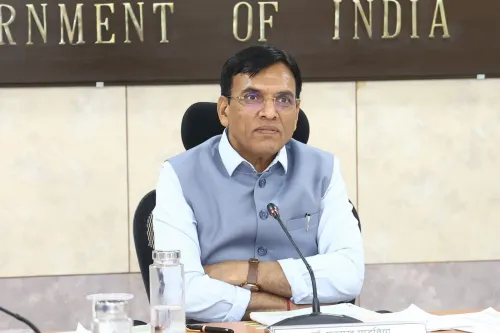
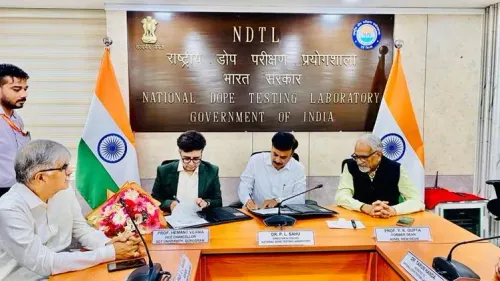
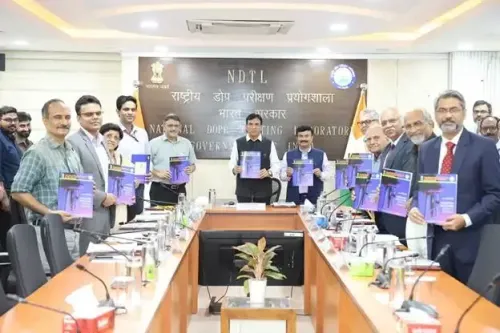
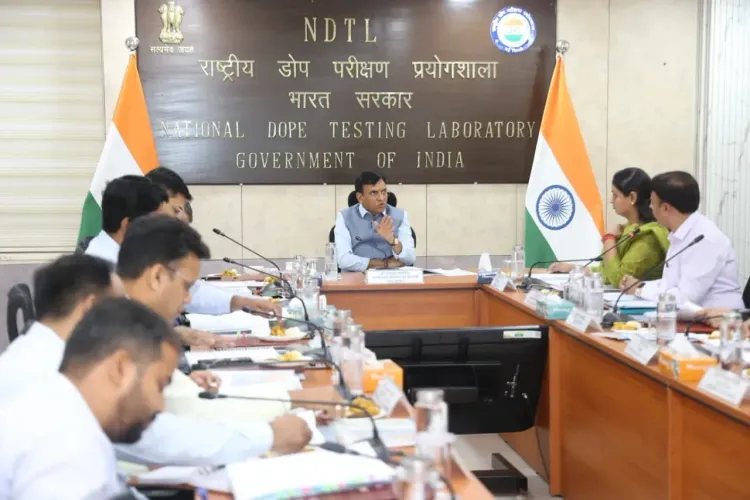
Union Minister of Youth Affairs and Sports Mansukh Mandaviya on Thursday, 25 June announced compulsory anti-doping education for athletes competing in the National Games and Khelo India events, marking a significant shift in India's approach to clean sport — from enforcement alone to early-career awareness. The announcement was made during a review meeting of the National Dope Testing Laboratory (NDTL) in New Delhi.
Key Announcements
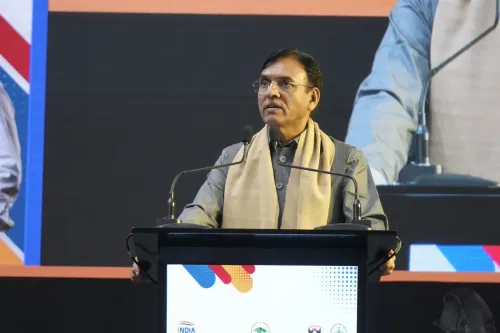
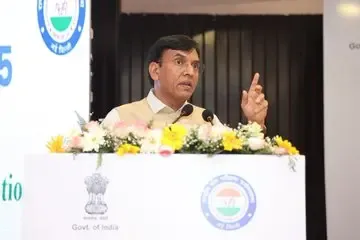
Mandaviya confirmed that all athletes participating in National Games and Khelo India competitions will be required to attend anti-doping awareness sessions. 'Athletes participating in the National Games and Khelo India competitions will undergo mandatory anti-doping awareness sessions,' he stated at the meeting.
The Minister also announced that the 'Know Your Medicine' mobile application will be made available in regional languages, broadening access to information on prohibited substances for athletes, coaches, and support staff across the country. 'Making anti-doping information available in local languages would help athletes, coaches, and support personnel across the country better understand prohibited substances and ensure informed decision-making,' Mandaviya said.
Expanding NDTL's Global Role
Mandaviya called for the NDTL — India's only World Anti-Doping Agency (WADA)-accredited laboratory — to expand its international footprint and deepen engagement with global anti-doping programmes. 'Efforts should be made to increase testing of samples from international athletes at the laboratory,' he stated.
The NDTL has in recent years developed advanced testing methodologies including Dried Blood Spot (DBS) testing and synthesised reference materials critical to anti-doping science. Officials noted that the laboratory's technical expertise and adherence to international standards position it to contribute more substantially to the global anti-doping ecosystem.
Grassroots Push for Clean Sport
Addressing the broader challenge of doping in Indian sport, Mandaviya underlined that punitive action alone is insufficient. He called for anti-doping campaigns to reach villages, schools, colleges, and sporting institutions across the country, advocating for a wider movement centred on promoting clean sport and clean sportspersons.
The Minister stressed the importance of educating athletes early in their careers to help them avoid inadvertent anti-doping rule violations — a category that has historically accounted for a significant share of doping cases in India.
Who Attended the Review Meeting
The NDTL review meeting was attended by Shreyasi Singh, shooter and Minister for Industries and Sports, Government of Bihar; Hari Ranjan Rao, Secretary (Sports); senior officers of the Ministry of Youth Affairs and Sports; representatives of National Sports Federations; eminent scientists; and P. L. Sahu, Director and CEO (I/c) of the NDTL.
With mandatory education now embedded in two of India's largest multi-sport platforms, the policy framework for clean sport is set to reach a far wider base of athletes than previous awareness drives.
Point of View
Often without professional support staff, are most vulnerable to inadvertent violations. The regional-language rollout of 'Know Your Medicine' addresses a real gap: doping information in India has historically been inaccessible to athletes outside metro training centres. What remains untested is follow-through — previous awareness drives have been announced with similar fanfare and then faded. The NDTL directive to attract more international samples is the right ambition, but competing with established European labs for that business will require sustained investment, not just ministerial resolve.
NationPress
25 Jun 2026
Frequently Asked Questions
What anti-doping measures did Sports Minister Mandaviya announce on 25 June?
Mandaviya announced mandatory anti-doping awareness sessions for athletes participating in the National Games and Khelo India events. He also directed that the 'Know Your Medicine' app be made available in regional languages and called for NDTL to increase testing of international athlete samples.
What is the 'Know Your Medicine' app?
'Know Your Medicine' is a mobile application that provides information on prohibited substances under anti-doping rules. The government has now announced it will be made available in regional languages so that athletes, coaches, and support staff across India can access it more easily.
What is the NDTL and why does it matter?
The National Dope Testing Laboratory (NDTL) is India's only World Anti-Doping Agency (WADA)-accredited laboratory. It plays a central role in the country's anti-doping programme, including testing samples from major sporting events and developing advanced methodologies such as Dried Blood Spot (DBS) testing.
Why is anti-doping education being made mandatory for Khelo India athletes?
The government has emphasised that punitive enforcement alone cannot eliminate doping, particularly inadvertent violations. Mandatory education at the Khelo India and National Games level targets athletes early in their careers, when they are most at risk of unknowingly consuming prohibited substances.
Who attended the NDTL review meeting?
The meeting was attended by Shreyasi Singh, Minister for Industries and Sports, Government of Bihar; Hari Ranjan Rao, Secretary (Sports); senior Ministry officials; National Sports Federation representatives; scientists; and P. L. Sahu, Director and CEO (I/c) of the NDTL.