Pranati Nayak's Tashkent silver: How her coach pushed her past fever and self-doubt

Synopsis
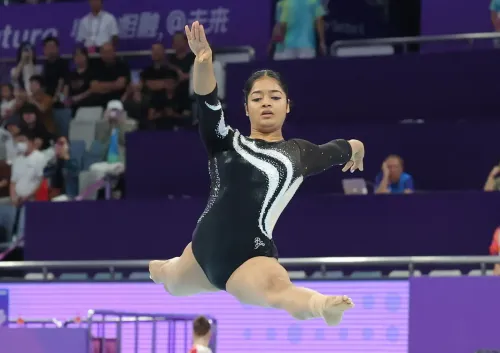
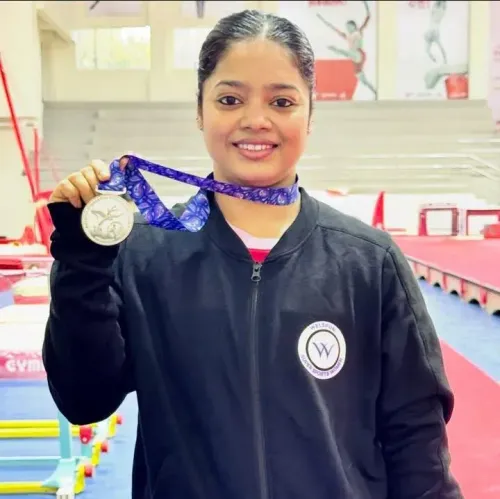
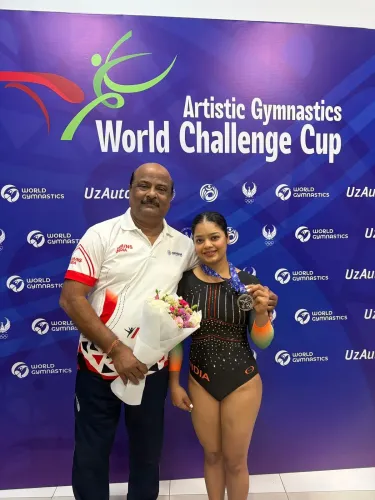
Pranati Nayak won silver at the FIG World Challenge Cup in Tashkent despite arriving with a barely-healed ankle and a fever that had cut her vault repetitions from 20 down to eight. The medal is less a gymnastics story and more a study in managed resilience — and a signal that India's top vaulter is back in contention for the Asian Games and Commonwealth Games.
Key Takeaways
Pranati Nayak won the silver medal at the FIG World Challenge Cup in Tashkent , returning from a seven-month international hiatus.
She suffered a ligament tear in her ankle in October during the World Artistic Gymnastics Championships at the Indonesia Arena .
A bout of viral fever and tonsillitis forced her to miss the Senior National Championships and disrupted final Tashkent preparations.
Coach Ashok Kumar Mishra cut her vault repetitions from up to 20 down to just 8 to conserve energy.
Her ankle was still only 90 per cent healed ; the team is managing load with the Asian Games and Commonwealth Games in view.
Indian gymnast Pranati Nayak claimed a silver medal at the FIG World Challenge Cup in Tashkent, powering through a bout of viral fever and months of injury-enforced absence to deliver one of the more resilient performances of her career. The three-time Asian Championship medallist credited her coach's relentless encouragement as the decisive factor that kept her from withdrawing.
A Comeback Shadowed by Setbacks
Pranati's road to Tashkent began with a serious ligament tear in her ankle sustained in October last year during the women's vault qualification at the World Artistic Gymnastics Championships at the Indonesia Arena. She had landed awkwardly while attempting a Tsukahara 720 Twist and pulled out before her second vault. The injury triggered a seven-month hiatus from international competition and forced a complete restructuring of her competitive calendar.
Her coach, Ashok Kumar Mishra, described the recovery as a multi-disciplinary effort. 'She had a ligament break in her ankle, but she is a senior player with immense experience and recovered incredibly fast. She worked closely with a physiotherapist, planned her diet with a nutritionist, and consulted a mental trainer to stay sharp,' he said.
Viral Fever Derails Final Preparations
Just as Pranati was finding her rhythm in training — roughly two weeks before the Tashkent event — a viral fever struck, wiping out her training gains almost overnight. The illness came on top of an earlier bout of tonsillitis that had already forced her to miss the Senior National Championships, the intended stepping stone back to international competition.
Pranati described the emotional toll candidly. 'To be honest, I had a viral fever before the competition. I was getting zero on my training. Just two weeks before the competition, my preparation was going well. After getting sick, I was losing hope. My coach kept pushing me, asking, why are you giving up? You can do it. He gave me quality training,' she said at a felicitation event organised by the Sports Authority of India on Friday.
Adapting the Training Load
With her body weakened, Mishra took a deliberate call to scale back the volume of Pranati's vault repetitions significantly. Where her standard training load runs to 17, 18, or even 20 vaults, the pre-Tashkent sessions were capped at just eight attempts — enough to rebuild confidence and groove the landing, without draining her limited reserves.
'Because my body was weak from the fever, we cut down on repetitions. I did what I was supposed to do at the competition. I just wanted to build my confidence, land well, and make the most of the exposure,' Pranati explained. The stripped-back approach also reflected a longer-term calculation: with the ankle still only 90 per cent healed, protecting Pranati ahead of the Asian Games and Commonwealth Games was equally important as the result in Tashkent.
Coach's Confidence and the Road Ahead
Mishra acknowledged that returning to international competition after six to seven months without competitive match practice is rarely straightforward for any athlete, but said his confidence in Pranati never wavered. 'Normally, for an athlete who hasn't competed for six to seven months, performance is never guaranteed. But I was absolutely certain that once she was physically fit, she would give 100 per cent,' he said.
The original plan had targeted four World Cups this season before the ankle injury intervened. The gymnastics federation, acknowledging Pranati's standing, cleared her to compete directly at the World Challenge Cup, bypassing the nationals she had missed. The silver in Tashkent now sets the tone for a carefully managed return, with the Asian Games and Commonwealth Games firmly in the crosshairs.
Point of View
But the more significant detail is what it reveals about Indian gymnastics' evolving support infrastructure — physiotherapists, nutritionists, and mental trainers working in concert around a single athlete's comeback. The real test comes next: with the ankle at 90 per cent and the Asian Games approaching, the margin for error is thin, and the temptation to overload a resurgent performer will need to be resisted. Whether the federation and coaching staff hold that line under competitive pressure is the story to watch.
NationPress
14 Oct 2026
Frequently Asked Questions
What medal did Pranati Nayak win at the FIG World Challenge Cup in Tashkent?
Pranati Nayak won the silver medal at the FIG World Challenge Cup in Tashkent. It was her first international competition after a seven-month absence caused by a ligament tear in her ankle.
What injury had kept Pranati Nayak out of competition before Tashkent?
Pranati sustained a ligament tear in her ankle in October during the women's vault qualification at the World Artistic Gymnastics Championships at the Indonesia Arena. She landed awkwardly while attempting a Tsukahara 720 Twist and withdrew before her second vault.
How did Pranati Nayak's coach help her prepare despite her illness?
Coach Ashok Kumar Mishra reduced her vault repetitions from the usual 17 to 20 down to just eight to conserve energy while she recovered from viral fever. He also kept encouraging her not to give up, focusing training on clean execution and a fixed landing rather than difficult elements.
Why did Pranati Nayak miss the Senior National Championships?
Pranati missed the Senior Nationals because she contracted viral fever and tonsillitis just before the event. The gymnastics federation subsequently cleared her to compete directly at the World Challenge Cup in Tashkent, taking her experience and calibre into account.
What are Pranati Nayak's next targets after the Tashkent silver?
Pranati and her coaching staff have the Asian Games and Commonwealth Games firmly in their sights. With her ankle still only 90 per cent healed, the team is managing her training load carefully to protect her long-term fitness ahead of those larger events.