Ramit Tandon: The Dual Nature of Home Advantage Ahead of the 2026 Indian Open
Synopsis
As the 2026 Indian Open nears, Ramit Tandon shares insights on the pressures of home competition, the importance of the Asian Games, and how past legends shape the future of Indian squash. Discover his journey and the evolving landscape of squash in India.
Key Takeaways
Ramit Tandon prepares for the 2026 Indian Open, a key event in his Olympic journey.
Competing at home offers both comfort and pressure.
The Asian Games are Tandon's main focus, serving as an Olympic qualifier.
Indian squash benefits from stronger support systems and infrastructure.
Tandon connects past legends with emerging talents in the sport.
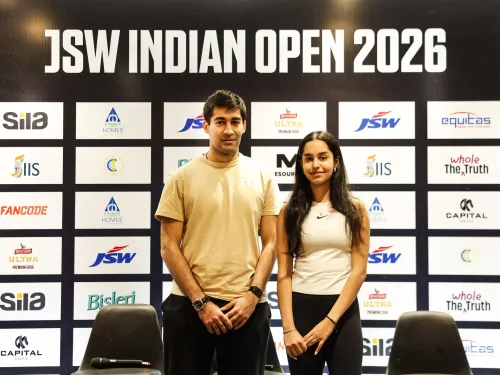
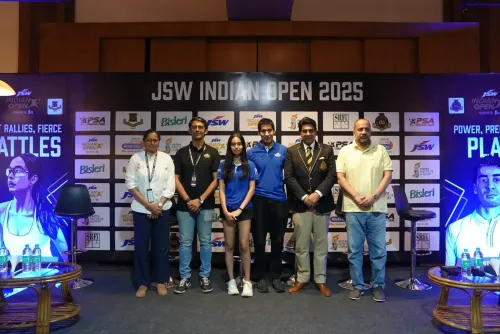
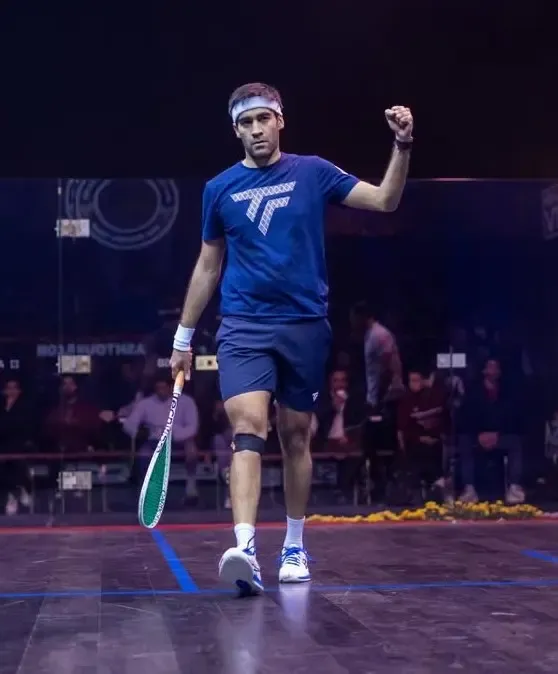
New Delhi, March 12 (NationPress) As the 2026 Indian Open draws near, India's squash sensation Ramit Tandon is preparing to demonstrate his talents on local turf. Slated to take place from March 18 to 22 at the Brabourne Stadium in Mumbai, this tournament is significant in Tandon's packed schedule, which also involves training for the 2026 Asian Games, a pivotal event that serves as a qualifying route to the Olympics.
In a candid discussion with IANS, Tandon shared his thoughts on the evolving landscape of Indian squash, the benefits and challenges of competing at home, and his definition of success at this juncture of his career. Offering a unique vantage point that connects both past and emerging talents in Indian squash, Tandon's perspectives not only reflect his personal experiences but also underscore the expanding framework of support that is elevating Indian squash.
With just over a week remaining until the Indian Open, Tandon is currently in his tapering phase, where he reduces training intensity to achieve optimal performance during the competition.
“Preparations have been progressing well. With another week and a half before the event, I find myself in my taper phase. It’s been a productive few weeks. Being at home has been refreshing; usually, I’m competing globally, which means my training camps are held abroad. However, when we have the chance to compete in India, we can enjoy the comforts of home and be taken care of. So far, it’s been quite positive,” Tandon conveyed to IANS.
The familiarity of his home environment enables Tandon to concentrate on recovery, lessen travel-related stress, and refine his game with his complete support team accessible to him. The Asian Games stands as Tandon’s primary goal this year, promising both prestige and a chance to secure a spot in the Olympics.
“This is the most crucial event of the year. First and foremost, the Asian Games command their own respect. Moreover, it’s the qualification for the Olympics, which is significant for squash since we have not been featured in the Olympics previously. For every Asian player ranking in the top four or eight, this is an opportunity for Olympic entry. Hence, it’s undoubtedly the most vital goal for the year,” he explained.
“My team is well aware of this. I have a dedicated team, and when I discuss my plans and training strategies, I mostly follow their guidance. We are united in our focus to peak at the Asian Games, with everything else structured around that objective.”
Every competition, including the Indian Open, is part of a meticulously designed strategy to ensure Tandon is at his peak when it counts the most.
Tandon perceives himself as part of a generation that connects the past icons and the rising talents. “Squash has seen strong players in every era. I find myself in between two phases—one dominated by legends like Ghoshal, Harinder, and Sandhu, who are significantly older than me, while I straddle the conclusion of their careers and the commencement of the new wave.”
“However, it’s an unfair comparison to judge generations. In cricket, for instance, when observing Virat Kohli, you recognize that Sachin Tendulkar played a pivotal role in his rise, just as Kohli is now influencing players like Shubman Gill. In our sport, we function as a cohesive unit.”
“Without Saurav Ghosal, there might not be a pipeline of players following him. If there were no Joshna or Deepika, the emergence of Anahat may not have been possible. Acknowledgment is essential when it’s due. Today, we are in a robust phase as a nation, with four men ranked in the world’s top 50, which is unprecedented for Indian squash.”
“Anahat is excelling, and Joshna is still active. Additionally, one must recognize the support systems available today, which were absent for players like Saurav, Harinder, Joshna, or Deepika in the past. It’s fair to expect that we should perform better and surpass the previous generations. If we fail, it reflects on the support system rather than us. Indian squash is in a promising position.”
“Corporate sponsorship for squash is a significant advancement for us as players. With squash now included in the Olympics, supported by government initiatives, we are enjoying a considerable boost. I am optimistic that both current and future generations will surpass the legacy left by our predecessors. I hesitate to refer to them as ancestors (laughs), but I mean the generations of squash players.”
Tandon firmly believes that the infrastructure, financial backing, and visibility for Indian squash have never been stronger, which is crucial for cultivating future champions.
The Indian Open provides a rare chance to compete in front of a home crowd. For Tandon, this experience is both comforting and demanding.
“This is extremely significant. Two factors stand out: as I mentioned earlier, we have the highest number of players in the world’s top 50 than ever before, necessitating an elevated level of competition, and bringing international events of this scale to our country is essential.”
“It grants us a home advantage, suitable conditions, and the comfort of spending time with family while competing in front of those who have supported us. Additionally, it means fewer flights; the rare occasions we compete at home are a considerable benefit, especially with the Asian Games on the horizon. It’s not solely about competing; it’s also about maintaining rest and staying injury-free. At the 2022 Asian Games, I faced a hamstring problem that prevented my participation. Therefore, having events at home provides me with the assurance that my team is nearby, and I have physiotherapists available, a challenge when traveling.”
He added that hosting international tournaments at home motivates younger players by exposing them to the level of competition they can strive for.
“Beyond my experience and that of the top athletes in the nation, it’s about fostering a culture for the upcoming generations. For younger players, such as those aged eight to ten, witnessing international squash can set a higher standard than what we had during our childhood.”
Competing at home brings expectations, but the 33-year-old regards it as a measure of resilience.
“Every positive aspect has its downside, right? Competing at home offers comfort, and the climate is favorable, yet it also comes with substantial pressure. You are surrounded by people who want to see you excel, and managing that expectation is crucial as an athlete. You cannot escape pressure.”
“You must learn to navigate and breathe through these circumstances. This experience toughens you as a squash player. In India, we often focus on results; when discussing board exams, the first question is always about the score. It’s the same in our sport; the primary inquiry is, ‘Will you win or lose?’”
“However, it’s essential to consider what enhances your growth as a sports person and an individual. Enduring these experiences adds significant value. You may not immediately notice the benefits in this tournament, but that mental resilience could prove crucial in the Asian Games. Overall, it’s beneficial to put yourself through these experiences.”
The inclusion of squash in the 2028 Los Angeles Olympics is a landmark achievement, and Tandon views it as a substantial milestone for Indian squash.
“This is monumental for the global squash community. We have made multiple attempts, and now finally being included in the Olympics for LA 2028 is perhaps the most significant accomplishment my sport has achieved. For Indian squash, being part of this global movement is a remarkable opportunity.”
Point of View
Ramit Tandon's reflections on squash reveal a sport at a crossroads, balancing legacy and ambition. His insights showcase not only personal growth but also the collective evolution of Indian squash, highlighting the significance of support systems that empower future champions.
NationPress
19 Sept 2026
Frequently Asked Questions
What is the significance of the 2026 Indian Open for Ramit Tandon?
The 2026 Indian Open is crucial for Tandon as it is part of his preparation for the 2026 Asian Games, which also serves as an Olympic qualifying event.
How does playing at home affect Tandon's performance?
Competing at home provides Tandon with comfort and support from his team, but it also comes with added pressure from expectations.
What are Tandon's views on the current state of Indian squash?
Tandon believes that Indian squash is in a strong phase with increased support, infrastructure, and visibility, which is essential for nurturing future talent.
What does Tandon see as the most important goal for this year?
Tandon's primary goal this year is to excel at the Asian Games, which is not only prestigious but also a pathway to Olympic qualification.
How does Tandon view the impact of past squash legends on the current generation?
Tandon sees himself bridging the gap between past legends and rising players, acknowledging their contributions while striving to elevate the sport further.