Lafayette Park permanent fence plan: 10-foot barrier proposed near White House
Synopsis
The US Secret Service wants to replace the patchwork of bicycle racks and concrete barriers around Lafayette Park with a permanent 10-foot fence — a shift that could cut closure times from 72 hours to a fraction of that. The catch: the park is a National Historic Landmark and the nation's most prominent protest ground, making the design reviews ahead as politically charged as the security rationale behind them.
Key Takeaways
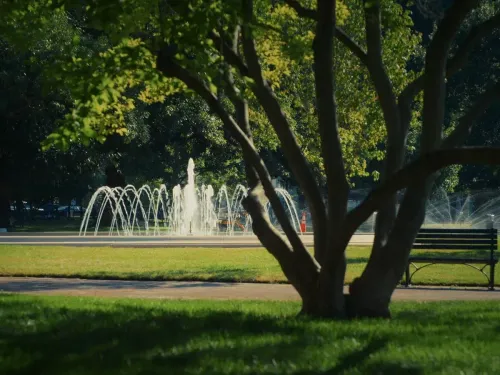
A permanent 8-to-10-foot fence is proposed for Lafayette Park , the historic square directly across from the White House .
The plan was prepared by the US Secret Service and Executive Office of the President with the Department of the Interior and National Park Service .
Current temporary barriers take up to 72 hours to install or remove; a permanent structure would enable far quicker closures.
The fence would feature four-inch picket spacing , wider entrances, and retained benches to preserve public access and park character.
Planning runs through 2026 ; phased construction could begin in 2027 , pending funding and historic-preservation reviews.
Lafayette Park, part of a National Historic Landmark District since 1970 , is a key site for First Amendment demonstrations.
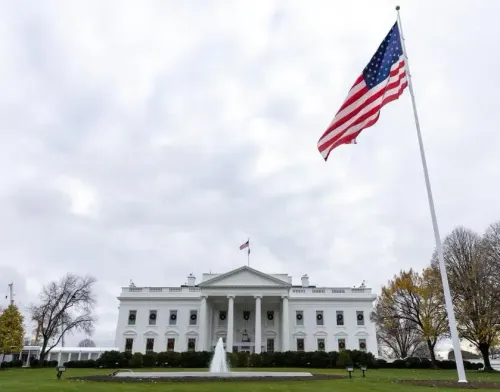
A permanent security fence standing up to 10 feet high could encircle Lafayette Park — the historic eight-acre public square directly opposite the White House — under a new federal concept plan aimed at enabling faster perimeter closures during heightened security threats. The proposal, prepared by the US Secret Service and the Executive Office of the President in coordination with the Department of the Interior and the National Park Service, was first reported on 11 July.
What the Proposal Covers
The concept plan calls for an eight-to-ten-foot fence running along the park's perimeter, bounded by H Street, Pennsylvania Avenue, Madison Place, and Jackson Place. Beyond the fence itself, the plan includes monitoring systems, alarms, and reinforced paving — with granite among the materials under consideration for thicker, tamper-resistant pavers and a deeper base.
The fence design features four-inch spacing between pickets to prevent a child from passing through while maintaining sightlines to the park's interior. The structure would taper toward the top, and existing bollards could be incorporated. Designers also propose removing or modifying climbable elements on the park's historic fence — including ornamental scrolls, closely spaced pickets, and horizontal rails that could serve as footholds.
Why Officials Say It Is Necessary
The current temporary security arrangement relies on bicycle racks, concrete barriers, and fencing ranging from four to ten feet in height. According to the plan, deploying those barriers can take as long as 72 hours — and removing them takes an equal amount of time. Officials argue the setup demands considerable staffing, creates structural gaps at joints, and degrades the visitor experience.
A permanent system, they say, would allow significantly quicker closures and reduce the number of personnel required to secure the perimeter — addressing a longstanding operational vulnerability identified after repeated protest-related security incidents near the White House.
Balancing Security and Public Access
The agencies involved have stated that the changes are designed to improve long-term security while preserving public access, views of the White House, and the civic character of one of Washington DC's most prominent public spaces. The preferred fence alignment would create a larger paved plaza near H and 16th Streets where demonstrations could continue even when the park itself is closed.
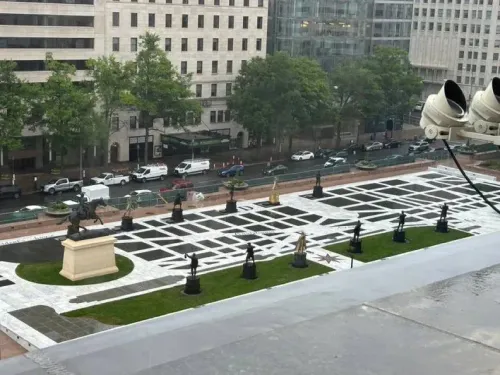
The proposal acknowledges that continuous fencing may make the park feel more enclosed. However, planners say wider entrances would be incorporated, existing benches retained, and access to the park's statues maintained during closures of Pennsylvania Avenue. Lafayette Park has long served as a primary site for First Amendment activities — protests, vigils, and press gatherings — owing to its proximity to the White House.
Historical Significance and Next Steps
Lafayette Park has deep historical roots: it was included in Pierre Charles L'Enfant's 1791 plan for Washington and was separated from the White House grounds during Thomas Jefferson's presidency. It was designated part of a National Historic Landmark District in 1970. Pennsylvania Avenue in front of the White House was closed to vehicular traffic following the 1995 Oklahoma City bombing.
Planning is expected to continue through 2026, with phased construction potentially beginning in 2027, subject to funding. The proposal will undergo historic-preservation and federal design reviews, with consultations involving District of Columbia authorities, tribal nations, neighbouring property owners, and other agencies. How those reviews balance security imperatives against the park's landmark status will shape the final design.
Point of View
At its core, a formalisation of what has already happened incrementally since 1995 — the slow securitisation of the civic space closest to American executive power. Each threat has added another layer of barriers; this plan simply makes that permanent. The harder question the historic-preservation and DC consultations must answer is whether a 10-foot fence around the nation's most prominent protest ground subtly redefines what proximity to power is permitted to look like. The 72-hour closure window is a genuine operational problem, but the solution chosen will set a precedent for how other democratic governments balance open civic space against security theatre.
NationPress
10 Oct 2026
Frequently Asked Questions
What is the Lafayette Park permanent fence proposal?
It is a federal concept plan to build a permanent 8-to-10-foot security fence around Lafayette Park in Washington DC, directly across from the White House. The plan was prepared by the US Secret Service and the Executive Office of the President, alongside the Department of the Interior and National Park Service.
Why is a permanent fence being proposed for Lafayette Park?
Officials say the current temporary security system — bicycle racks, concrete barriers, and portable fencing — can take up to 72 hours to install or remove and requires significant staffing. A permanent fence would allow faster perimeter closures during heightened threats and reduce personnel requirements.
When could construction on the Lafayette Park fence begin?
Planning is expected to continue through 2026, with phased construction potentially starting in 2027, depending on funding. The proposal must first clear historic-preservation and federal design reviews, as well as consultations with DC authorities, tribal nations, and neighbouring property owners.
Will the fence affect public access and protests at Lafayette Park?
Agencies say public access will be preserved. The preferred design includes wider entrances, retained benches, and a larger paved plaza near H and 16th Streets where demonstrations can continue even when the park is closed. The four-inch picket spacing is designed to maintain sightlines into the park.
What is the historical significance of Lafayette Park?
Lafayette Park was part of Pierre Charles L'Enfant's 1791 plan for Washington DC and was separated from the White House grounds during Thomas Jefferson's presidency. It was designated part of a National Historic Landmark District in 1970 and has been a key site for First Amendment activities for decades.