Fourth judge quits Bengal SIR Tribunal in a month; 15 of 19 members remain
Synopsis
Four judges have now quit West Bengal's Supreme Court-mandated SIR Tribunal in a single month — citing commute burden, family issues, and personal reasons. With over 63 lakh voter deletions pending judicial scrutiny, the panel's ability to deliver timely justice is under serious strain, and 15 members are left to handle one of India's largest electoral adjudication exercises.
Key Takeaways
Former Calcutta High Court judge Biswajit Basu resigned from the SIR Tribunal on 7 November 2026 , citing personal reasons.
He is the fourth of 19 tribunal members to resign in a month; 15 members remain.
Earlier resignations: former Justice Indrajit Chatterjee (22 km daily commute), former Justice Ranjit Kumar Bagh (personal reasons), and former Chief Justice T.S.
Sivagnanam (family issues).
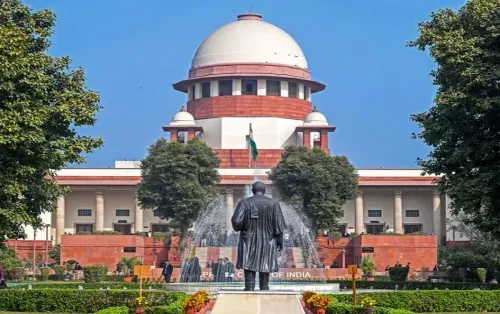
The tribunal was set up on the Supreme Court's directions to adjudicate appeals from voters deleted during West Bengal's SIR exercise.
Total voter deletions in the final electoral roll reached 63,66,952 , with approximately 60 lakh cases referred for judicial adjudication.
Supplementary electoral rolls will be published only as the adjudication progresses, directly linking tribunal pace to voter rights restoration.
Former Calcutta High Court judge Biswajit Basu resigned from the Special Intensive Revision (SIR) Tribunal on Saturday, 7 November 2026, becoming the fourth member to exit the panel in a single month. The tribunal was constituted on the Supreme Court's directions to hear appeals from voters whose names were struck off the electoral roll during the West Bengal SIR exercise, and now has only 15 of its original 19 members remaining.
Basu's Exit and the Trail of Resignations
Basu cited personal reasons for his departure, conveying his resignation in a letter to Calcutta High Court Chief Justice Ravindra Vithalrao Ghuge. His exit closely follows that of former Justice Indrajit Chatterjee, who quit over the daily commute burden — Chatterjee had described travelling 22 km every day as unsustainable, adding that he had accepted the assignment expecting the work to wrap up in two to three months. The sheer volume of pending cases made clear that timeline was unrealistic, prompting his departure.
Before Chatterjee, former Justice Ranjit Kumar Bagh stepped down citing unspecified personal reasons. The first to go was former Calcutta High Court Chief Justice T.S. Sivagnanam, who resigned citing family issues. Four departures in quick succession — each citing different but individually plausible reasons — have raised questions about the tribunal's operational sustainability.
Scale of the Electoral Roll Controversy
West Bengal had 7,66,37,529 registered voters before the SIR notification was issued in November last year. The draft electoral roll published in December removed 58,20,899 names. By the time the final roll was published on 28 February, total deletions had climbed to 63,66,952 — a figure that generated significant political controversy in the state.
Notably, the final electoral roll, excluding approximately 60 lakh cases referred for judicial adjudication, was published on 28 February. The Election Commission of India (ECI) indicated that supplementary lists would be released as the adjudication process progressed, with successful claimants having their names restored to the electoral list.
What the Tribunal Was Set Up to Do
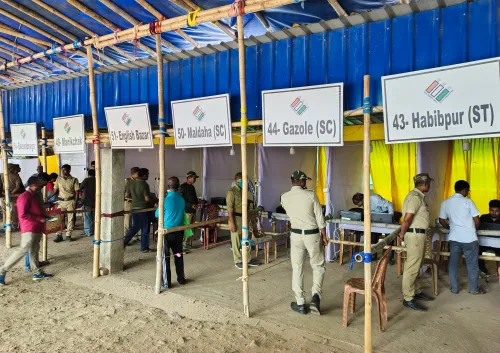
The SIR Tribunal — comprising 19 retired judges and magistrates — was established specifically to provide an independent, judicial mechanism for voters to challenge their exclusion from the rolls. Its mandate is directly linked to the 63-lakh-plus deletions, making it one of the largest electoral adjudication exercises in recent Indian history. With the caseload far exceeding initial projections, the tribunal faces pressure on both capacity and credibility.
What Happens Next
The departures create an immediate workload challenge for the 15 remaining members, who must continue processing cases while the panel operates below its constituted strength. It remains to be seen whether the Supreme Court or the ECI will direct fresh appointments to fill the vacant positions. Supplementary electoral rolls for West Bengal are contingent on the pace of adjudication — a delay in tribunal proceedings directly delays the restoration of voter rights for those whose names were deleted.
Point of View
The queue of disenfranchised voters grows longer, and no replacement mechanism has been publicly announced. The Supreme Court, which directed the tribunal's constitution, may need to revisit its design before the panel's credibility — and its effectiveness — erodes further.
NationPress
7 Nov 2026
Frequently Asked Questions
Who is the fourth judge to resign from the West Bengal SIR Tribunal?
Former Calcutta High Court judge Biswajit Basu resigned on 7 November 2026, citing personal reasons — becoming the fourth member to leave the 19-member SIR Tribunal in a single month. He conveyed his resignation in a letter to Calcutta High Court Chief Justice Ravindra Vithalrao Ghuge.
Why have judges been resigning from the SIR Tribunal?
The stated reasons vary: former Justice Indrajit Chatterjee cited an unsustainable 22 km daily commute and a caseload far larger than expected; former Justice Ranjit Kumar Bagh gave unspecified personal reasons; former Chief Justice T.S. Sivagnanam cited family issues; and Biswajit Basu also cited personal reasons. Collectively, the exits point to a tribunal under-resourced for its mandate.
What is the West Bengal SIR Tribunal and why was it set up?
The Special Intensive Revision (SIR) Tribunal is a panel of 19 retired judges and magistrates constituted on the Supreme Court's directions to hear appeals from voters whose names were removed from West Bengal's electoral rolls during the SIR exercise. It was created to give excluded voters a judicial avenue to seek reinstatement.
How many voters were deleted from West Bengal's electoral rolls?
The final electoral roll published on 28 February recorded a total of 63,66,952 deletions. Of these, approximately 60 lakh cases have been referred for judicial adjudication by the tribunal. West Bengal had 7,66,37,529 registered voters before the SIR notification was issued.
What happens to deleted voters while the tribunal is under-strength?
Their cases remain pending with the tribunal's 15 remaining members. Supplementary electoral rolls — which would restore the names of successful claimants — will only be published as adjudication progresses. Any slowdown in the tribunal's work directly delays the restoration of voting rights for affected citizens.