SC refuses urgent hearing on Bengal PDS-SIR linkage PIL, directs petitioner to Calcutta HC
Synopsis
The Supreme Court has refused to fast-track a PIL that claims West Bengal is using Election Commission voter-roll classifications to strip up to 58 lakh people of ration cards — a move the petitioner says the apex court's own SIR judgment explicitly prohibits. The Calcutta High Court is now the arena to watch.
Key Takeaways
The Supreme Court on 23 June 2026 declined an urgent hearing on a PIL challenging West Bengal orders linking PDS and Annapurna Yojana benefits to SIR electoral classifications.
A bench of Justice B.V.
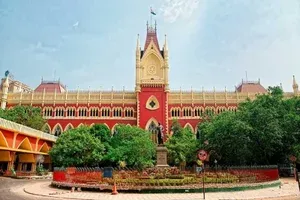
Nagarathna and Justice Joymalya Bagchi directed the petitioner to approach the Calcutta High Court .
The challenged orders are dated 4 June 2026 (Food and Supplies Department) and 19 May 2026 (Women and Child Development Department).
The PIL warns that between 50 lakh and 58 lakh living persons could lose ration card access if the voter-list matching is applied mechanically.
The petition argues the orders contradict the Supreme Court's own SIR judgment, which clarified that electoral deletions do not constitute a determination of citizenship.
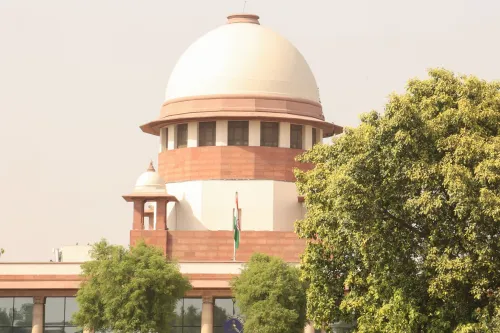
The Supreme Court on Tuesday, 23 June 2026, declined to grant an urgent hearing on a public interest litigation (PIL) challenging two West Bengal government orders that allegedly tie welfare entitlements under the Public Distribution System (PDS) and Annapurna Yojana to the outcomes of the Election Commission of India's (ECI) Special Intensive Revision (SIR) of electoral rolls. The bench directed the petitioner to first approach the Calcutta High Court, which had resumed sitting after its summer recess.
What the Bench Said
A bench of Justice B.V. Nagarathna and Justice Joymalya Bagchi declined the urgent mention, with Justice Nagarathna advising the petitioner plainly: 'Please take it to the Calcutta High Court.' The court noted that the Calcutta High Court had already resumed functioning after its summer vacation and was the appropriate forum for initial relief.
What the PIL Challenges
The writ petition, filed under Article 32 of the Constitution, targets two specific government instruments: an order dated 4 June 2026 issued by the Food and Supplies Department of the West Bengal government, and a notification dated 19 May 2026 issued by the state's Department of Women and Child Development and Social Welfare.
According to the plea, the June order directs authorities to identify, scrutinise, and delete beneficiaries from the food security framework based on SIR classifications, while the May notification allegedly makes migration of Annapurna Yojana beneficiaries contingent on classifications such as 'dead', 'shifted', 'deleted', and 'absentee' electors.
Scale of the Alleged Impact
The petitioner contended that electoral status and SIR classifications have no legal nexus with eligibility for food security or welfare assistance. If the voter-list matching exercise is applied mechanically, the plea claimed, between 35 lakh and 60 lakh living persons could face deactivation of ration cards — with the most probable estimate ranging between 50 lakh and 58 lakh beneficiaries. The plea argued this would violate the National Food Security Act, 2013, which guarantees access to subsidised foodgrains, and would breach principles of natural justice by allowing deletions without giving affected persons a hearing.
The SIR Judgment Background
The PIL invoked the Supreme Court's own recent ruling — delivered by a bench headed by Chief Justice of India Surya Kant and also comprising Justice Bagchi — which upheld the constitutional validity of the ECI's SIR exercise. That judgment held that electoral roll revision fell within the poll body's statutory powers and did not violate the Representation of the People Act, 1950.
Crucially, however, the apex court in that ruling clarified that any citizenship inquiry conducted during the SIR exercise was limited strictly to electoral purposes and did not constitute a final determination of citizenship. It further directed that persons deleted from rolls on grounds of doubtful citizenship be referred to the competent authority under the Citizenship Act, 1955 for adjudication, with their names restored if they were ultimately found to be citizens. The PIL argued that West Bengal's orders violate precisely this clarification by using SIR classifications for collateral welfare purposes.
What Happens Next
With the Supreme Court declining to intervene at this stage, the petitioner is expected to move the Calcutta High Court for urgent relief. The outcome will likely determine whether the two state government instruments remain operative during the pendency of any legal challenge. Welfare rights advocates argue that any delay in judicial intervention could result in large-scale disruption to food entitlements for economically vulnerable households ahead of the monsoon season.
Point of View
Which the apex court's own SIR judgment arguably forecloses. The 50–58 lakh figure, if even partially accurate, would represent one of the largest single-state disruptions to food entitlements since the National Food Security Act came into force. The Calcutta High Court will now decide whether to stay the orders pending hearing — and its speed will matter enormously to households who may not survive a bureaucratic limbo through the monsoon months.
NationPress
22 Sept 2026
Frequently Asked Questions
Why did the Supreme Court decline to hear the West Bengal PDS-SIR PIL urgently?
The Supreme Court declined urgent listing because the Calcutta High Court had resumed functioning after its summer vacation and is the appropriate first forum for the challenge. Justice B.V. Nagarathna directed the petitioner to seek relief there first, which is standard practice before invoking Article 32 jurisdiction.
What do the two West Bengal government orders actually say?
The Food and Supplies Department order dated 4 June 2026 directs authorities to identify and delete PDS beneficiaries based on SIR electoral classifications. The Women and Child Development Department notification dated 19 May 2026 makes migration of Annapurna Yojana beneficiaries contingent on SIR categories such as 'dead', 'shifted', 'deleted', and 'absentee' electors.
How many people could lose ration card access under the challenged orders?
According to the PIL, between 35 lakh and 60 lakh living persons could face ration card deactivation if the voter-list matching exercise is applied mechanically, with the most likely figure estimated between 50 lakh and 58 lakh beneficiaries.
How does the Supreme Court's earlier SIR judgment relate to this case?
The Supreme Court, in a ruling by a bench headed by Chief Justice Surya Kant, upheld the SIR exercise but explicitly clarified that electoral roll deletions do not constitute a final determination of citizenship and cannot be used for collateral purposes. The PIL argues West Bengal's orders violate this clarification by using SIR classifications to deny welfare entitlements.
What happens to people deleted from electoral rolls on citizenship grounds under the SIR?
The Supreme Court directed that persons deleted from electoral rolls on grounds of doubtful citizenship must be referred to the competent authority under the Citizenship Act, 1955 for adjudication, with notice and a hearing. Their names must be restored to the rolls if they are ultimately found to be citizens.