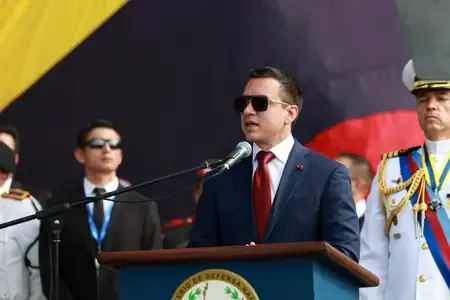
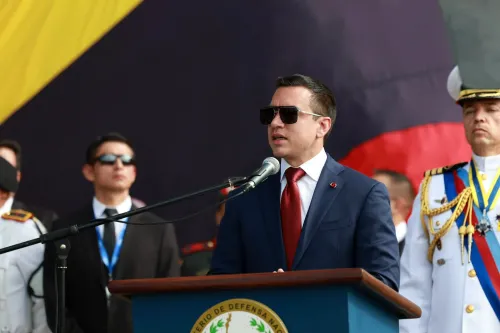
Ecuador Major Non-NATO Ally push: 5 US lawmakers urge Rubio to act
Synopsis
Five US lawmakers are pushing Secretary of State Marco Rubio to grant Ecuador a rare Major Non-NATO Ally designation — a status held by only 19 countries globally. The move would give Quito access to US military financing, surplus defence equipment, and counterterrorism technology as Ecuador battles record cartel violence on a Pacific cocaine corridor feeding both the US and Europe.
Key Takeaways
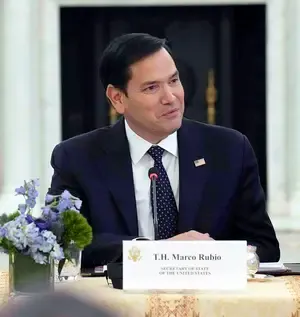
Five US lawmakers , led by Congresswoman María Elvira Salazar , wrote to Secretary of State Marco Rubio on 14 August urging Ecuador's designation as a Major Non-NATO Ally .
The designation would give Ecuador access to US military financing , surplus defence equipment, counterterrorism technology, and cooperative defence R&D.
Ecuador's Pacific coast is reportedly a major cocaine transit corridor for shipments bound for the US and Europe .
Only 19 countries currently hold MNNA status; four are in Latin America — Argentina, Brazil, and Colombia (twice listed in source).
The status does not carry NATO's collective defence guarantee under Article 5 .
The State Department has not yet publicly responded to the lawmakers' request.
Five US lawmakers have formally urged Secretary of State Marco Rubio to designate Ecuador as a Major Non-NATO Ally (MNNA), arguing the status would deepen security cooperation and bolster Quito's campaign against transnational drug cartels and organised crime. The letter, dated 14 August, was led by Congresswoman María Elvira Salazar and co-signed by Congressman Vern Buchanan, Carlos Giménez, Carol Miller, and Greg Steube.
What the Lawmakers Are Asking
The bipartisan group called on Rubio and the State Department to formally grant Ecuador the MNNA designation, which would unlock a suite of US defence and security privileges. These include expanded military financing and defence loans, priority access to surplus US defence equipment, and eligibility for cooperative defence research and development programmes.
Ecuador would also gain greater access to counterterrorism cooperation and technology, as well as new opportunities for procurement partnerships with the US defence industry — tools the lawmakers say are essential for confronting criminal networks that have embedded themselves across the country.
Why Ecuador, and Why Now
The lawmakers described Ecuador as being on the front lines of the Western Hemisphere's drug crisis. Criminal organisations have exploited the country's Pacific coastline as a major transit corridor for cocaine shipments destined for the United States and Europe. The letter also cited record levels of violence linked to these criminal groups, which have strained Ecuador's security institutions in recent years.
'The battle against the cartels does not stop at Ecuador's borders,' Salazar said. 'The United States has a strategic interest in helping democratic allies confront the criminal organizations that threaten our hemisphere. Designating Ecuador as a Major Non-NATO Ally would strengthen one of our closest security partners in the Western Hemisphere.'
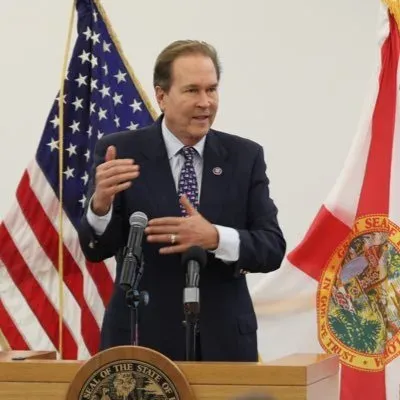
Buchanan, in his capacity as Chairman of the House Democracy Partnership, added that he had seen firsthand Ecuador's commitment to combating organised crime, countering narcotics trafficking, and advancing democratic institutions. 'Recognizing Ecuador as a Major Non-NATO Ally would strengthen our strategic partnership, and I am proud to support this effort,' he said.
What Major Non-NATO Ally Status Means
The MNNA designation recognises close US defence and security partnerships with countries outside the North Atlantic Treaty Organisation (NATO). Crucially, it does not carry NATO's Article 5 collective defence guarantee — under which an attack on one member is treated as an attack on all — but it does confer significant military and financial advantages.
Currently, 19 countries hold the designation, including Argentina, Australia, Brazil, Colombia, Israel, Japan, South Korea, and Pakistan, among others. In Latin America, four nations — Argentina, Brazil, Colombia, and Ecuador's northern neighbour Colombia — already hold the status. Ecuador's inclusion would make it the fifth in the region.
Strategic Implications for the Region
This comes amid a broader US effort to shore up security partnerships across Latin America as cocaine trafficking routes shift and cartel violence intensifies. Ecuador, once considered one of the region's more stable nations, has seen a sharp deterioration in public security over the past two years, prompting a state of emergency and military deployments by its government.
If approved, the designation would represent a significant upgrade in the bilateral relationship and could accelerate joint operations targeting drug supply chains before shipments reach US shores. The State Department has not publicly responded to the letter.
Point of View
Not a sponsor — but the real question is whether MNNA benefits will translate into operational capacity or simply add a diplomatic badge. With the State Department yet to respond, the letter is a political signal as much as a policy push, and its fate will test how seriously the Rubio-led State Department prioritises hemispheric security over other bilateral equities.
NationPress
28 Sept 2026
Frequently Asked Questions
What is Major Non-NATO Ally status and what does it offer?
Major Non-NATO Ally (MNNA) status is a US designation for close defence and security partners that are not NATO members. It provides military financing, priority access to surplus US defence equipment, expanded training, counterterrorism cooperation, and eligibility for joint defence research — but does not include NATO's Article 5 collective defence guarantee.
Why are US lawmakers pushing for Ecuador to receive this designation?
The lawmakers argue that Ecuador is on the front lines of transnational drug trafficking, with criminal groups using its Pacific coast as a major corridor for cocaine bound for the US and Europe. They say MNNA status would give Ecuador the tools to confront these organisations more effectively and protect both Ecuadorian civilians and the US homeland.
Who signed the letter to Secretary Rubio?
The letter was led by Congresswoman María Elvira Salazar and co-signed by Congressman Vern Buchanan, Carlos Giménez, Carol Miller, and Greg Steube — a group of five US lawmakers urging the State Department to act on the designation.
How many countries currently hold Major Non-NATO Ally status?
As of the lawmakers' letter, 19 countries hold the MNNA designation, including Argentina, Australia, Brazil, Colombia, Israel, Japan, South Korea, and Pakistan, among others. Four of these are in Latin America.
Has the US State Department responded to the request?
The State Department had not publicly responded to the lawmakers' letter as of the time of reporting. The designation requires approval from the Secretary of State, meaning the decision ultimately rests with Marco Rubio.