Kabul school grenade blast injures 52, including children, in Dasht-e Barchi
Synopsis
A grenade detonated near a private school in Kabul's Hazara-majority Dasht-e Barchi district, wounding more than 52 people including children. Whether the blast was accidental or deliberate remains unresolved — but the UN's Special Rapporteur has already called it a 'heinous attack' and demanded an independent investigation, spotlighting the district's grim history of targeted violence.
Key Takeaways
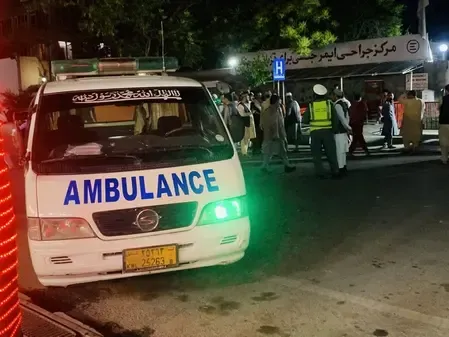
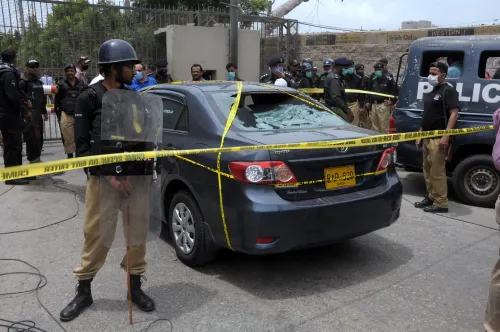
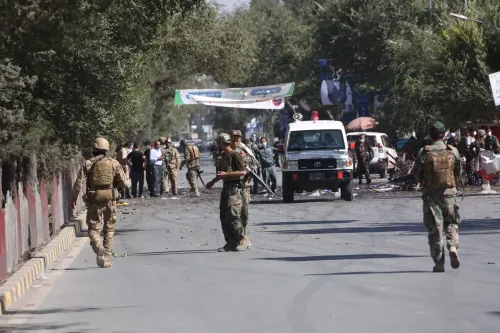
A grenade explosion near Sham-e Hedayat private school in Dasht-e Barchi , western Kabul , injured more than 52 people , including children, on Monday, 18 August .
Taliban police spokesperson Khalid Zadran confirmed a hand grenade caused the blast but gave no details on its origin or trigger.
Witnesses say the grenade reportedly detonated while in the possession of a school student, who was also wounded.
Authorities have not yet determined whether the explosion was accidental or intentional; an investigation is ongoing.
UN Special Rapporteur Richard Bennett condemned the 'heinous attack' and called for a full independent investigation.
Dasht-e Barchi , home to a large Hazara and Shia community, has faced repeated deadly attacks on schools and civilians in recent years.
A grenade explosion near the Sham-e Hedayat private school in the Dasht-e Barchi area of western Kabul injured more than 52 people, including children, on Monday, 18 August, according to security officials and witnesses cited by local media. The blast has reignited fears over civilian safety in one of the Afghan capital's most vulnerable neighbourhoods.
What Happened
Taliban police spokesperson Khalid Zadran confirmed the explosion was caused by a hand grenade but offered no details on how it detonated or who was responsible. According to witnesses, the grenade reportedly went off while in the possession of a school student, who was also among the wounded. How the student came to possess the grenade and the circumstances of its detonation remain unknown, according to reports from Afghanistan's Khaama Press.
Authorities have yet to determine whether the explosion was accidental or deliberate. An investigation is under way to establish how the grenade was obtained and what triggered the blast.
A Neighbourhood Under Recurring Threat
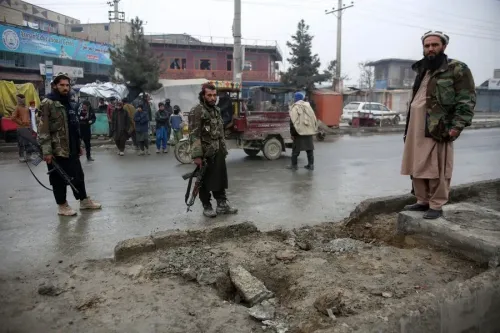
Dasht-e Barchi is a densely populated district home to a large Hazara and Shia community. The area has endured a pattern of deadly attacks over the years, with schools and educational institutions among the recurring targets. The latest incident is the most recent in a grim series of violence directed at civilians in this part of the city.
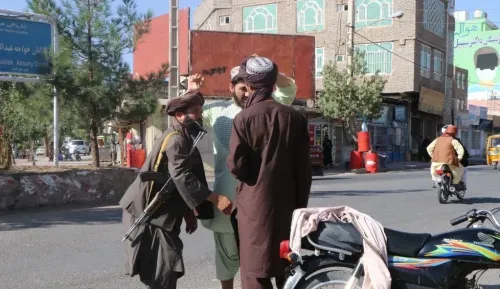
The explosion has renewed urgent concerns about the continued presence of explosive materials and weapons in civilian areas — a direct legacy of decades of armed conflict in Afghanistan.
International Condemnation
UN Special Rapporteur on human rights in Afghanistan, Richard Bennett, strongly condemned what he called a 'heinous attack', and called for an independent investigation with accountability for those responsible. In a post on X on Tuesday, Bennett wrote: 'I condemn the heinous attack harming numerous children near a school in Dasht-e Barchi yesterday. Once again, this mainly Hazara part of Kabul has been targeted. Deplorable! A full and independent investigation with a view to bringing the perpetrators to justice is essential.'
Broader UN Concerns Over Afghanistan
The blast comes days after the United Nations Assistance Mission in Afghanistan (UNAMA) urged Taliban authorities to take concrete steps toward lasting stability. UNAMA highlighted restrictions on women and girls, and ongoing terrorism concerns, as key obstacles to post-conflict recovery.
Georgette Gagnon, Deputy Special Representative of the Secretary-General and Officer-in-Charge of UNAMA, said: 'The last five years have shown that Afghans deeply value peace and stability after decades of war. But sustainable peace and prosperity require more than just an absence of conflict. Afghanistan's future depends on building a society in which the rights and potential of all Afghans are realised, and institutions are responsive and accountable.'
With investigations ongoing and no group yet claiming responsibility, the incident underscores the fragile security environment facing Afghan civilians — particularly in communities already marked by years of targeted violence.
Point of View
With schools serving as both symbolic and physical targets. The Taliban's sparse statement — confirming a grenade without addressing how a student came to possess one — reflects the accountability vacuum that defines post-2021 Afghanistan. The UN's call for an independent probe is morally necessary but operationally hollow while Taliban authorities control the investigative process. What the incident reveals most starkly is that explosive remnants of war remain a live threat in civilian spaces, and no credible disarmament or clearance programme is in sight.
NationPress
2 Oct 2026
Frequently Asked Questions
What happened in the Kabul school grenade blast?
A hand grenade exploded near the Sham-e Hedayat private school in the Dasht-e Barchi area of western Kabul on Monday, 18 August, injuring more than 52 people including children. Taliban police confirmed the grenade caused the blast, but the circumstances of how it detonated remain under investigation.
Who was responsible for the Dasht-e Barchi explosion?
No group has claimed responsibility, and authorities have not yet determined whether the explosion was accidental or deliberate. Witnesses reportedly said the grenade was in the possession of a school student when it went off, but how the student acquired it is unknown.
Why is Dasht-e Barchi significant?
Dasht-e Barchi is a densely populated district in western Kabul with a large Hazara and Shia population. The area has been repeatedly targeted in deadly attacks, including violence specifically directed at schools and educational institutions, making it one of Kabul's most at-risk neighbourhoods.
What did the UN say about the Kabul school blast?
UN Special Rapporteur on human rights in Afghanistan Richard Bennett condemned the incident as a 'heinous attack' and called for a full, independent investigation to bring those responsible to justice. Separately, UNAMA urged Taliban authorities to take steps toward lasting stability and address ongoing security and human rights concerns.
What is the broader security situation in Afghanistan?
Afghanistan continues to face serious security challenges, including the presence of explosive remnants of war in civilian areas and recurring attacks on vulnerable communities. UNAMA has flagged restrictions on women and girls and terrorism concerns as major obstacles to post-conflict recovery, warning that sustainable peace requires accountable institutions and the realisation of rights for all Afghans.