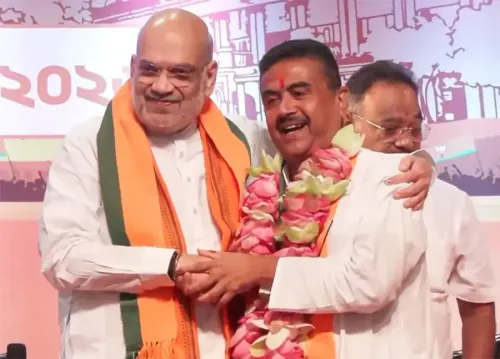
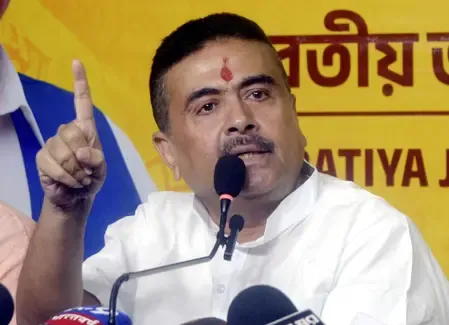
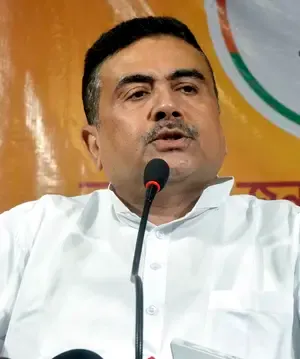
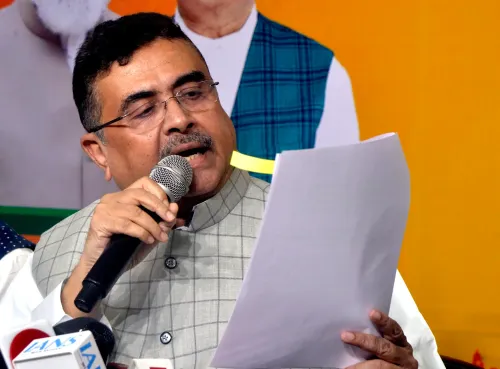
West Bengal CM Adhikari pledges wider democratic space for opposition MLAs
Synopsis
West Bengal's new BJP Chief Minister Suvendu Adhikari has done something his predecessors reportedly never did — invite opposition MLAs to administrative meetings and the budget process. Speaking at an MLA orientation in Kolkata, he drew a pointed contrast with 34 years of Left Front rule and 15 years of TMC governance, both of which he accused of shutting out opposition voices entirely.
Key Takeaways
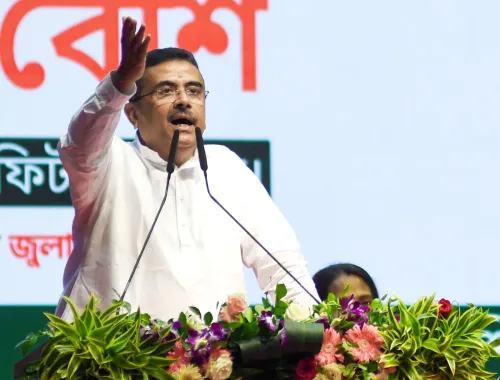
West Bengal CM Suvendu Adhikari addressed a two-day MLA orientation programme at the West Bengal Assembly , Kolkata , on 3 July .
Adhikari, the state's ninth Chief Minister , pledged greater democratic inclusion for opposition legislators.
He alleged that under the previous TMC regime, opposition MLAs were excluded from public programmes and ignored by local officials.
In his first one and a half months in office, Adhikari held five administrative meetings with both ruling and opposition MLAs present.
He also involved the opposition in the budget process — a first, according to his account.
Adhikari called for modernising Assembly infrastructure, noting that voting is still conducted on paper with no electronic system in place.
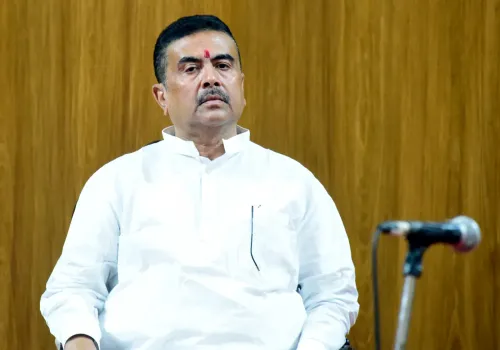
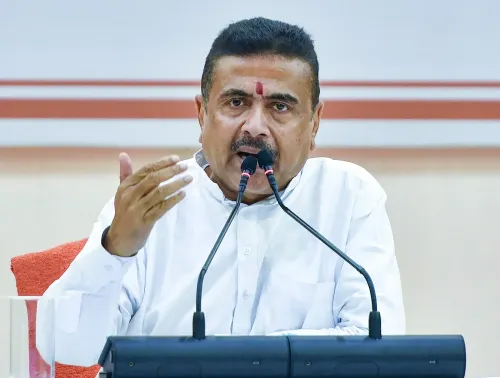
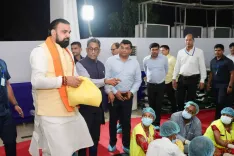
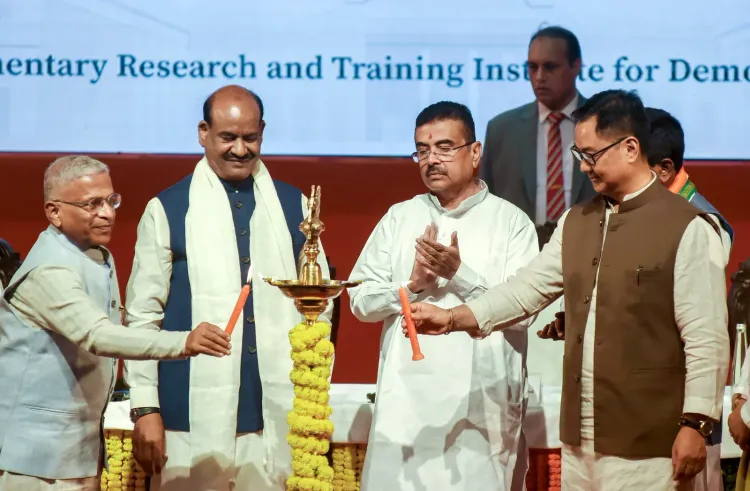
West Bengal Chief Minister Suvendu Adhikari on Friday, 3 July pledged greater democratic space for opposition legislators in the state, asserting that the previous All India Trinamool Congress (TMC) regime had systematically excluded opposition members from governance. He made the remarks at the inauguration of a two-day orientation programme for newly-elected legislators at the West Bengal Assembly in Kolkata.
What Adhikari Said
Speaking candidly about the political culture he inherited, Adhikari drew a sharp contrast between his administration and those of his predecessors. 'First, during the 34-year Left Front regime from 1977 to 2011, everything operated from the party office of the ruling dispensation. And the least said is better about what happened in the last 15 years, from 2011 to 2026,' he said.
He added that under the previous regime, 'there was no respect for the opposition MLAs. The block development officers and officer-in-charge of police stations even refused to attend the telephone calls of the opposition MLAs. In any public programme, only the ruling party MLAs were invited. I was the leader of the opposition for five years. I was not invited to a single programme.'
Changes in the First Two Months
Adhikari, now the ninth Chief Minister of West Bengal, said he had made deliberate efforts to reverse this pattern in the first two months of his tenure. 'In the last one and a half months, I have held five administrative meetings, where both the ruling and the opposition MLAs were invited. I have also involved the opposition in the budget process. This is because I believe that we will have to develop the state together,' he said.
This marks a notable departure from the governance style that critics — including Adhikari himself when he served as Leader of the Opposition — had long flagged as exclusionary.
Modernising Assembly Infrastructure
Beyond political inclusion, Adhikari also criticised both the Left Front and TMC regimes for failing to modernise the Assembly's operational framework. He pointed out that voting in the Assembly is still conducted on paper, with no electronic voting system in place.
'There is a need to increase the popularity of our MLAs, ruling or opposition. Voting is still done on paper here. There is no electronic system. The infrastructure of the Assembly needs to be fixed. That is necessary for the sake of the welfare of the people,' he said. He called on legislators to work with the people rather than the party, adding: 'West Bengal will lead the country again.'
Context and Significance
The orientation programme for newly-elected MLAs comes shortly after a change of power in the state, with Adhikari's Bharatiya Janata Party (BJP) ending the TMC's 15-year run. The new Chief Minister's outreach to opposition members — including inviting them to administrative meetings and the budget process — signals an attempt to reset the political culture of the state legislature.
Notably, West Bengal has historically been marked by sharp political polarisation, with successive ruling parties accused of marginalising opponents at the grassroots level. Whether this stated commitment translates into sustained institutional change will be closely watched by both legislators and civil society in the months ahead.
Point of View
But it arrives in a state where such promises have historically dissolved once ruling parties consolidate power. He speaks from personal experience — five years as Leader of the Opposition under TMC — which lends his critique credibility, but also raises the bar for his own administration. The real test will not be five administrative meetings; it will be whether block-level officials treat opposition MLAs differently a year from now. West Bengal's governance culture is deeply entrenched, and structural change requires more than a Chief Minister's instruction — it requires accountability mechanisms that outlast goodwill.
NationPress
1 Oct 2026
Frequently Asked Questions
What did West Bengal CM Suvendu Adhikari announce at the MLA orientation programme?
Chief Minister Suvendu Adhikari pledged greater democratic space for opposition legislators at a two-day MLA orientation programme in Kolkata on 3 July. He said his government had already held five administrative meetings that included both ruling and opposition MLAs, and had involved the opposition in the budget process.
What did Adhikari say about the previous TMC and Left Front regimes?
Adhikari alleged that under the TMC's 15-year rule (2011–2026), opposition MLAs were not invited to public programmes and were ignored by local officials including block development officers and police station heads. He made similar criticisms of the 34-year Left Front regime (1977–2011), saying governance operated from the ruling party office rather than the government.
Who is Suvendu Adhikari and what is his political background?
Suvendu Adhikari is the ninth Chief Minister of West Bengal and a senior leader of the Bharatiya Janata Party (BJP). He previously served as Leader of the Opposition in the West Bengal Assembly during the TMC government, a period he described as one of systematic exclusion from governance.
What infrastructure changes did Adhikari propose for the West Bengal Assembly?
Adhikari called for modernising the Assembly's infrastructure, specifically highlighting that voting is still conducted on paper with no electronic voting system. He said upgrading these systems was necessary for the welfare of the people and the credibility of elected representatives.
Why does opposition inclusion in West Bengal matter?
West Bengal has historically been marked by sharp political polarisation, with successive ruling parties — first the Left Front and then the TMC — accused of marginalising opponents at the grassroots level. Adhikari's stated commitment to inclusion, if sustained, would represent a significant shift in the state's political culture.