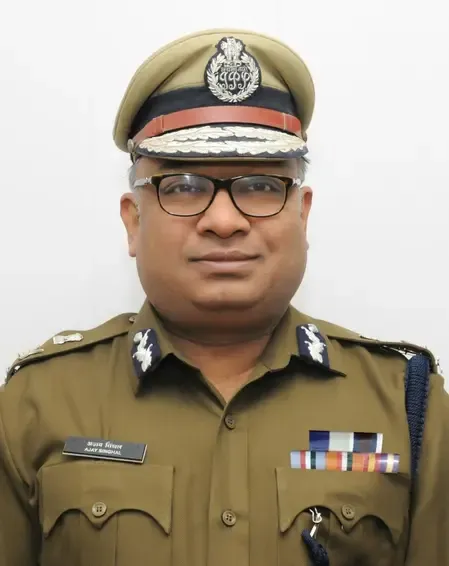
Did 1992-batch IPS officer Singhal take charge as Haryana's DGP?
Synopsis
Ajay Singhal, a 1992-batch IPS officer, has taken the helm as Haryana's new Director General of Police. With a commitment to modernizing policing and enhancing public trust, Singhal aims to address rising crime rates and ensure the safety of vulnerable groups. His proactive strategies promise a redefined approach to law enforcement in Haryana.
Key Takeaways
Ajay Singhal is the new DGP of Haryana.
Focus on modernizing policing practices.
Commitment to public safety and women's safety .
Plans for a fully automated grievance redressal system.
Aim to improve the conviction rate to 100% .
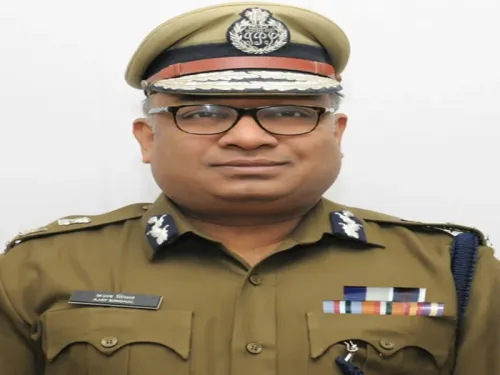
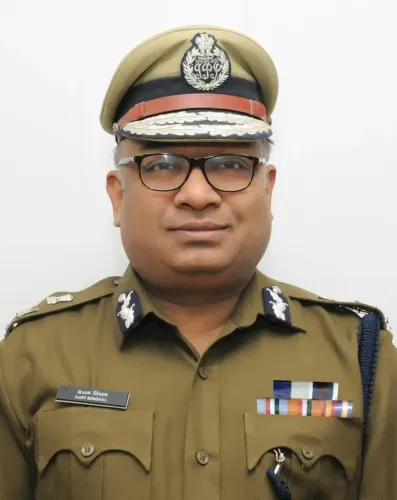
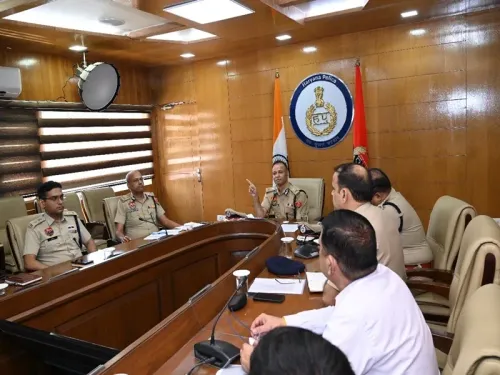
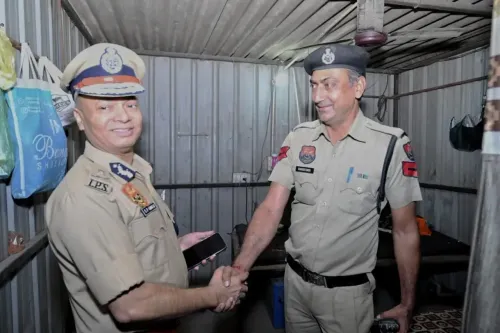
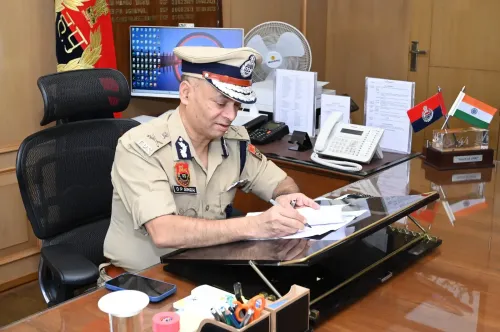
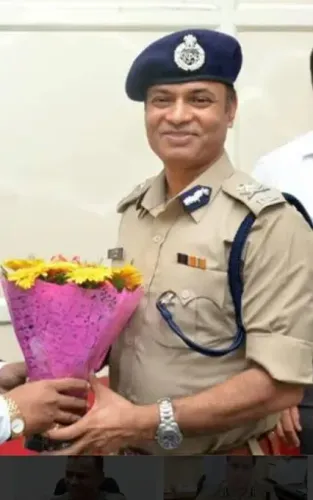
Chandigarh, Jan 1 (NationPress) On Thursday, Ajay Singhal, a distinguished officer from the 1992 batch of the Indian Police Service (IPS), officially assumed the role of the 42nd Director General of Police (DGP) for Haryana, succeeding the outgoing O.P. Singh.
His father, Om Prakash Singhal, was present during this significant transition.
DGP Singhal articulated that policing represents a dynamically evolving and challenging responsibility, adapting to shifting crime landscapes, advancements in technology, and the expectations of the public.
He assured that the Haryana Police is fully equipped, vigilant, and dedicated to addressing new challenges through a well-structured, phased, and goal-driven approach aimed at bolstering law and order throughout the state.
Ensuring peace, public safety, and a robust law-and-order framework will be his primary focus.
He stated that the Haryana Police would operate as a unified and professional unit, prioritizing accountability, sensitivity, and community-oriented policing.
DGP Singhal noted that the recently introduced criminal laws have been tailored to meet the demands of a modern and progressive India.
“These laws are designed to enhance the efficiency, speed, and victim-centric nature of the justice delivery system. The Haryana Police will implement these measures effectively to foster proactive, technology-driven, and results-oriented policing,” he stated.
Building public confidence in the police remains a pivotal aim. The DGP announced plans to fully automate and enhance the grievance redressal system. Complaints will be tracked via digital platforms to guarantee timely, equitable, and qualitative resolutions.
He mentioned that the state’s conviction rate has already reached approximately 72-73%, and committed efforts will be made to elevate it towards the target of 100%.
Highlighting the safety of women as a crucial area, the DGP pledged to implement a comprehensive strategy to prevent crimes against women.
He emphasized strengthening technology-enabled surveillance and scientifically identifying crime-prone hotspots for targeted interventions. Special attention will also be given to safeguarding Dalits, marginalized, and vulnerable groups, ensuring prompt and stringent action in cases of crimes against them.
Point of View
The appointment of Ajay Singhal as Haryana's DGP resonates with the ongoing efforts to enhance law enforcement across India. His experience and commitment to modern policing are crucial as the state navigates complex crime patterns and public expectations. The focus on community engagement and technological advancement reflects a forward-thinking approach that aligns with national priorities for safety and justice.
NationPress
30 Sept 2026
Frequently Asked Questions
Who is Ajay Singhal?
Ajay Singhal is a 1992-batch IPS officer who recently became the Director General of Police (DGP) for Haryana.
What are the priorities of the new DGP of Haryana?
The new DGP, Ajay Singhal, prioritizes public safety, enhancing the justice delivery system, and modernizing policing methods.
How will the Haryana Police address women's safety?
The Haryana Police under DGP Singhal will implement a comprehensive strategy focused on preventing crimes against women and enhancing surveillance.
What is the current conviction rate in Haryana?
The current conviction rate in Haryana is approximately 72-73%, with efforts aimed at improving it to 100%.
What technological advancements will be made in policing?
The Haryana Police plans to enhance technology-enabled surveillance and automate the grievance redressal mechanism.