AMC orders carpooling, shared rides to cut petrol and diesel use
Synopsis
The Ahmedabad Municipal Corporation has formalised what most Indian civic bodies only talk about — a binding internal directive requiring employees to carpool or share two-wheelers to cut petrol and diesel use. With 1,405 new buses on the way and the Gandhinagar Mayor riding the metro to work, Gujarat's twin cities are making public transport a matter of institutional policy, not just public appeal.
Key Takeaways
The Ahmedabad Municipal Corporation (AMC) issued a carpooling and shared-mobility directive to all employees on 14 May .
The circular covers office commuters, field officers, and two-wheeler users, requiring shared travel where colleagues live nearby.
1,350 AMTS and BRTS buses are currently operational; 1,405 additional buses are expected to be inducted soon.
Gandhinagar Mayor Miraben Patel commuted by metro from Raysan Metro Station to Old Secretariat Station to promote public transport.
The directive echoes Prime Minister Narendra Modi's public appeals for reduced fuel consumption and greater use of shared mobility.
The Ahmedabad Municipal Corporation (AMC) has directed its employees to adopt carpooling and shared mobility arrangements to reduce petrol and diesel consumption across all departments and zonal offices. The circular, issued by the Municipal Commissioner on Thursday, 14 May, marks a structured push by one of Gujarat's largest civic bodies to curb fuel use among its own workforce.
What the Directive Says
The circular instructs all head officers and staff working in the same or nearby municipal office premises to coordinate carpooling for their daily commute, particularly where employees live in close proximity. Officers engaged in field duties have been asked to adopt shared travel arrangements, including carpooling or two-wheeler sharing with colleagues.
Employees commuting on two-wheelers have similarly been directed to arrange shared rides with nearby colleagues. The administration stated that the measures are intended to ensure 'minimum use of national resources like petrol and diesel'.
Public Transport Push
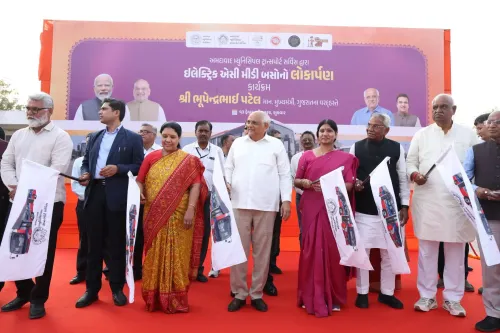
Alongside the internal directive, the AMC highlighted that 1,350 buses under the Ahmedabad Municipal Transport Service (AMTS) and the Bus Rapid Transit System (BRTS) are currently operational. The civic body added that 1,405 additional buses are expected to be inducted in the coming period, and urged citizens to make greater use of public transport, including the Metro system.
Gandhinagar Mayor Leads by Example
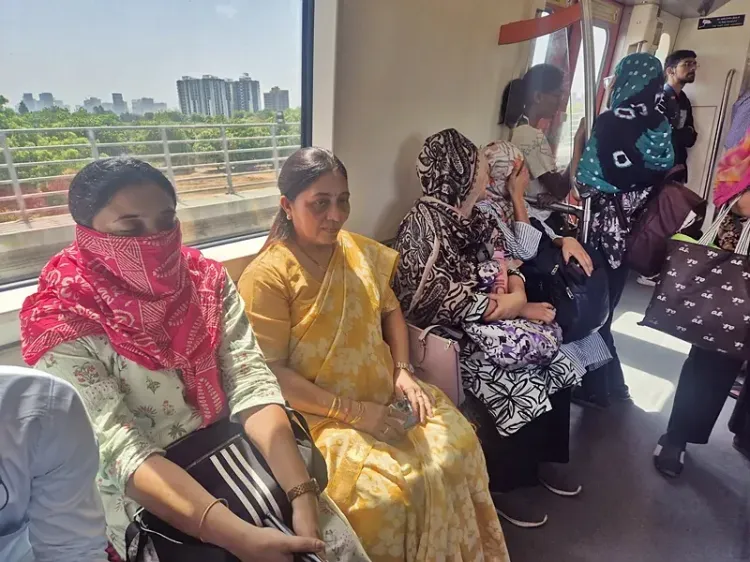
Gandhinagar Mayor Miraben Patel underscored the message by commuting via metro from Raysan Metro Station, near her residence, to Old Secretariat Station to reach her office. During the journey, she interacted with passengers and encouraged the adoption of public transport, describing it as 'a practical and environmentally responsible mode of travel'.
She noted that modern cities require efficient and well-organised transport systems, and that metro services help reduce congestion, save time, and lower air pollution. She also referenced appeals by Prime Minister Narendra Modi encouraging citizens to reduce fuel consumption and embrace shared mobility as part of broader energy conservation goals.
National Context
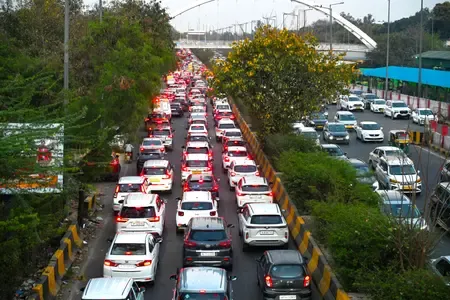
The AMC directive aligns with recent public remarks by Prime Minister Narendra Modi urging citizens to limit unnecessary fuel use, increase reliance on public transport, and adopt carpooling to ease pressure on energy resources and reduce urban congestion. The civic body's move is among the more formalised institutional responses to those appeals, extending the directive beyond public messaging to enforceable internal policy. This comes amid rising concerns over urban air quality and fuel import costs, with several Indian cities ramping up public transport capacity as a long-term corrective.
Whether the AMC's directive translates into measurable fuel savings will depend on implementation monitoring — a detail the circular has not yet specified publicly.
Point of View
Which is where similar initiatives have historically stalled. The backdrop matters: India's urban transport policy has long relied on exhortation over enforcement, and voluntary carpooling schemes at government offices have a poor record of sustained uptake. The addition of 1,405 buses is the more structurally significant move, but that figure comes without a commissioning timeline. The Gandhinagar Mayor's metro commute is good optics, but durable modal shift requires fare structures and frequency that make public transport the rational default — not just the virtuous choice.
NationPress
29 Sept 2026
Frequently Asked Questions
What has the Ahmedabad Municipal Corporation directed its employees to do?
The AMC has directed all employees to adopt carpooling and shared-mobility arrangements — including two-wheeler sharing — for their daily commute, in order to reduce petrol and diesel consumption. The circular was issued by the Municipal Commissioner on 14 May and applies across departments and zonal offices.
How many buses does Ahmedabad's public transport system currently operate?
The Ahmedabad Municipal Transport Service (AMTS) and the Bus Rapid Transit System (BRTS) together operate 1,350 buses. An additional 1,405 buses are expected to be inducted in the coming period, according to the AMC.
Why did Gandhinagar Mayor Miraben Patel take the metro to work?
Mayor Miraben Patel commuted by metro from Raysan Metro Station to Old Secretariat Station to publicly encourage the use of public transport. She described it as a practical and environmentally responsible travel option, and referenced Prime Minister Modi's appeals for reduced fuel consumption.
How does this directive connect to national energy policy?
The AMC circular aligns with Prime Minister Narendra Modi's recent public appeals urging citizens to limit fuel use, carpool, and rely more on public transport to support energy conservation and reduce urban congestion. The AMC directive is one of the more formalised institutional responses to those appeals.
Will AMC employees be penalised for not carpooling?
The circular does not publicly specify enforcement mechanisms or penalties for non-compliance. The directive is framed as an administrative instruction, but details on monitoring or accountability have not been disclosed.