Gujarat CM flags off 'Two Wheeler for Two' bike rally
Synopsis
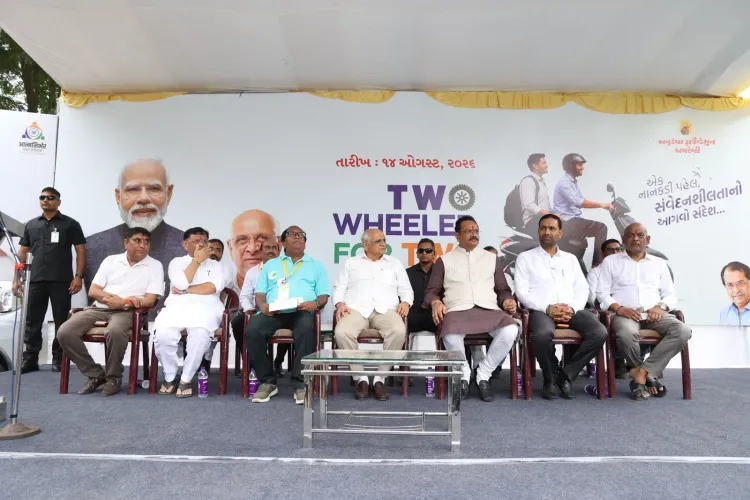
The Chief Minister of Gujarat flagged off a bike rally on 14 August 2026 under the 'Two Wheeler for Two' campaign by Anukampa Foundation, urging riders to offer pillion lifts to strangers — targeting social hesitation while promising cuts in fuel use, pollution, and urban traffic congestion.
Key Takeaways
The Chief Minister of Gujarat flagged off a bike rally on 14 August 2026 under the 'Two Wheeler for Two' campaign.
The campaign is organised by Anukampa Foundation and targets social hesitation around offering or accepting pillion rides.
The initiative aims to reduce fuel consumption , vehicular pollution , and urban traffic congestion .
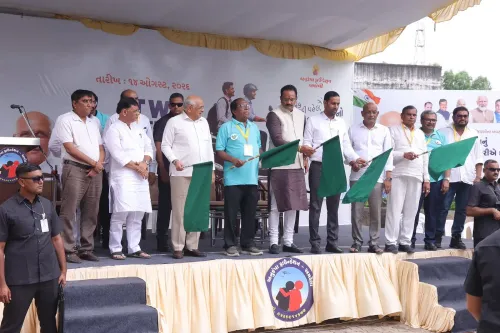
The flag-off took the form of a public bike rally to demonstrate the concept on Gujarat's roads.
No coordinated national programme of this kind currently exists; Gujarat's official backing gives it state-level visibility.
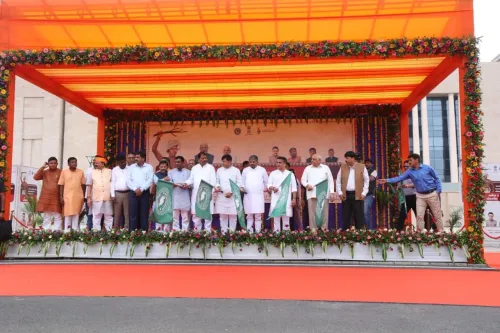
A convoy of two-wheelers rolled out across Gujarat on Friday, 14 August 2026, carrying a message that is equal parts civic and environmental: stop hesitating to share a ride. The Chief Minister of Gujarat flagged off a bike rally organised by Anukampa Foundation under the 'Tu Wheeler for Tu' ('Two Wheeler for Two') campaign — a grassroots mobility drive aimed at normalising the simple act of giving a stranger a lift.
What the 'Two Wheeler for Two' campaign asks of riders
The campaign's premise is disarmingly straightforward: too many two-wheelers travel with an empty pillion seat while tired commuters wait on roadsides. Anukampa Foundation designed the initiative to dissolve the social hesitation — the awkward calculation of whether to offer or accept a ride — that keeps those seats empty. The Chief Minister's Office described the twin goals as samajik sauhaard ane paryavaran suraksha — social harmony and environmental protection.
Beyond the human connection, the campaign makes a practical environmental pitch: more shared rides mean fewer solo trips, which directly cuts fuel consumption, reduces vehicular emissions, and eases congestion on Gujarat's increasingly choked urban roads. Each filled pillion seat is, in effect, one fewer engine idling in traffic.
Why a bike rally, and why now
Flagging off a rally rather than issuing a circular is a deliberate choice — it turns an abstract idea into a visible, participatory event. Riders who join the rally become ambassadors of the concept, demonstrating on public roads that sharing a two-wheeler is normal, safe, and neighbourly. The timing, on the eve of Independence Day, frames the act of civic generosity within a broader national spirit.
Similar ride-sharing nudges have surfaced in other Indian cities, but they have remained hyperlocal and uncoordinated. Gujarat's official flag-off lends the concept state-level visibility — a meaningful step up, even if the programme's reach and measurable impact will only become clear as participation data emerges.
If the culture of shared rides takes even modest hold, the downstream effects — lower fuel bills for commuters, cleaner air, lighter traffic — are real and compounding. The empty pillion seat may be a small thing. What fills it could matter.
Point of View
Which is politically low-risk and high on optics. It sits within a broader pattern of Indian state governments adopting behavioural-nudge campaigns on environment and civic conduct as a complement to infrastructure spending. The campaign's real test will be whether it outlasts the rally's media cycle and produces measurable commuter participation. If it does, it offers a replicable template for other states grappling with urban congestion and air quality without the budget for mass transit expansion.
NationPress
28 Sept 2026
Frequently Asked Questions
What is the 'Two Wheeler for Two' campaign in Gujarat?
It is a ride-sharing initiative by Anukampa Foundation, flagged off by the Chief Minister of Gujarat, that encourages two-wheeler riders to offer pillion lifts to tired commuters on the road, aiming to cut fuel use, reduce pollution, and ease traffic.
Who organised the Two Wheeler for Two bike rally?
The rally was organised by Anukampa Foundation, with the Chief Minister of Gujarat officially flagging it off on 14 August 2026.
What are the goals of the Two Wheeler for Two campaign?
The campaign has three stated goals: promoting social harmony by reducing hesitation around sharing rides, saving fuel, and reducing vehicular pollution and traffic congestion on Gujarat's roads.
How does sharing a two-wheeler pillion help the environment?
Each shared pillion ride replaces a solo trip, meaning fewer engines running for the same number of people moved — directly reducing fuel consumption and vehicle emissions.
Is there a national ride-sharing programme for two-wheelers in India?
No coordinated national programme of this kind currently exists. Similar local experiments have appeared in other Indian states, but Gujarat's official state-level flag-off is a notable step up in institutional backing.