Should Languages and Scripts Be Politicised, Asks HM Amit Shah?
Synopsis
Union Home Minister Amit Shah has called for languages and scripts to remain free from political controversy, urging parents to teach their children in their mother tongues. He emphasizes the importance of preserving cultural heritage and linguistic identities in a diverse region like the Northeast.
Key Takeaways
Amit Shah advocates for preserving languages and scripts from political controversies.
Parents are encouraged to speak to their children in their mother tongues .
Over 200 dialects exist in the Northeastern region, showcasing its cultural diversity.
Education in local languages is a government priority.
Promoting Hindi can enhance governance and inclusivity.
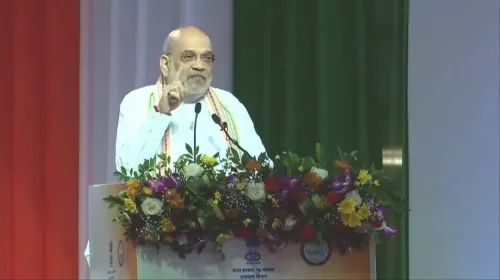
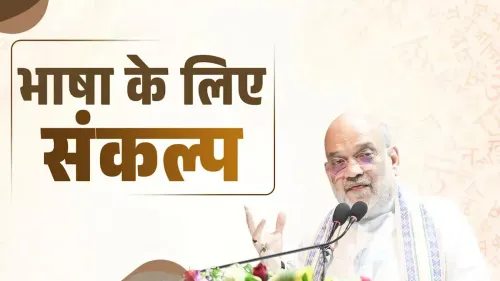
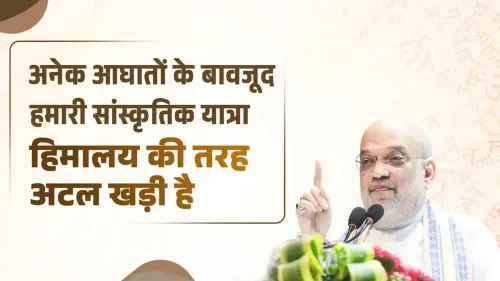
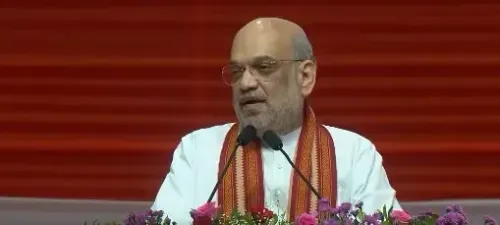
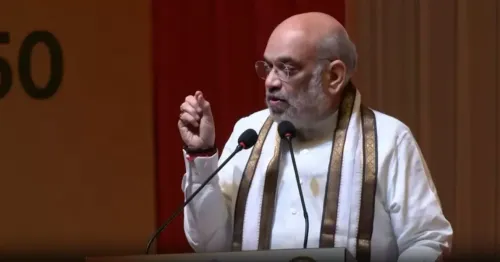
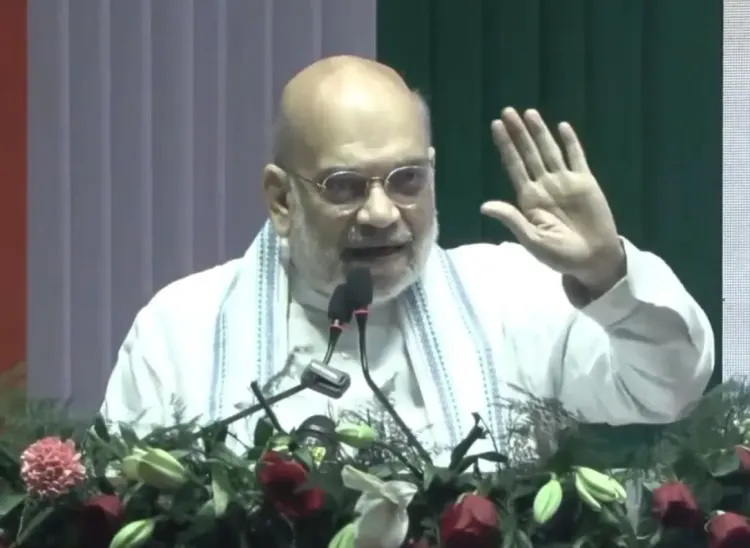
Agartala, Feb 20 (NationPress) Union Home Minister Amit Shah emphasized on Friday that languages and their scripts must not be politicized or become subjects of controversy. He urged parents to communicate with their children in their mother tongue, warning that neglecting this may lead future generations to be cut off from their own literature, culture, and history.
During the Joint Regional Official Language Conference (Rajbhasha Sammelan) for the Eastern, North-Eastern, and Northern regions in Agartala, the Home Minister asserted that if children fail to learn their mother tongue effectively, they will struggle to comprehend their roots, traditions, and cultural heritage.
“The government has prioritized imparting primary education in students’ own mother tongues,” Shah noted while addressing the assembly.
He urged all stakeholders in the Northeastern region to refrain from politicizing languages or sparking controversies over scripts. The Home Minister highlighted the importance of using ‘Nagari Lipi’ for local languages, stating that it would aid in preserving linguistic identities.
Shah remarked that the Northeastern region boasts over 200 dialects and is home to more than 50 festivals, various ethnic communities, a multitude of dance forms, and a rich diversity of cultures. He pointed out that countries that effectively utilize their own languages for governance and education experience faster and more inclusive development.
“While some languages lack scripts, it is crucial to take concrete measures to safeguard such oral languages,” the Union Minister stated, dismissing criticism toward Hindi and asserting that there is no conflict between Hindi and other Indian languages.
Shah claimed that the Northeastern region is exceptionally positioned to bolster Rajbhasha Hindi. He praised the people of Tripura, acknowledging the simultaneous use of Bengali, the tribal Kokborok language, and Hindi in the state. He referenced distinguished artists from the Northeast, including Bhupen Hazarika, Sachin Dev Burman, and Zubeen Garg, who gained national and international acclaim by performing Hindi songs, which provided them a broader platform.
Shah further noted that numerous non-Hindi-speaking legendary leaders of India significantly promoted Hindi and collectively battled against British rule to uphold Indian languages. He shared that although Hindi is not Gujarat's primary language, he learned it and now conducts most of his official tasks in Hindi.
Additionally, he commended Prime Minister Narendra Modi for initiatives aimed at strengthening Hindi, including the establishment of the Department of Official Language under the Ministry of Home Affairs to enhance Hindi usage nationwide.
Shah remarked that prior to the Modi government's tenure in 2014, the Northeastern region faced rampant terrorist activities. However, after signing 21 peace agreements, over 11,000 misguided youths from various extremist groups surrendered their weapons and reintegrated into society.
“The Northeastern region, once plagued by bombs and blockades, is now witnessing increased tourism and attracting more investment,” Shah noted.
Union Minister of State for Home Bandi Sanjay Kumar addressed the conference, stating that language acts as a bridge among communities, and millions residing abroad also converse in Hindi. Despite being a Telugu speaker, Kumar shared that he learned Hindi, inspired by the Union Home Minister, and now conducts a significant portion of his official duties in Hindi.
Several publications from the Department of Official Language were unveiled during the event.
At the conference, 80 Regional Official Language Awards for 2024-25 were conferred to Central government offices, banks, and public sector undertakings for exemplary adherence to the Official Language Policy.
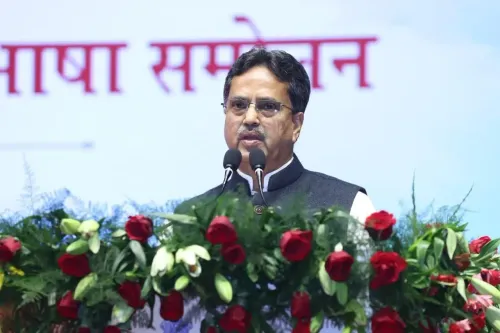
Tripura Chief Minister Manik Saha, three Tripura MPs -- Biplab Kumar Deb, Rajib Bhattacharjee, and Kriti Devi Debbarman -- Department of Official Language Secretary Anshuli Arya, and other dignitaries graced the event.
Over 3,000 senior officials, representatives, and experts from Central government offices, public sector undertakings, and banks across more than 20 states from the Northern, Eastern, and North-Eastern regions participated in the conference.
The participating states included West Bengal, Odisha, Bihar, and Jharkhand from the Eastern region; Assam, Tripura, Manipur, Meghalaya, Mizoram, Nagaland, Arunachal Pradesh, and Sikkim from the Northeastern region; and Uttar Pradesh, Uttarakhand, Haryana, Punjab, Himachal Pradesh, Rajasthan, Jammu and Kashmir, and Ladakh from the Northern region.
Point of View
It is imperative to acknowledge Amit Shah's stance on language politicization. In a nation as diverse as India, preserving linguistic heritage is vital. This approach aligns with the broader goal of fostering unity while respecting cultural identities. The focus on education in mother tongues highlights an essential aspect of cultural preservation, making it a national priority.
NationPress
3 Oct 2026
Frequently Asked Questions
What did Amit Shah say about languages and scripts?
Amit Shah emphasized that languages and scripts should not be politicized and urged parents to speak to their children in their mother tongues to preserve culture and history.
Why is learning one's mother tongue important?
Learning one's mother tongue is crucial for understanding roots, traditions, and cultural heritage.
What initiatives has the government taken regarding language education?
The government has stressed that primary education should be provided in students' own mother tongues.
How many dialects exist in the Northeast?
There are over 200 dialects across the eight Northeastern states.
What was mentioned about Hindi's role in the Northeast?
Shah stated that the Northeastern region is well-positioned to strengthen Rajbhasha Hindi and highlighted the simultaneous use of multiple languages in states like Tripura.