Amit Shah in Chhattisgarh: 3-day visit targets Bastar security, Zonal Council
Synopsis
For the first time, the Central Zonal Council — bringing together four state chief ministers — will meet in Bastar, a region long defined by Naxal violence. Amit Shah's three-day Chhattisgarh visit is as much a political statement about Bastar's changing status as it is a policy exercise in inter-state security coordination.
Key Takeaways
Home Minister Amit Shah arrived in Chhattisgarh on 18 May for a three-day visit focused on security and development.
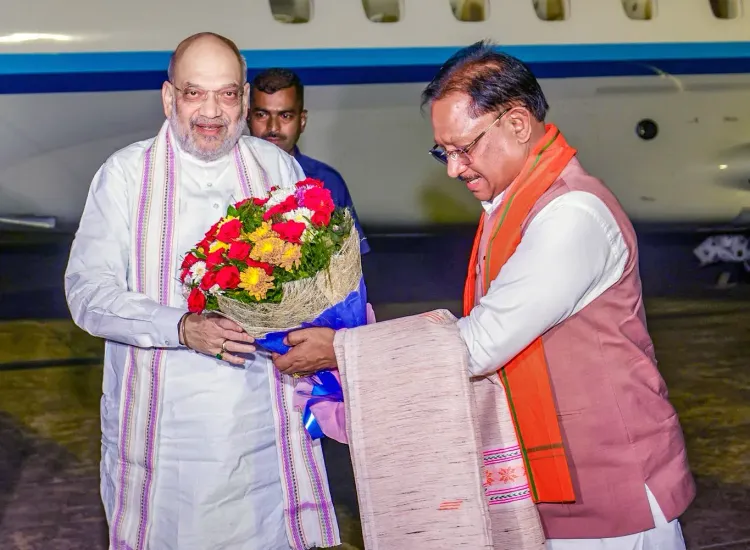
He was received by Chief Minister Vishnu Deo Sai , Deputy CMs Vijay Sharma and Arun Sao , and Finance Minister OP Choudhary .
Shah will flag off Dial-112 emergency service vehicles in Raipur before travelling to Bastar for development and security programmes.
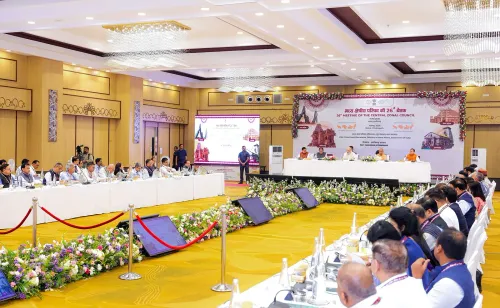
The visit culminates on 19 May with a Central Zonal Council meeting in Bastar — the first ever hosted in the region — with CMs of MP , UP , and Uttarakhand attending.
CM Sai cited a significant decline in Naxal activity in Bastar, attributing it to Central government support and the double-engine government framework.
Union Home Minister Amit Shah arrived in Chhattisgarh on Sunday evening, 18 May for a high-stakes three-day visit, touching down at Raipur Airport to a reception by the state's top leadership. The visit spans security, development, and inter-state coordination — with Bastar, long the heartland of Left-Wing Extremism, as its focal point.
Grand Reception at Raipur
Chief Minister Vishnu Deo Sai, Deputy Chief Ministers Vijay Sharma and Arun Sao, Finance Minister OP Choudhary, and a large contingent of senior ministers and legislators received Shah at the airport. The turnout reflected the significance the ruling Bharatiya Janata Party (BJP) has attached to the visit, with party workers visibly energised by his arrival.
Day One: Dial-112 Launch and Bastar Programmes
On Monday, 18 May, Shah is scheduled to flag off vehicles for the Dial-112 emergency response service in Raipur — an initiative designed to strengthen the state's law and order machinery by ensuring rapid emergency assistance. He will then travel directly to Bastar to participate in multiple programmes centred on development and security. The itinerary reflects the government's stated priority of transforming Bastar into a Naxal-free zone.
Central Zonal Council in Bastar: A Historic First
The visit concludes on 19 May with a meeting of the Central Zonal Council in Bastar — notably the first time such a high-profile inter-state forum has convened in the region. Chief Ministers of Chhattisgarh, Madhya Pradesh, Uttar Pradesh, and Uttarakhand are expected to participate. The agenda covers security coordination, development priorities, and inter-state cooperation — issues that directly bear on the anti-Naxal campaign spanning multiple state borders.
Naxalism Decline and the Bastar Narrative
Chief Minister Sai described the visit as pivotal, saying that with Central government support, Chhattisgarh is advancing rapidly toward peace, good governance, and development. He credited Shah's guidance and the 'double-engine government' framework for a significant decline in Naxal activity across the Bastar region, alongside the opening of new development corridors. This comes amid a broader security push by the Centre, which has intensified anti-Naxal operations in the region over the past year.
What to Watch
The Central Zonal Council session in Bastar will be closely watched for any concrete security or development commitments emerging from the four-state chief ministers' meeting. Hosting the council in Bastar — rather than a state capital — is itself a political signal, projecting normalcy and institutional confidence in a region once considered too volatile for such gatherings. The outcomes of the meeting are expected to shape the Centre's roadmap for the region in the months ahead.
Point of View
And credit attribution in a multi-agency operation involving central forces is rarely straightforward. The Zonal Council's agenda will be the one to watch — concrete commitments on inter-state border security and rehabilitation funding matter more than the symbolism of the location.
NationPress
1 Oct 2026
Frequently Asked Questions
Why is Amit Shah visiting Chhattisgarh in May 2025?
Home Minister Amit Shah is on a three-day visit to Chhattisgarh from 18 May to oversee security and development initiatives in the Bastar region and chair the Central Zonal Council meeting. The visit also includes the launch of the Dial-112 emergency service in Raipur.
What is the Central Zonal Council meeting in Bastar about?
The Central Zonal Council meeting, scheduled for 19 May in Bastar, will bring together the Chief Ministers of Chhattisgarh, Madhya Pradesh, Uttar Pradesh, and Uttarakhand to discuss security coordination, development priorities, and inter-state cooperation. It is the first time the council is meeting in Bastar.
What is the Dial-112 service being launched in Chhattisgarh?
Dial-112 is an emergency response service aimed at providing prompt assistance during emergencies and strengthening law and order in the state. Shah is scheduled to flag off vehicles for the service in Raipur on 18 May.
How significant is the Bastar region to this visit?
Bastar has been the epicentre of Naxal activity in Chhattisgarh for decades. The visit signals the Centre's focus on transforming the region through security operations and development programmes, with CM Sai noting a significant decline in Naxal activity in recent times.
Who received Amit Shah at Raipur Airport?
Shah was received at Raipur Airport by Chief Minister Vishnu Deo Sai, Deputy Chief Ministers Vijay Sharma and Arun Sao, Finance Minister OP Choudhary, and several other senior ministers and legislators.