Will the Assam Assembly's New Detention Room Tackle Disorderly Conduct by Suspended MLAs?

Synopsis
In a historic move, the Assam Legislative Assembly is set to create a detention room for suspended MLAs to ensure order during legislative sessions. This initiative aims to combat disruptive behavior and maintain decorum. As political scrutiny grows, the Assembly takes a firmer stance on maintaining the integrity of its proceedings.
Key Takeaways
New Detention Room: Assam Assembly plans to set up a dedicated space for suspended MLAs.
Objective: Aimed at ensuring order and decorum during legislative sessions.
Speaker's Confirmation: Speaker Biswajit Daimary announced the initiative.
Political Scrutiny: The proposal has attracted significant political attention.
Operational Guidelines: Detailed guidelines will be created to govern the detention room's use.
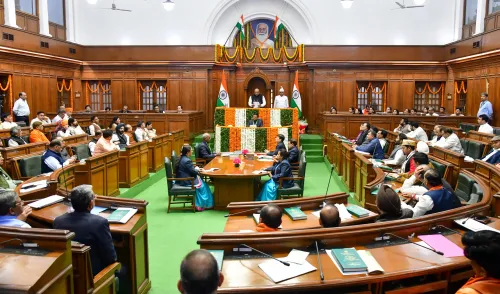
Guwahati, Nov 28 (NationPress) In a groundbreaking initiative aimed at preserving order and decorum during legislative processes, the Assam Legislative Assembly plans to introduce a specialized detention room for Members of the Legislative Assembly (MLAs) who face suspension due to disruptive conduct.
Speaker of the Assembly, Biswajit Daimary, announced on Friday that the Assembly Secretariat is tasked with formulating comprehensive guidelines that will outline the rules and operational procedures for this new facility.
This initiative seeks to discourage ongoing disturbances that obstruct the smooth functioning of legislative activities.
The decision comes after a series of interruptions during Question Hour, particularly instigated by suspended MLA Akhil Gogoi, whose persistent disruptions led to significant disorder within the House on Thursday.
These recurrent disturbances prompted demands from government members for more stringent measures to uphold discipline within the Assembly.
Following Gogoi’s suspension, Minister Bimal Borah suggested creating a designated area within the Assembly complex for temporarily confining suspended members to avert further disruptions during proceedings.
This proposal garnered support from several members concerned about the frequent interruptions that compromise the Assembly's functionality.
In response to the escalating calls for institutional safeguards, Speaker Daimary officially declared that steps to establish the detention room would commence promptly.
He emphasized that such a facility would facilitate the peaceful and orderly conduct of the Assembly's business while reinforcing respect for legislative norms.
This proposal has attracted considerable political scrutiny, especially in light of recent confrontational sessions and strong criticisms directed at the government from certain opposition factions.
While proponents view this move as essential for preserving the Assembly's dignity, opponents consider it controversial and potentially excessive.
Officials indicated that further details regarding the location, duration of detention, and protections for members would be disclosed once the Secretariat finalizes the regulations.
This initiative signifies a notable shift in the Assembly's approach to managing disorder, indicating a more assertive stance on disruptions during legislative sessions.
Point of View
The establishment of a detention room within the Assam Legislative Assembly marks a pivotal shift in governance. It underscores the need for maintaining discipline and decorum in legislative processes, reflecting a broader trend towards accountability among elected officials. While some view this measure as necessary, it raises questions about its potential implications for democratic discourse.
NationPress
30 Sept 2026
Frequently Asked Questions
Why is the Assam Assembly creating a detention room?
The Assam Assembly is establishing a detention room to maintain order and decorum during legislative proceedings, especially in response to disruptive behavior by suspended MLAs.
What will the detention room be used for?
The detention room will be used to temporarily confine MLAs who are suspended due to disruptive actions, helping to ensure the smooth functioning of the Assembly.
Who proposed the idea of the detention room?
The idea was proposed by Minister Bimal Borah, who emphasized the necessity of having a designated space for suspended members to prevent further disruptions.
What are the expected guidelines for the detention room?
The Assembly Secretariat is tasked with drafting comprehensive guidelines outlining the rules, operational procedures, and safeguards concerning the detention room.
What reactions has the proposal received?
The proposal has elicited mixed reactions, with some supporting it as essential for maintaining the Assembly's dignity, while others criticize it as potentially excessive.