Assam CM Defends Delimitation, Accuses Congress of Misinformation
Synopsis
In a strong rebuttal to Congress criticism, Assam CM Himanta Biswa Sarma defends the state's delimitation exercise, labeling it necessary for correcting past political imbalances. He challenges allegations of gerrymandering, emphasizing the need for fair representation.
Key Takeaways
The delimitation exercise is intended to correct historical political imbalances.
CM Sarma defends the process against allegations of gerrymandering.
Changes reflect demographic shifts and aim for fair representation.
Opposition voices concerns over potential community impacts.
The exercise is seen as a response to illegal immigration challenges.
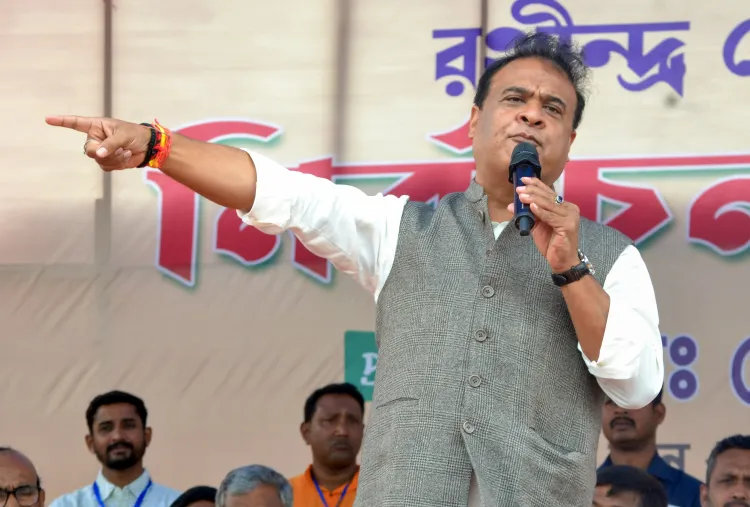
Guwahati, April 19 (NationPress) Assam's Chief Minister, Himanta Biswa Sarma, responded vigorously to the Congress party's critique of the recent delimitation exercise in the state. He accused the opposition of exploiting the term “gerrymandering” to mislead the public and undermine a crucial electoral adjustment that has been overdue for years.
In a statement on X, CM Sarma emphasized that the delimitation process conducted in 2023 was “not a scheme but a vital and necessary action” to rectify long-standing political disparities.
He claimed that previous administrations, especially those led by the Congress, had neglected significant demographic shifts in various areas, particularly in Lower Assam, for electoral benefits.
“The real distortion of representation occurred in the past when evolving population patterns were ignored for vote-bank politics,” the Chief Minister remarked, explaining that the current delimitation aims to align constituencies with actual demographics.
The delimitation of both Assembly and Parliamentary constituencies in Assam was executed by the Election Commission of India in accordance with the Delimitation Act, utilizing data from the 2001 Census.
Finalized in August 2023, this process redefined the boundaries of 126 Assembly and 14 Lok Sabha constituencies, focusing on optimizing population distribution, geographical contiguity, and administrative efficiency.
This exercise also resulted in a reconfiguration of reserved seats for Scheduled Castes (SCs) and Scheduled Tribes (STs), ensuring a more accurate representation of their population proportions.
Changes to several constituencies in minority-dominated regions sparked political reactions from various parties.
CM Sarma reiterated that the goal of this delimitation was to “restore equilibrium” and guarantee fair political representation for indigenous populations.
He described the current arrangement as a “temporary measure” to address challenges stemming from illegal immigration and demographic shifts.
Opposition parties, including the Congress, have persistently criticized the process, claiming it disproportionately impacts certain communities while favoring the ruling party.
They labeled it as an example of gerrymandering—a claim that the BJP has vehemently dismissed.
The Chief Minister asserted that those opposing the delimitation are “unsettled” because it disrupts a system that historically benefitted them, emphasizing that the initiative mirrors the aspirations of the people of Assam.
Point of View
The opposition raises concerns about fairness and community impacts. A balanced approach is essential for addressing the aspirations of all constituents.
NationPress
19 Sept 2026
Frequently Asked Questions
What is the purpose of the delimitation exercise in Assam?
The delimitation exercise aims to redraw electoral boundaries to reflect demographic changes and ensure fair representation in the political landscape.
Why is the Congress party opposing the delimitation?
The Congress party argues that the delimitation disproportionately affects certain communities and serves the interests of the ruling party.
What demographic data was used for the delimitation in Assam?
The delimitation process utilized data from the 2001 Census as its base for redrawing the electoral boundaries.
How did the delimitation affect reserved seats?
The delimitation led to a reconfiguration of reserved seats for Scheduled Castes and Scheduled Tribes, aiming for a more accurate representation of their population share.
What did CM Sarma say about past governments?
CM Sarma accused previous governments, particularly the Congress, of neglecting significant demographic changes for electoral gain.