Did Assam’s R-Day tableau showcase Asharikandi’s terracotta heritage?
Synopsis
Assam’s tableau at the Republic Day celebrations highlighted Asharikandi's rich terracotta heritage, showcasing the craftsmanship and cultural pride of local artisans. With a focus on traditional skills and self-reliance, this presentation symbolizes the vibrant legacy of this renowned craft village.
Key Takeaways
Asharikandi is a significant hub for terracotta craftsmanship in Assam.
The tableau at Republic Day celebrates cultural heritage and local artisans.
Terracotta art represents a blend of traditional skills and modern entrepreneurship.
The Geographical Indication (GI) tag enhances the recognition of Asharikandi's crafts.
Artisans continue to preserve techniques passed down through generations.
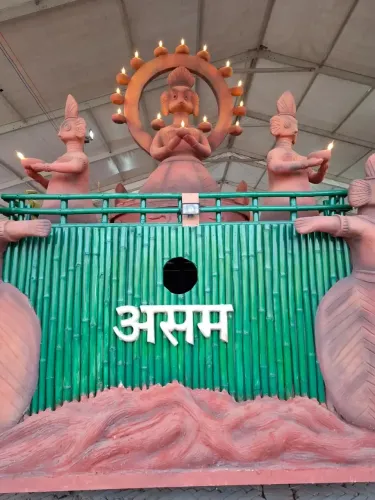
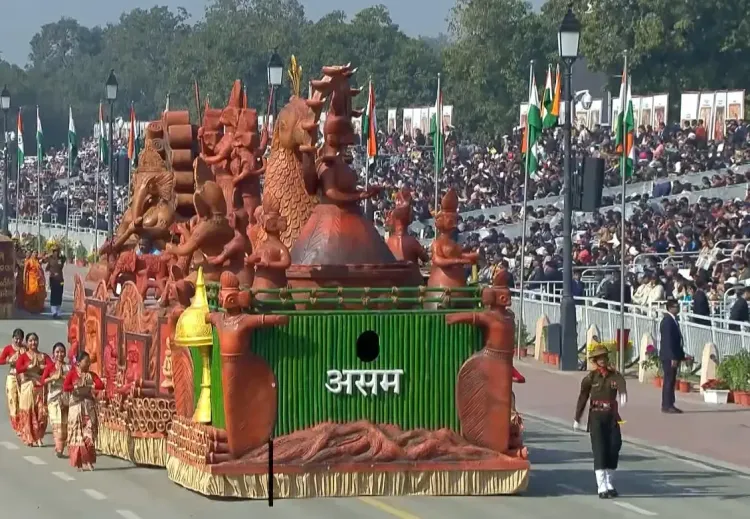
New Delhi, Jan 26 (NationPress) The tableau from Assam made its way down Kartavya Path in the capital on Monday as part of the 77th Republic Day festivities, highlighting the exquisite terracotta tradition of Asharikandi, a notable craft village located in the Dhubri district.
Focusing on the state's age-old terracotta artistry, the tableau presented a lively visual representation of Assam’s cultural legacy, artisanal skills, and river-based lifestyle.
Bikram Newar, the Nodal Officer, along with officials from Assam’s Cultural Affairs Department, contributed to this presentation.
At the tableau's heart was a magnificent terracotta figure holding earthen lamps arranged in a circular pattern, representing light, continuity, and a living tradition. Earthen sarai placed alongside bamboo fencing on either side of the tractor-mounted display underscored Assam’s valuable bamboo resources and their significance in socio-economic growth.
The trailer was crafted to resemble a traditional Mayurpangkhi boat, symbolizing Assam’s profound connection with its waterways.
Artisans were illustrated shaping hiramati (local clay) into figures of deities such as Ganesh, Kartik, Durga, Lakshmi, and Saraswati, showcasing the ongoing process of terracotta artistry. A traditional pall (sail canvas) at the back further enhanced the authenticity of the river-themed display.
The tableau was conceptualized around the theme of Aatmanirbhar Bharat, representing Asharikandi as a beacon of cultural self-sufficiency, showcasing how heritage skills and traditional entrepreneurship can sustain livelihoods and bolster local economies.
Asharikandi, found in Dhubri district, is recognized as the largest terracotta and pottery craft hub in Assam and among the most notable in India.
The village is home to generations of artisan families who have engaged in terracotta and pottery for over a century, preserving techniques that have been handed down through generations. The artisans are celebrated for creating terracotta toys and idols known locally as puttola, made from hiramati. Their popular creations include the Hatima doll, Ganesh, Kartik, Maa Durga, and other traditional figures that merge folk art with religious motifs.
The craft tradition dates back to the early 19th century when pottery artisans migrated from East Bengal (now Bangladesh) and settled in the area. Over time, they adapted their ancestral techniques to the local culture, giving rise to a unique Assamese terracotta art form.
Late artisan Sarala Bala Devi significantly contributed to Asharikandi’s national recognition. She was awarded the National Award for Terracotta Craft in 1982 for her iconic Hatima doll, which became a defining emblem of the village's artistic identity.
In March 2024, the terracotta crafts from Dhubri district received the Geographical Indication (GI) tag, marking it as the sixth traditional craft from Assam to achieve this honor. The GI tag reinforced Asharikandi’s reputation as a national center of terracotta excellence. Through its Republic Day tableau at Kartavya Path, Assam honored Asharikandi’s terracotta heritage while spotlighting the enduring spirit of self-reliance and cultural pride among its artisan community.
Point of View
This tableau not only showcases Assam's cultural wealth but also emphasizes the importance of preserving traditional crafts. Asharikandi stands as a testament to the ingenuity of local artisans, highlighting the vital role of cultural heritage in shaping self-sufficient communities in India.
NationPress
9 Oct 2026
Frequently Asked Questions
What does the tableau from Assam represent?
The tableau represents the terracotta heritage of Asharikandi, highlighting traditional craftsmanship and cultural pride.
Where is Asharikandi located?
Asharikandi is located in the Dhubri district of Assam, India.
What is the significance of the Geographical Indication tag?
The Geographical Indication tag recognizes Asharikandi's terracotta crafts as unique and provides legal protection, enhancing its market value.
Who was Sarala Bala Devi?
Sarala Bala Devi was a renowned artisan from Asharikandi who received national recognition for her terracotta crafts, particularly the iconic Hatima doll.
What is Aatmanirbhar Bharat?
Aatmanirbhar Bharat is an initiative aimed at promoting self-reliance in India, emphasizing local production and traditional skills.