Assocham backs Modi's Independence Day vision for Indian industry and economy
Synopsis
Assocham's endorsement of Modi's Independence Day address goes beyond routine industry approval — it signals that the 200 GW nuclear target, AI skilling for one crore youth, and the Fortune 500 ambition for Indian firms are being read as concrete policy signals, not just aspirational rhetoric. The real test will be execution.
Key Takeaways
Assocham called PM Narendra Modi 's 15 August 2025 Independence Day vision a strong confidence-builder for Indian industry.
Assocham President Nirmal Kumar Minda welcomed the 200 GW nuclear energy target and five new nuclear reactors as a step toward long-term energy security.
The chamber backed the government's plan for free online coaching and AI skilling for one crore young Indians .
Modi's call for 50 Indian companies to enter the Fortune Global 500 was described as a welcome push for globally competitive enterprises.
Assocham also supported the focus on FTAs , critical minerals, semiconductors, and modernisation of outdated laws.
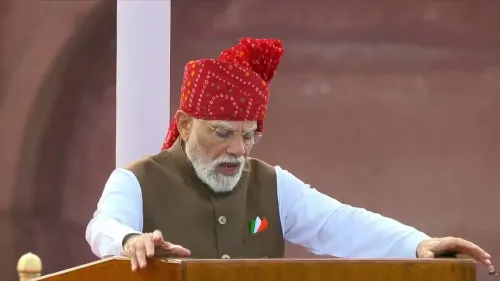
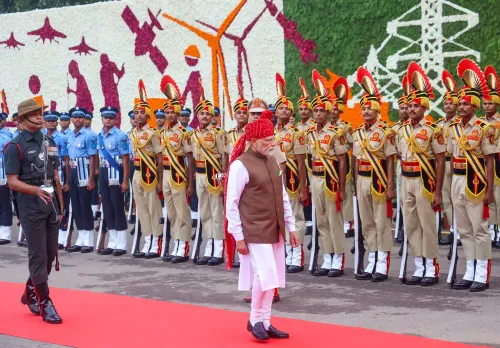
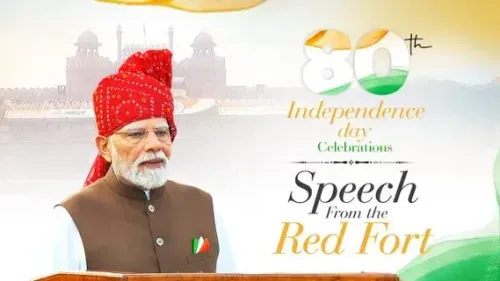
Leading industry body Assocham on 15 August 2025 expressed strong support for Prime Minister Narendra Modi's Independence Day address, saying the vision outlined by the Prime Minister instils robust confidence in Indian industry and the broader business community. The chamber described the speech as a comprehensive roadmap for economic transformation.
Sapta Dhara Framework and Economic Resilience
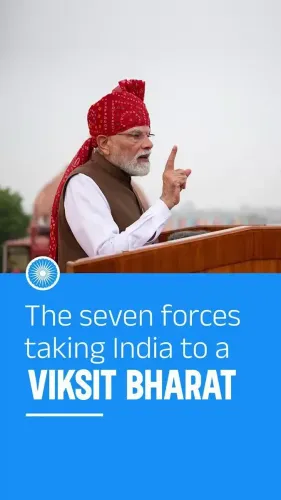
Assocham President Nirmal Kumar Minda said the Prime Minister's emphasis on self-reliance, the 'Vocal for Local' movement, domestic manufacturing, and strategic capabilities is highly significant for strengthening India's economic resilience. Minda specifically appreciated Modi's ambitious vision of transforming India into a developed economy by 2047, noting that the seven-stream 'Sapta Dhara' framework offers a broad-based approach to inclusive, sustainable, and accelerated development.
Nuclear Energy, Critical Minerals and Semiconductors
'Assocham welcomes the focus on critical minerals, semiconductors and reducing import dependence. The announcement of a 200 GW nuclear energy target and five new nuclear reactors marks an important step towards ensuring long-term energy security. A reliable and affordable energy ecosystem will be crucial for India's industrial expansion and competitiveness,' Minda said in a statement. This comes amid growing global competition for semiconductor supply chains and a domestic push to reduce dependence on energy imports.
AI Skilling and Youth Employability
Minda also welcomed the Prime Minister's focus on free online coaching and AI skilling for one crore young Indians, calling it particularly significant. He noted that India's greatest strength lies in its young population, and equipping youth with emerging-technology skills can meaningfully enhance productivity, employability, and innovation across sectors.
Fortune 500 Ambition and Global Trade
The Prime Minister's call for 50 Indian companies to enter the Fortune Global 500 and for an Indian bank to break into the world's top five was described by Assocham as a welcome shift towards building globally competitive enterprises. 'This will require deeper innovation, scale, capital access and ease of doing business,' Minda said. The chamber also backed the government's emphasis on free trade agreements (FTAs), deep-sea exploration, and expanding India's footprint in strategic sectors, arguing that greater market access and stronger global value-chain integration can open new avenues for Indian industry, MSMEs, and exporters.
Legal Reforms and Investment Climate
Assocham particularly appreciated the Prime Minister's call for modernising outdated laws, accelerating economic growth, and transforming work culture through greater efficiency and accountability. According to Minda, these reforms can lay the foundation for a more competitive, innovative, and investment-friendly India. The chamber's endorsement reflects broader industry optimism heading into the next phase of economic policy implementation.
Point of View
50 Indian Fortune 500 companies, a top-five Indian bank, 200 GW of nuclear power, come with legislative timelines and measurable milestones. India has a pattern of ambitious headline targets that stall at implementation. The AI skilling pledge for one crore youth is the most immediately testable: delivery infrastructure, curriculum quality, and employer linkages will determine whether it moves the needle on youth unemployment or remains a well-intentioned number.
NationPress
30 Sept 2026
Frequently Asked Questions
What did Assocham say about PM Modi's Independence Day speech?
Assocham said PM Modi's Independence Day vision provides strong confidence to Indian industry and the business community. The chamber's president, Nirmal Kumar Minda, welcomed the focus on self-reliance, domestic manufacturing, nuclear energy, and AI skilling.
What is the 'Sapta Dhara' framework mentioned in Modi's speech?
The 'Sapta Dhara' or seven-stream framework is a broad-based development approach outlined by PM Modi in his Independence Day address, aimed at inclusive, sustainable, and accelerated economic growth. Assocham described it as a comprehensive roadmap for India's transformation into a developed economy by 2047.
What is India's nuclear energy target announced on Independence Day?
PM Modi announced a target of 200 GW of nuclear energy capacity and the addition of five new nuclear reactors. Assocham called this an important step towards ensuring long-term energy security for India's industrial expansion.
What did PM Modi say about Indian companies and global rankings?
Modi called for 50 Indian companies to enter the Fortune Global 500 and for an Indian bank to break into the world's top five. Assocham welcomed this as a shift towards creating globally competitive Indian enterprises, while noting it will require deeper innovation, capital access, and ease of doing business.
How does the AI skilling announcement affect Indian youth?
PM Modi announced free online coaching and AI skilling for one crore young Indians. Assocham said this is particularly significant given India's large youth population, arguing that emerging-technology skills can enhance productivity, employability, and innovation.