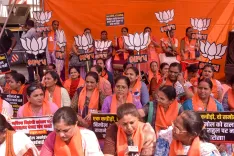
Why is the Baloch Student Council Opposing Charges Against Human Rights Lawyers in Pakistan?

Synopsis
The Baloch Students Council has raised alarms against the politically charged trial of lawyers Imaan Mazari and Hadi Chattha, emphasizing the dangers of suppressing dissent in Pakistan. This case highlights the troubling trend of silencing critical voices in a vulnerable political atmosphere.
Key Takeaways
The trial against Imaan Mazari and Hadi Chattha is seen as politically motivated.
Ambiguous laws are being used to suppress dissent in Pakistan.
This case highlights the risks facing civil society and critical voices.
The BSC calls for international intervention to protect human rights.
The situation reflects broader issues of human rights violations in Balochistan.
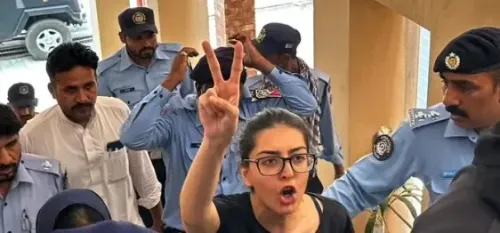
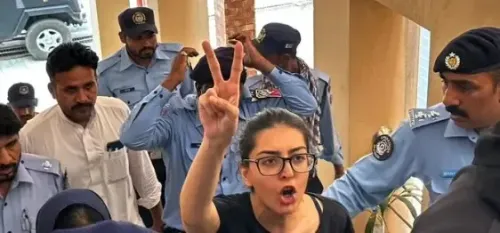
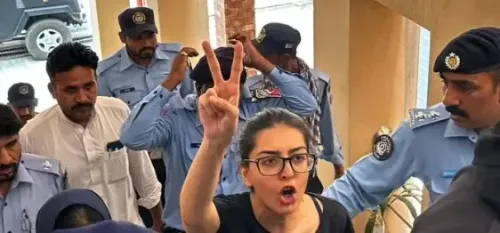
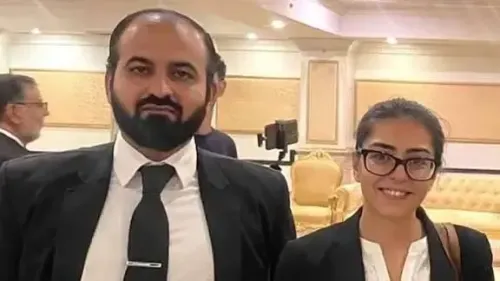
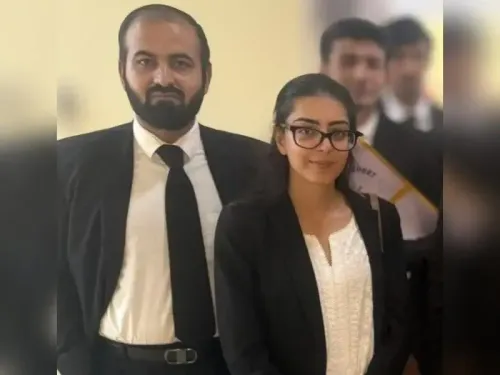
Islamabad, Dec 9 (NationPress) The Baloch Students Council (BSC) in Islamabad has vehemently criticized the current trial of lawyers Imaan Zainab Mazari-Hazir and Hadi Ali Chattha in Pakistan, asserting that the accusations brought against them under the Prevention of Electronic Crimes Act (PECA) are purely politically motivated.
Human rights advocate and attorney Imaan Mazari, along with her spouse, Advocate Hadi Ali Chattha, were allegedly indicted by an Islamabad court in October due to supposed controversial posts on social media.
The student organization emphasized that the utilization of ambiguous and broadly defined laws by Pakistani authorities to stifle dissent represents a blatant effort to silence critical voices in a progressively diminishing political landscape. They asserted that this trend illustrates the alarming pace at which civic and democratic spaces are being restricted.
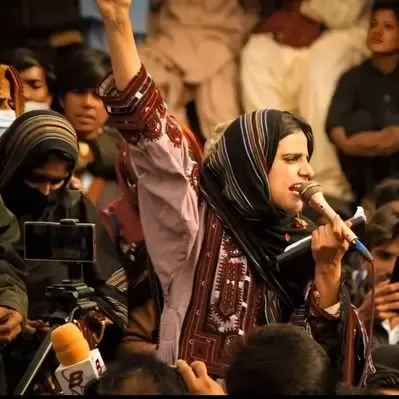
"The way in which the trial of Iman and Hadi Ali Chatta is being conducted demonstrates the urgency with which those in power wish to suppress resistance. Both individuals have been steadfast champions for the Baloch community and Baloch students in Islamabad. Their principled opposition to enforced disappearances and state oppression seems to be the reason behind this targeting. Any attempt to silence them directly contributes to the further erosion of civil society that supports the Baloch," stated the BSC Islamabad.
"Imaan Mazari's sole offense has been her steadfast support for the families of the forcibly disappeared, elevating their narratives in international platforms, and fighting legal battles for Baloch students in Islamabad. The ongoing proceedings against such prominent lawyers, lacking fundamental legal protocols, reveal the urgency with which the judiciary seeks to suppress dissenting voices," it further added.
Concerned, the organization highlighted that if notable lawyers can face prosecution in this manner, the extent of suppression encountered by ordinary citizens in Balochistan can only be imagined, particularly in a region where a complete media blackout obscures the reality of human rights abuses.
"This is not merely an effort to silence two individuals; it serves as a broader message aimed at all who have consistently stood in solidarity with marginalized nations, especially the Baloch," they asserted.
The BSC has called upon international organizations and human rights advocates to take action and urge the Government of Pakistan to cease the misuse of legal frameworks to criminalize political dissent.
Point of View
It is crucial to approach this situation with a commitment to truth and transparency. The ongoing trial against the Baloch lawyers raises significant concerns about the state of civil liberties in Pakistan. While the legal proceedings unfold, our responsibility remains to report with integrity, ensuring that the voices of the marginalized and oppressed are heard.
NationPress
12 Oct 2026
Frequently Asked Questions
What are the charges against Imaan Mazari and Hadi Chattha?
They are facing charges under the Prevention of Electronic Crimes Act, which the Baloch Students Council describes as politically motivated.
What is the Baloch Students Council's stance on the trial?
The BSC strongly condemns the trial, viewing it as an attempt to suppress dissent and silence critical voices.
How does this trial affect civil society in Pakistan?
The trial is seen as part of a troubling pattern of suppressing dissent, which poses a threat to the already shrinking civic space in Pakistan.
What actions is the BSC calling for?
They urge international organizations and human rights defenders to intervene and advocate against the misuse of legal frameworks to silence political dissent.
What implications does this case have for ordinary people in Balochistan?
If prominent lawyers can be prosecuted in this manner, it indicates a severe level of suppression that ordinary citizens likely face in the region.