Is Bangladesh's Upcoming Election a 'Sham' as Ex-FM Claims?
Synopsis
Former Bangladeshi Foreign Minister A K Abdul Momen has denounced the upcoming parliamentary election as a 'sham,' calling for the U.S. to reject the process. With major parties barred from contesting, Momen warns of severe implications for democracy and stability in Bangladesh. Discover the alarming details behind the election controversy.
Key Takeaways
Former Foreign Minister A K Abdul Momen labels the upcoming election a 'sham.' Major parties are excluded from the electoral process .
The election is claimed to be a means to alter the constitution .
Economic instability is already evident with declining investments .
Momen urges the U.S. to take a stand against the election.
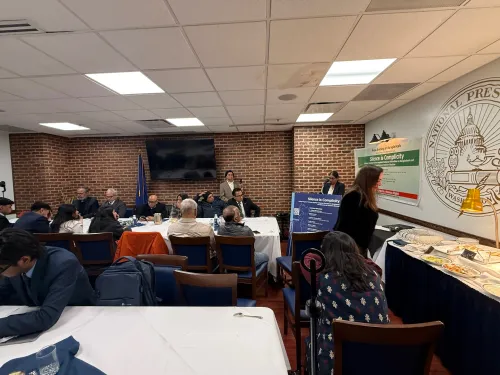
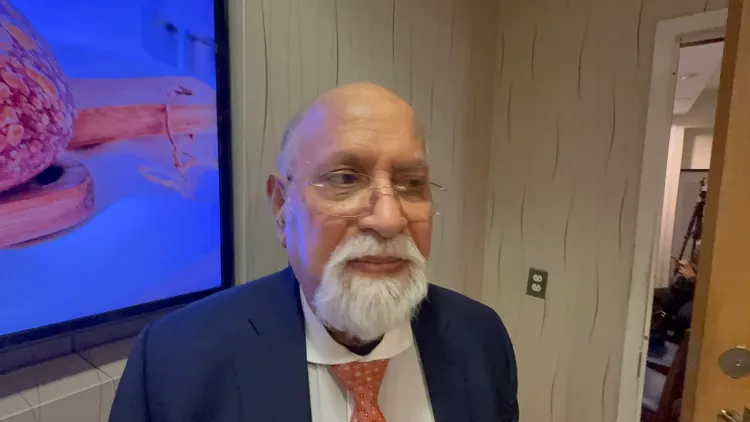
Washington, Feb 6 (NationPress) The forthcoming parliamentary election in Bangladesh has been labeled a “sham” by the nation's former foreign minister A K Abdul Momen, who criticized its “lack of credibility”. He called on the United States to publicly denounce the election and withhold recognition of a process that effectively bans majority parties from participating and denies the full involvement of the electorate.
Scheduled for February 12, the election is said to be “prearranged,” according to Momen, who expressed concerns that it is being exploited by the authorities to implement significant alterations to the Bangladesh constitution and its core values.
He pointed out that parties with approximately 60 to 70 percent of public support, in addition to 12 aligned parties, have been barred from the electoral process, leaving only a select group of parties and individuals to compete.
Momen questioned the rationale behind conducting such an election, stating that elections are intended to foster stability and confidence. He emphasized, “We are going for the election to have stability, political stability, economic recovery, and to eliminate fear and threat in the country.”
However, he cautioned that “this election will not resolve any of these issues.” Instead, he predicted it would lead to “greater disaster” for the country, warning of a declining economy.
The former minister highlighted visible economic ramifications, noting a significant decline in investments. “There is no new investment, both domestic and foreign,” Momen stated, noting that Bangladesh sees around 2 million new job seekers entering the market annually. “They’ll be crying,” he expressed, warning that ongoing instability would exacerbate challenges for the nation's youth.
When asked about the current leadership, Momen indicated that formal authority has been weakened under the interim administration of Nobel Laureate Muhammad Yunus, who has been serving as the chief adviser since August 8, 2024. “He technically runs the country, but he has effectively relinquished his responsibilities,” Momen asserted, claiming that control has shifted to “a group of mulah, radical Islamists.”
This shift, Momen argued, has resulted in “extensive human rights violations, rampant corruption, and atrocities,” branding the current administration as “the most inefficient and ineffective.”
Turning his attention to the United States, Momen urged a definitive public response. “Our expectation is that the US will not recognize this election,” he stated, appreciating the decision by both the United States and the United Nations not to dispatch election observers.
He added, “The United States stands for democracy and full participation of people.” Momen emphasized that it is “high time for the USA to publicly declare that this election is a sham and that it will not recognize it.”
Momen also accused the interim government of inciting anti-India sentiments to distract from domestic discontent. “He (Mohd Yunus) has initiated false propaganda against India,” he pointed out, dismissing allegations that previous administrations compromised national interests, insisting agreements with India and other nations were always made for “mutual benefits.”
On the issue of foreign policy, Momen remarked that Bangladesh's traditional balancing act has been abandoned. He noted that previous governments maintained a delicate equilibrium among India, the United States, and China, whereas the current leadership has “turned India into an enemy” and is gravitating towards China. “This is a misguided approach in South Asia,” he cautioned, foreseeing long-term strategic repercussions.
In conclusion, Momen warned of serious internal and regional risks if the current path continues, predicting that “Bangladesh will go down in history” for allowing “jihadi terrorist” networks to gain traction. He asserted that these terrorists are devoid of religion and nationality and their singular goal is to dismantle the existing establishment, highlighting that such threats transcend national borders.
Point of View
It's crucial to approach the situation with balanced scrutiny. The concerns raised by Momen about the validity of the upcoming elections merit attention, especially given the implications for democracy and governance in Bangladesh. While the accusations of a 'sham' election warrant investigation, it is equally important to consider the perspectives of current authorities and their justifications.
NationPress
4 Oct 2026
Frequently Asked Questions
What did A K Abdul Momen say about the Bangladesh election?
A K Abdul Momen described the upcoming parliamentary election as a 'sham' and called for the U.S. to reject its legitimacy due to the exclusion of major parties from the electoral process.
Why does Momen believe the election is not credible?
He claims that the election has been 'prearranged' and that significant changes to the constitution and governance are being pushed through without proper public participation.
What are the economic implications mentioned by Momen?
Momen pointed out that ongoing instability is leading to a decline in investments, which could negatively affect the job market, particularly for the youth.
How has the current administration changed Bangladesh's foreign policy?
Momen stated that the current leadership has abandoned the traditional balancing approach with countries like India and the U.S., instead fostering closer ties with China.
What risks does Momen foresee for Bangladesh's future?
He warns of the rise of 'jihadi terrorist' networks and the potential for increased instability if the current trajectory continues.