Did Around 68 Percent Vote 'Yes' in Bangladesh's July Charter Referendum?
Synopsis
In a significant turnout, around 68% of voters opted for 'yes' in Bangladesh's July Charter referendum, held alongside parliamentary elections. The EC confirmed these figures amid political controversy surrounding the legality of the referendum. The BNP claims a decisive victory, setting the stage for Tarique Rahman's leadership. What does this mean for Bangladesh's political future?
Key Takeaways
68% of voters supported the 'yes' option in the referendum.
The BNP claims a significant victory in the elections.
Tarique Rahman is set to lead as Prime Minister.
The political landscape in Chittagong underwent major shifts.
The Awami League criticized the legality of the referendum.
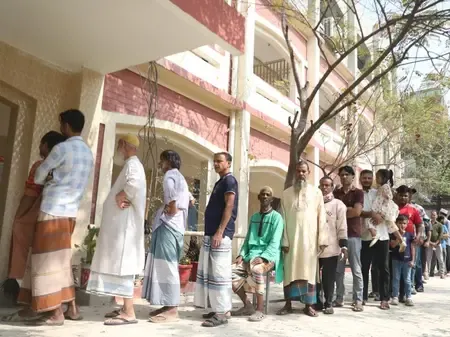
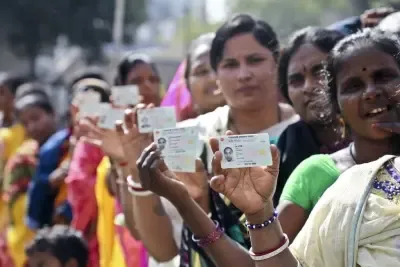
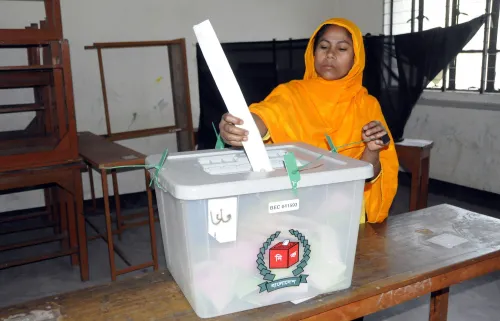
Dhaka, Feb 13 (NationPress) Approximately 68 percent of voters selected the 'yes' option during the July Charter referendum, which coincided with the 13th Parliamentary elections in Bangladesh, as reported by local media on Friday, citing an official from the Election Commission (EC).
According to EC Senior Secretary Akhter Ahmed, a total of 48,074,429 individuals voted 'yes', while 22,565,627 opted for 'no'.
During a press conference at the Bangladesh Election Commission in Dhaka, Ahmed revealed that the voter turnout for the parliamentary election was 59.44 percent, while participation in the referendum reached 60.26 percent.
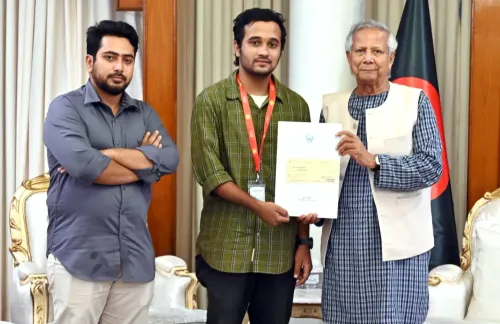
Last month, the Awami League accused the decision to hold the referendum under an “illegal” interim government led by Muhammad Yunus of being a severe breach of constitutional principles and a deliberate attempt to mislead the populace.
The Awami League described the referendum held alongside the general elections as a “farce” orchestrated by the Yunus government, which they claim will forever remain a “black mark” on the nation's constitutional history.
They also asserted that an “illegal government” lacking a popular mandate is attempting to shape the future of the nation while keeping its citizens uninformed.
Meanwhile, the Bangladesh Nationalist Party (BNP) and its coalition claimed a significant victory in the 13th parliamentary elections, as reported by local media on Friday, referencing unofficial results.
The results indicated that the BNP-led alliance has won 210 seats, paving the way for the formation of a new government under party chairman Tarique Rahman, who is poised to become Bangladesh's first male Prime Minister in nearly 35 years.
Tarique is the offspring of the late Prime Minister Khaleda Zia, who served Bangladesh during two separate terms from 1991 to 1996 and from 2001 to 2006.
Following Khaleda Zia’s passing in December of last year, Tarique took the reins of the BNP and is now set to guide the nation.
Additionally, the political dynamics in Chittagong and the Hill Tracts experienced a significant transformation during the 13th National Parliament elections, with the BNP winning 21 out of 23 parliamentary seats in the Chittagong district, Cox's Bazar, and three districts in the Hill Tracts, while Jamaat-e-Islami secured merely two seats.
Local media reports indicated that the majority of 'no' votes were registered in the referendum across all three districts.
Point of View
It is crucial to approach the recent referendum and parliamentary elections in Bangladesh with an unbiased lens. The reported 68% 'yes' vote highlights a significant public response amidst a politically charged atmosphere. It's essential to examine the implications of these events on the nation's democratic processes and the future governance under Tarique Rahman's leadership.
NationPress
7 Oct 2026
Frequently Asked Questions
What was the voter turnout in the July Charter referendum?
The voter turnout for the July Charter referendum reached 60.26%.
Who is set to become the new Prime Minister of Bangladesh?
Tarique Rahman is poised to become the new Prime Minister of Bangladesh.
What percentage of voters chose the 'yes' option?
Approximately 68% of voters opted for the 'yes' option in the referendum.
What accusations were made against the interim government?
The Awami League accused the interim government of being illegal and violating constitutional norms.
How many seats did the BNP-led alliance win?
The BNP-led alliance won 210 seats in the parliamentary elections.