How Are Extremist Groups in Bangladesh Legitimizing Feminism Through Intimidation?
Synopsis
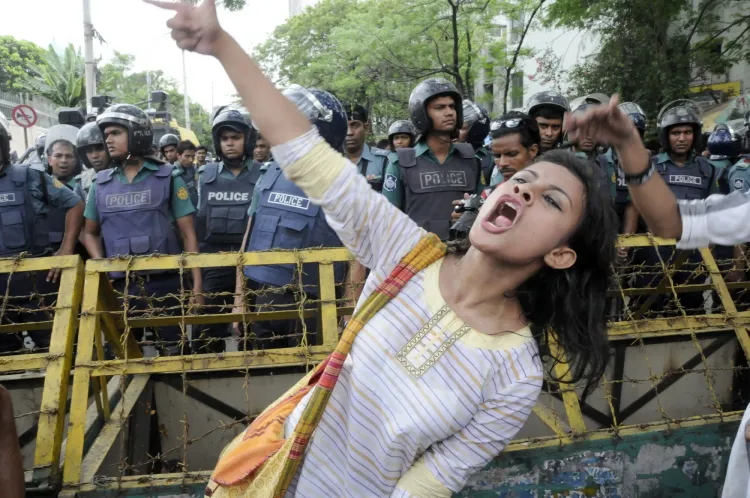
In Bangladesh, a paradox unfolds as right-wing extremists brand feminism as a 'Western agenda.' This article dissects the roots of women's rights activism in non-Western contexts, emphasizing that local struggles against oppression are not mere imitations but vital movements against deep-seated inequalities.
Key Takeaways
Feminism in Bangladesh is rooted in local struggles .
Right-wing extremists use intimidation tactics to undermine feminist activism.
Women's rights movements are not copies of Western ideologies .
Historical context is crucial to understanding current gender issues .
Solidarity among women globally is essential .
Dhaka, Feb 2 (NationPress) Bangladesh is experiencing a remarkable contradiction as right-wing extremist factions portray feminism as a “Western agenda”. Fundamentally, the struggle for women’s rights in non-Western contexts should not be dismissed as a mere import from the West, particularly considering that Western societies themselves have historically subjected women to ongoing discrimination and oppression, according to a report released on Monday.
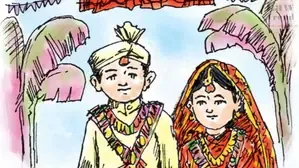
“Feminist movements in Bangladesh have arisen from local women’s issues, deeply rooted in material realities, such as dowry-related violence and murders, domestic violence, child marriage, acid attacks, and extra-judicial punishments enforced through shalish and fatwas. Other struggles include barriers to women’s education, discriminatory inheritance practices, and violations of indigenous women’s rights,” a report in Bangladesh’s prominent newspaper 'The Daily Star' elaborated.
“It is crucial to remember that women in the West have also been victims of patriarchy and oppression and have actively fought for their rights. However, this does not imply that women in non-Western regions are simply imitating them in their fight against mistreatment. The irony lies in the universal reality that women worldwide are not strangers to gender inequality and abuse within their specific contexts. This collective experience does not render the political activism of non-Western women as mere mimicry of Western efforts,” it added.
The report noted that after the demonstration in July 2024, conservative right-wing groups have consistently labeled feminist activism as a “Western” act and have called for its total boycott.
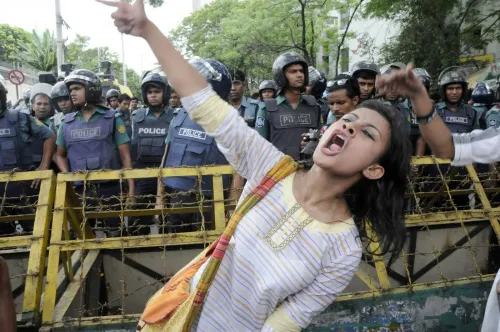
It highlighted that the recent radical right-wing campaign in Bangladesh, which involves defacing posters of former Bengali social reformer Rokeya Shakhawat Hossain with offensive remarks and publicly branding notable feminist leaders as “beshha” (prostitutes) at political events, does not represent a critique of feminism. Rather, it is a calculated strategy aimed at undermining feminist activism through intimidation and threats.
“This stems from a historical masculine rage that has opposed women’s voting rights, sought to keep women as second-class citizens, denied them educational opportunities, and perpetuated social control by portraying women as inferior. Any woman or ideology that challenges this framework has historically been viewed as a threat. Thus, it is essential to contextualize these extreme radical campaigns within a broader history of gendered power dynamics that have perpetuated violence, exclusion, and control over women in post-colonial Bangladesh,” the report concluded.
Point of View
Our stance at NationPress recognizes that women's rights activism in Bangladesh is a response to local issues deeply embedded in society. It is vital to support these movements that challenge gender inequality and promote women's empowerment across the nation.
NationPress
9 Oct 2026
Frequently Asked Questions
What is the main argument against the portrayal of feminism in Bangladesh as a Western agenda?
The primary argument is that women's rights activism in Bangladesh arises from local issues and realities rather than being an imitation of Western feminism.
What historical factors contribute to the current state of women's rights in Bangladesh?
Historical factors include patriarchy, dowry-related violence, child marriage, and systemic discrimination against women in various sectors.
How are recent campaigns against feminism manifesting in Bangladesh?
Recent campaigns involve defacing feminist icons and labeling female leaders with derogatory terms, aimed at intimidating activists and delegitimizing their efforts.