How is Violence Being Romanticised and Dissent Suppressed in Bangladesh's Politics?
Synopsis
In Bangladesh, the political discourse is rapidly evolving, influenced by social media and extreme populism. This article uncovers the alarming trend of violence romanticisation and the suppression of dissent, detailing the precarious state of politics in the country. What does this mean for the future of democracy in Bangladesh?
Key Takeaways
Social media is heavily influencing Bangladesh's political discourse.
Two forms of extremist populism coexist, each suppressing dissent in their own ways.
Romanticising violence is becoming a norm in political rhetoric.
Women and minorities face increased pressure under a narrow definition of 'the people.' Open dialogue and pluralism are essential for a healthy democracy.
Dhaka, Dec 8 (NationPress) The political landscape in Bangladesh has undergone a significant transformation, increasingly influenced by social media broadcasts, online speeches, Islamic sermons, viral videos, memes, slogans, offensive language, abuse, and emotional livestreams, as reported on Monday.
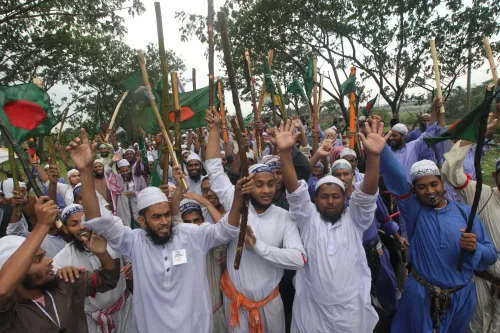
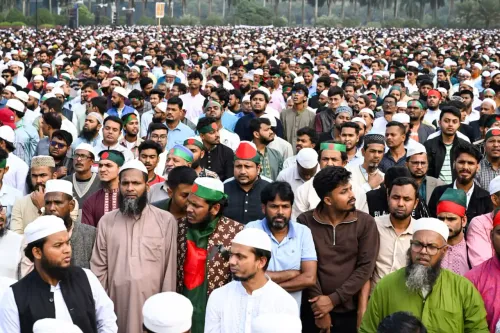
As highlighted in a report by Bangladesh's prominent newspaper The Daily Star, two divergent forms of extremist populism currently coexist in the nation. One is anchored in revolutionary nationalist rhetoric stemming from the July 2024 demonstrations, while the other operates via religious platforms, madrassa networks, and the language of waaz (Islamic sermon).
Despite their apparent differences, these factions employ similar communication strategies, revealing that they are engaged in the same struggle under different guises.
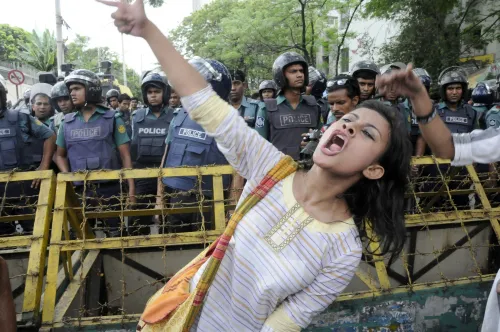
The report states, "Issues such as equal rights for women, reform of inheritance law, recognition of third-gender individuals, and discussions on pluralism in the constitution are all framed as a 'Western agenda.' Such topics are portrayed as 'attacks on the faith of the people' and 'plots to undermine the nation.' Consequently, women, minorities, human rights advocates, and dissenters find themselves under simultaneous pressure. In this context, 'the people' are narrowly defined, and anyone who diverges from this viewpoint is categorized as an enemy."
Furthermore, the report notes, "Although the language, attire, and platforms of these two factions differ, they converge in one significant way: both claim to speak 'in the name of the people.' They label opposing parties as 'illegitimate' instead of treating them as political adversaries. Both factions aspire to reshape the state and constitution according to their ideologies, convinced of their moral superiority and unwilling to entertain dissent."
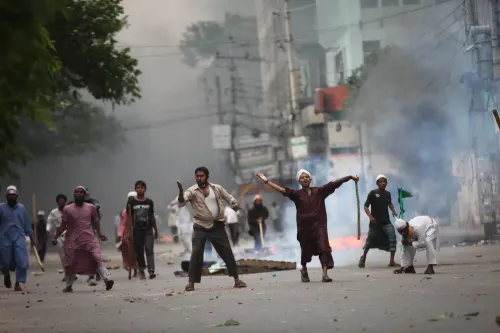
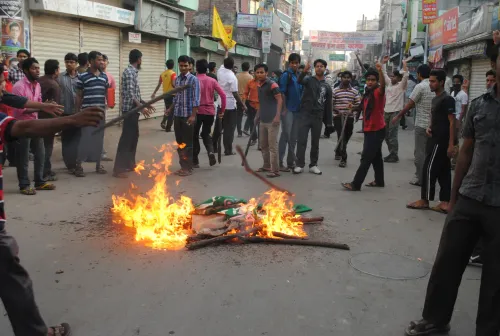
Another concerning trend underscored by the report is the romanticization of violence. When slogans like "we want the rope," "ban them," or "wipe them out" become commonplace at rallies, when violent content gains traction on social media, and when authorities or political factions subtly endorse this behavior, society starts to perceive that political dilemmas can only be resolved through the elimination of opposing views.
"In the future, even minor disagreements may lead individuals to seek not compromise but methods to obliterate their opponents," the report cautions.
Point of View
I firmly believe that the alarming trends in Bangladesh's political landscape highlight the urgent need for open dialogue and a recommitment to democratic values. The suppression of dissent and the romanticisation of violence undermine the very fabric of our society. We must advocate for a pluralistic approach that embraces diverse perspectives while ensuring the safety and rights of all individuals.
NationPress
27 Sept 2026
Frequently Asked Questions
What is the current state of political discourse in Bangladesh?
The political discourse in Bangladesh is increasingly influenced by social media, leading to the rise of extremist populism and the suppression of dissent.
How are women and minorities affected in this political climate?
Women, minorities, and human rights advocates are facing heightened pressure as their rights and identities are often dismissed as part of a 'Western agenda.'
What trends are emerging concerning violence in politics?
There is a worrying trend of romanticising violence in political discourse, with slogans and sentiments promoting aggressive actions against opposing views gaining traction.
How are political factions communicating their messages?
Despite differing ideologies, political factions are utilizing similar communication strategies, framing their views as representing the 'true' voice of the people.
What should be done to address these issues?
Promoting dialogue, inclusive policies, and emphasizing the importance of democratic values are crucial steps toward addressing the current political climate.