Kiran Bedi: India's law-and-order system still colonial, lathi charge wrong first resort
Synopsis
Kiran Bedi's interview cuts to a core institutional failure: India's police still defaults to the colonial playbook — lathi first, dialogue never. Her call for civil defence as the opening response to student protests, and her pointed remark that Pradhan's offered resignation should have been accepted immediately, reveal how much of the exam-agitation damage was self-inflicted by the state.
Key Takeaways
Kiran Bedi on 29 July said India's law-and-order system 'is still rooted in colonialism', citing alleged police brutality during the CJP -led exam-irregularities agitation.
She called for Ramlila Maidan to be formally declared the designated protest site in New Delhi , arguing Jantar Mantar is too small and too close to the business district.
Bedi proposed a tiered policing model: civil defence first, women police second, riot force only as a last resort.
She said she does not recall any lathi charge during the 2011 Anna Hazare agitation and described it as an inherently peaceful protest.
On the NEET paper leak, she backed PM Modi 's task force but urged that the response extend to broader educational reform .
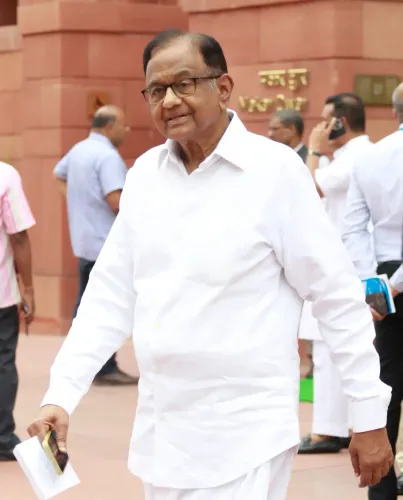
She said former Education Minister Dharmendra Pradhan 's offered resignation should have been accepted immediately to defuse the crisis.
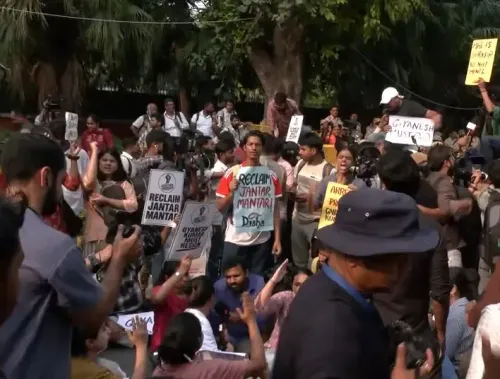
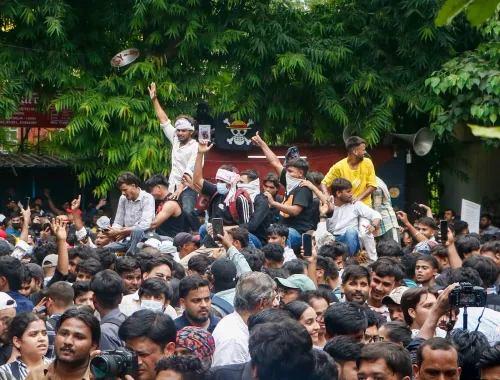
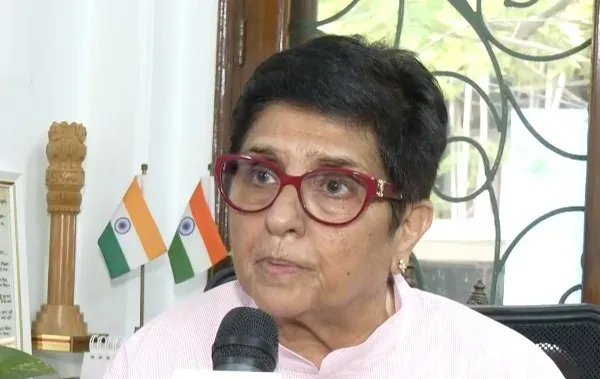
Former Indian Police Service (IPS) officer and ex-Lieutenant Governor of Puducherry Kiran Bedi on Wednesday, 29 July said that India's law-and-order machinery 'is still rooted in colonialism', pointing to the alleged police brutality during the Cockroach Janta Party (CJP)-led agitation against exam irregularities as a case in point. Speaking in an interview, Bedi argued that the use of riot force as a first response to civilian protests reflects an outdated, colonial-era policing mindset that must be urgently reformed.
Wrong Venue, Wrong Response
Bedi, who was a prominent face of the Anna Hazare-led Lokpal agitation at Ramlila Maidan in 2011, drew a sharp contrast between that movement and the recent CJP-led protests. She argued that the choice of protest venue — Jantar Mantar, near Parliament Street and the Connaught Place business district — was fundamentally flawed and almost guaranteed confrontation.
'Their venue was wrong. Their venue too should have been Ramlila ground. If the protest is brought to Parliament Street itself, then why would they not march to the Parliament?' she said. Bedi called on authorities to formally designate Ramlila Maidan as the official site for all large-scale demonstrations in New Delhi, citing its ample space and capacity to accommodate essential facilities including toilets and food arrangements.
She noted that protest venues in the capital have been progressively pushed further from seats of power — from outside the Prime Minister's residence on Teen Murti Marg, to Tughlaq Road, then India Gate, and finally to the current, cramped Jantar Mantar site. 'This venue is wrong and will always create problems,' she said.
Colonial Policing: Lathi Charge Should Be Last Resort
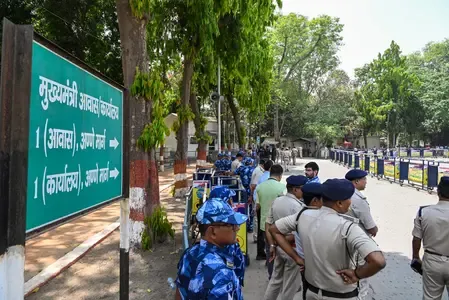
On the police response to the Gen Z agitation, Bedi was unsparing. She said riot force should never be deployed as the opening measure against protesters, particularly young students. 'Our law and order system is still colonial; the use of lathi charge and directly using riot force — why should riot force be used as the first resort? It should be the last,' she said.
Bedi proposed a tiered response model: civil defence volunteers — trained personnel enrolled across every state — should be the first line of engagement, followed by women police officers at the second level, with riot police deployed only if all prior measures fail. 'No lathis; they should have body gear so that they can protect themselves,' she added, arguing that 'students handling students' would have de-escalated the situation far more effectively.
Contrast With 2011 UPA-Era Protests
Bedi said she does not recall any lathi charge during the 2011 agitation under the then United Progressive Alliance (UPA) government. 'I do not recall any situation where there was a lathi charge. Sections 144 and 188 were imposed, and we offered peaceful arrests,' she said. She described the 2011 protest as inherently peaceful — a hunger strike, not a march — which made a different policing approach both possible and appropriate.
On the UPA government's handling, Bedi said a more proactive stance could have pre-empted the entire movement. 'If the Lokpal Bill had been introduced earlier, the movement would not have escalated to such an extent. What was accepted later could have been accepted much earlier,' she said, adding that repeated assurances by ministers proved hollow before the government eventually moved.
On PM Modi's Assurances and Exam Reform
Asked whether she trusts Prime Minister Narendra Modi's assurance of justice in paper leak cases, Bedi said: 'If we don't trust the government, then whom should we trust? They are the final authority, and they are taking action.' She acknowledged the swift constitution of a task force staffed with 'highly capable people', but cautioned that the response must go beyond fixing examination processes. 'It should not remain limited to testing alone; it should lead to broader educational reforms,' she said.
On the question of former Union Education Minister Dharmendra Pradhan's resignation, Bedi said the situation was allowed to escalate unnecessarily. She indicated that Pradhan had himself offered to resign when the controversy peaked, and that accepting it at that point could have defused the crisis. 'It should not have been turned into an ego issue,' she said.
Online Pressure Groups and Government Responsiveness
Bedi also weighed in on the wave of online pressure groups that have emerged in the wake of the CJP agitation. She said the government cannot and should not try to suppress such formations, but must instead become more responsive to the demands they raise. 'Constructive opinions should be taken into consideration by the government and dealt with, and it should also respond to the destructive views,' she said, urging a distinction between constructive and destructive social media voices rather than treating all dissent as a threat.
As pressure mounts on India's examination and policing systems simultaneously, Bedi's remarks signal a broader reckoning with institutional reform that is unlikely to fade from public discourse any time soon.
Point of View
Not an opposition voice. Her critique of lathi charges as a 'first resort' lands differently when it is delivered by someone who commanded the very forces she is questioning. Yet her prescription — civil defence volunteers as a buffer — has been available policy for decades and has simply not been used, which raises the harder question: is the colonial default a resource problem or a will problem? Her silence on why the 2011 UPA government was 'not proactive enough' while extending relatively more credit to the current administration also reflects the selective accountability that tends to blunt otherwise sharp institutional critiques.
NationPress
28 Oct 2026
Frequently Asked Questions
What did Kiran Bedi say about India's law-and-order system?
Kiran Bedi said India's law-and-order system 'is still rooted in colonialism', specifically criticising the use of lathi charges and riot force as a first response to civilian protests. She made the remarks on 29 July in the context of alleged police brutality during the CJP-led agitation against exam irregularities.
Why does Kiran Bedi want Ramlila Maidan declared the official protest site in Delhi?
Bedi argues that Jantar Mantar is too small, too narrow, and too close to the Connaught Place business district, making market closures and confrontations almost inevitable. Ramlila Maidan, she says, offers ample space and can accommodate essential facilities like toilets and food, reducing friction between protesters and authorities.
How does Bedi compare the 2011 Anna Hazare agitation to the recent CJP protests?
Bedi says she does not recall any lathi charge during the 2011 Lokpal agitation, describing it as a peaceful hunger strike rather than a march. She contrasts this with the CJP protests, where she says riot force was used prematurely, and attributes the difference partly to venue and partly to policing approach.
What is Kiran Bedi's view on PM Modi's response to the paper leak controversy?
Bedi expressed trust in the government's intentions, noting the swift formation of a task force with capable members. However, she cautioned that the response must go beyond fixing examinations and lead to broader educational reforms.
What did Kiran Bedi say about Dharmendra Pradhan's resignation?
Bedi said that former Education Minister Dharmendra Pradhan had himself offered to resign when the controversy peaked, and that accepting the resignation at that point could have defused the crisis. She said it 'should not have been turned into an ego issue'.