Chidambaram defends 'regime change' as normal democratic process
Synopsis
P. Chidambaram's X post defending 'regime change' as a normal democratic right has put the BJP on the defensive, turning a semantic dispute into a full-blown political confrontation. With protests over alleged electoral roll irregularities already targeting the Election Commission, the row over who gets to define democracy's boundaries is now as explosive as the underlying grievance.
Key Takeaways
Chidambaram defended 'regime change' on 17 October 2026 , calling it a normal feature of democratic politics.
He stated the Opposition's role is to 'oppose, expose and depose' the government — through elections, not extra-constitutional means.
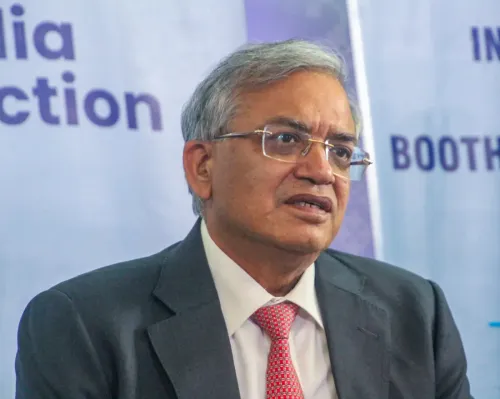
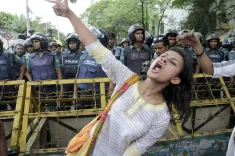
Protests in New Delhi are targeting the ECI and CEC Gyanesh Kumar over alleged 'vote theft' in electoral roll revision.
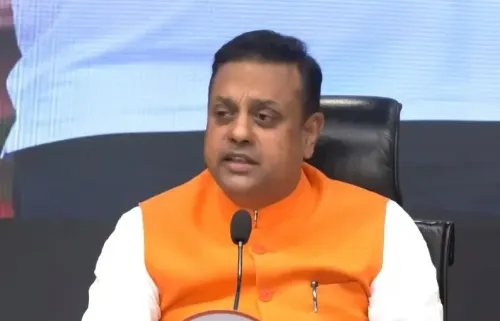
BJP spokesperson Sudhanshu Trivedi alleged the phrase signals an attempt to 'destabilise' India through 'violent struggle or foreign collaboration.' Congress's Pawan Khera accused the BJP of framing democratic demands as 'anti-national and anarchic' out of fear of losing power.
AISA President Neha Bora cited Bangladesh's Gen Z movement as 'inspiration', drawing sharp criticism from the BJP.
Veteran Congress leader P. Chidambaram on Saturday, 17 October 2026, publicly defended the use of the phrase 'regime change', describing it as a routine feature of democratic politics and asserting that the Opposition has a duty to unseat governments — but strictly through the ballot box. His remarks come amid a charged political standoff in New Delhi, where Opposition leaders and student activists are protesting against the Election Commission of India (ECI) and Chief Election Commissioner (CEC) Gyanesh Kumar over alleged irregularities in electoral roll revision.
What Chidambaram Said
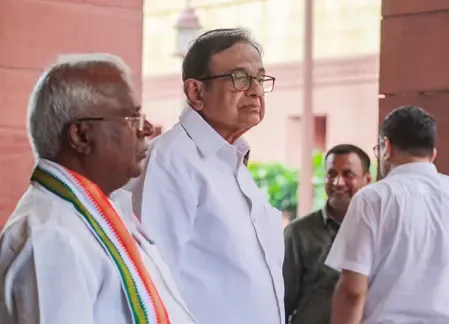
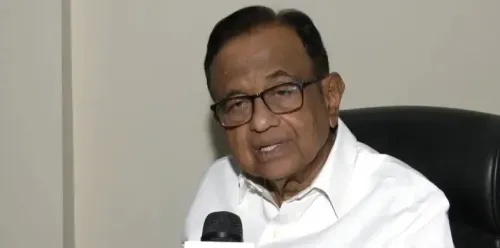
Taking to X, Chidambaram wrote: 'Why is the BJP apoplectic with feigned rage on the use of the phrase 'regime change'? Regime change is normal in a democracy.' He elaborated that the duty of the Opposition is to 'oppose, expose and depose' the government — opposing in politics, exposing in Parliament, and deposing through elections. The framing was a direct rebuttal to the Bharatiya Janata Party (BJP), which has sought to cast the phrase as evidence of a sinister, extra-constitutional agenda.
The Protests and Who Is Involved
The demonstrations in the national Capital began as a focused agitation against the alleged 'vote theft' linked to the ECI's electoral roll revision process. Senior advocate Prashant Bhushan has described the protests as a 'fight for regime change', calling it a 'democratic right' of citizens. All India Students' Association (AISA) President Neha Bora drew attention — and BJP backlash — when she reportedly praised Bangladesh's Gen Z movement as 'inspiration' for young people in India. Congress Rajya Sabha member Pawan Khera asserted that the party is committed to changing the regime and that it 'will indeed be changed.'
BJP's Counter-Narrative
The ruling party has moved aggressively to reframe the protests. BJP National Spokesperson Sudhanshu Trivedi claimed on Friday that terms like 'regime change' — which he defined as attempts to overthrow governments through 'violent struggle, conspiracy, or collaboration with foreign powers' — are increasingly surfacing in Indian politics. He alleged that the Congress, the INDIA Bloc, and the 'declining Left parties', facing diminishing public support, are turning to such language as a political strategy. The BJP has further alleged that a broader controversy is at play, aimed at 'destabilising' India's economy.
Opposition's Rebuttal
Protesters and Opposition figures have firmly maintained that their criticism is directed squarely at CEC Gyanesh Kumar and the alleged irregularities in the electoral process. Khera accused the BJP of being 'frightened of losing its grip on power' and of pushing a narrative that frames democratic demands as 'anti-national and anarchic.' Notably, this war of words around language — who gets to define 'regime change' — has become as contested as the underlying electoral dispute itself.
What This Signals
The episode underscores a deepening fault line between the ruling establishment and the Opposition ahead of what observers expect will be a high-stakes electoral season. With protests centred on the integrity of the Election Commission, the row over 'regime change' rhetoric reflects a broader battle over the legitimacy of democratic institutions in India. How the ECI and the government respond to the Opposition's specific electoral grievances is likely to shape the political temperature in the weeks ahead.
Point of View
But the Opposition's embrace of the term, especially alongside references to Bangladesh's street movement, hands the ruling party a ready-made narrative. The real story beneath the rhetoric is the still-unaddressed Opposition grievance about electoral roll revision — an institutional question that neither side is letting the country focus on. If the ECI does not respond substantively to the specific allegations, the language war will only intensify.
NationPress
17 Oct 2026
Frequently Asked Questions
What did P. Chidambaram say about 'regime change'?
Chidambaram said 'regime change is normal in a democracy' and that the Opposition's duty is to 'oppose, expose and depose' the government through elections. He was responding to the BJP's criticism of the term being used by Opposition leaders and student protesters in New Delhi.
What are the ongoing protests in New Delhi about?
The protests are directed against the Election Commission of India and Chief Election Commissioner Gyanesh Kumar over alleged irregularities — described as 'vote theft' — in the electoral roll revision process. Opposition leaders and student groups including AISA have joined the agitation.
What is the BJP's position on the 'regime change' demand?
The BJP has framed 'regime change' as a reference to overthrowing governments through 'violent struggle, conspiracy, or collaboration with foreign powers', not through elections. Spokesperson Sudhanshu Trivedi alleged the Congress and INDIA Bloc are using the term to destabilise India's economy and polity.
Who is Neha Bora and why did she invite criticism?
Neha Bora is the President of the All India Students' Association (AISA), which is aligned with the Left. She drew BJP backlash after reportedly praising Bangladesh's Gen Z protest movement as an 'inspiration' for young people in India — a comparison the BJP characterised as promoting anti-national sentiment.
What has Congress's Pawan Khera said about the controversy?
Rajya Sabha member Pawan Khera accused the BJP of deliberately labelling democratic demands as 'anti-national and anarchic' because it is 'frightened of losing its grip on power.' He affirmed that the Congress is committed to bringing about a change of government through legitimate political means.