Why Bhabanipur is the Crucial Battleground in Bengal Elections
Synopsis
The Bhabanipur Assembly constituency is at the heart of the upcoming Bengal elections, spotlighting a fierce battle between Chief Minister Mamata Banerjee and Opposition Leader Suvendu Adhikari. With a complex voter landscape and recent electoral shifts, this contest could redefine political dynamics in West Bengal.
Key Takeaways
Bhabanipur is a critical constituency in the West Bengal elections.
Mamata Banerjee faces a tough challenge against Suvendu Adhikari .
The voter demographic is heavily skewed towards Hindus and includes a significant Muslim minority.
The impact of Special Intensive Revision has complicated the electoral scenario.
This is the second direct contest between Banerjee and Adhikari.
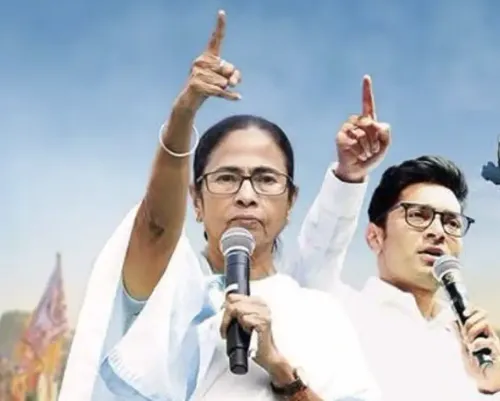
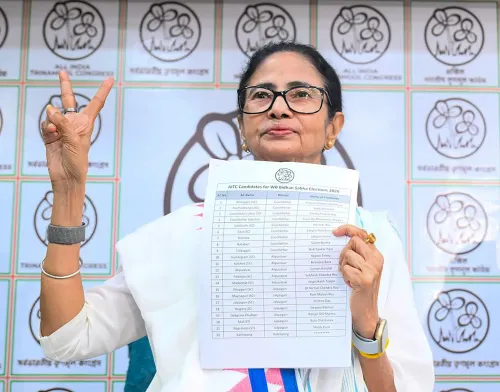
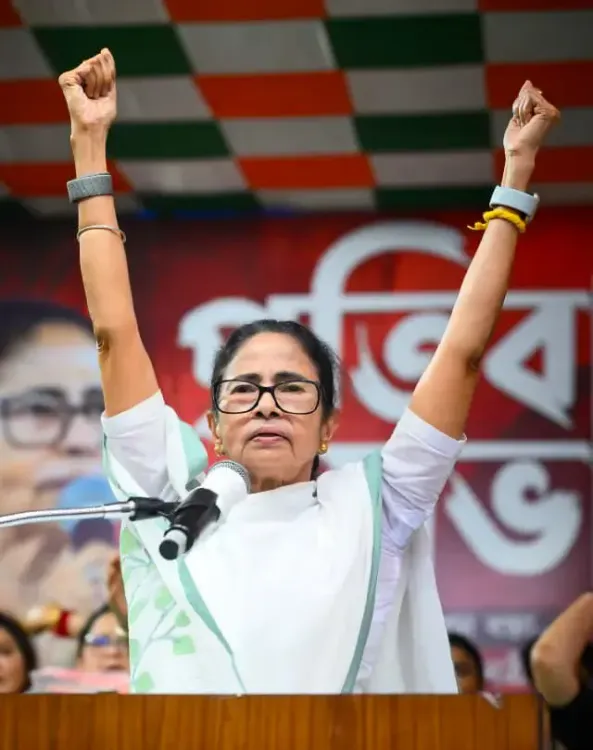
Kolkata, March 18 (NationPress) Among the 294 Assembly constituencies in West Bengal set to hold elections in two phases next month, the Bhabanipur Assembly constituency is capturing significant attention. This area is the battleground for a fierce contest between Chief Minister Mamata Banerjee and Opposition Leader Suvendu Adhikari, elevating the stakes of this election.
Adhikari is concurrently contesting from the Nandigram Assembly constituency in East Midnapore, where he has served two terms—first with the Trinamool Congress from 2016 to 2021, and then with the Bharatiya Janata Party (BJP) since 2021.
One of the most critical aspects contributing to the significance of this competition is the diverse voter demographic in Bhabanipur. This constituency, established in 2011, combines parts of the former Alipore Assembly constituency and sections of Chowrangee in south Kolkata.
According to voter statistics, approximately 76% of the electorate identifies as Hindu, with 42% being Bengali-speaking and 34% non-Bengali-speaking. The minority community, predominantly Muslims, makes up about 24%.
The Trinamool Congress has enjoyed success in Bhabanipur in past elections, largely due to overwhelming support from minority voters and a strong base among Bengali-speaking Hindus. In contrast, a notable portion of non-Bengali-speaking Hindu voters has historically favored the BJP.
During the Left Front's 34-year governance in West Bengal from 1977 to 2011, the Left parties were relatively weak in this constituency. Before the rise of the Trinamool Congress, it was regarded as a Congress bastion.
However, since the 2014 Lok Sabha elections, the BJP has established itself as a formidable contender in Bhabanipur. The constituency comprises eight wards of the Kolkata Municipal Corporation (KMC)—63, 70, 71, 72, 73, 74, 77, and 82—with the BJP consistently achieving significant vote shares in six of these wards, except in those dominated by the Muslim population.
In the 2024 Lok Sabha elections, although Trinamool Congress candidate Mala Roy was re-elected from Kolkata (Dakshin), she fell behind in many KMC wards within Bhabanipur and the neighboring Rashbehari constituency.
Notably, in 2024, the Trinamool Congress also lagged in KMC Ward 73, where Chief Minister Mamata Banerjee and party general secretary Abhishek Banerjee are registered voters.
Adding complexity to the political landscape for the Trinamool Congress and the Chief Minister is the impact of the Special Intensive Revision (SIR). A total of 47,111 voters were removed from the constituency in the final electoral roll published on February 28, while an additional 14,154 voters remain under judicial review due to “logical discrepancies.”
Data from the Chief Electoral Officer (CEO) of West Bengal indicates that most of the deleted voters and those under review hail from the two wards that have historically provided substantial leads to the Trinamool Congress.
In this context, the BJP's strategy to nominate Adhikari against the Chief Minister is perceived as a calculated move, potentially limiting her campaign reach within the constituency and her ability to actively campaign statewide.
This marks the second direct face-off between the two leaders; in 2021, Adhikari defeated Banerjee in Nandigram. Subsequently, Banerjee won a by-election in Bhabanipur, allowing her to continue her role as Chief Minister for a third consecutive term.
Point of View
The unfolding political drama in Bhabanipur reflects broader trends in West Bengal's electoral politics. The interplay between demographic shifts and party strategies highlights the evolving nature of voter allegiance. This race is not just about two individuals; it's a reflection of changing political tides in the state.
NationPress
22 Sept 2026
Frequently Asked Questions
What makes Bhabanipur a significant constituency?
Bhabanipur is significant due to its diverse voter demographics and the high-profile contest between Chief Minister Mamata Banerjee and Suvendu Adhikari, which could influence the broader political landscape in West Bengal.
Who are the main candidates in the Bhabanipur election?
The main candidates are Chief Minister Mamata Banerjee from the Trinamool Congress and Suvendu Adhikari, Leader of the Opposition from the BJP.
How has the voter profile changed in Bhabanipur?
The voter profile in Bhabanipur shows approximately 76% Hindus, a significant portion of whom are Bengali-speaking, while around 24% are minority voters, predominantly Muslims.
What impact has the Special Intensive Revision had?
The Special Intensive Revision has led to the removal of over 47,000 voters from the electoral roll, complicating the electoral landscape for the Trinamool Congress.
What was the outcome of the previous elections in Bhabanipur?
In the last elections, Mamata Banerjee won a by-election in Bhabanipur after losing to Adhikari in Nandigram, showcasing the competitive nature of this constituency.