Son River water pact: Bihar gets 5.75 MAF, ending 25-year dispute with Jharkhand
Synopsis
A dispute that outlasted Jharkhand's own existence as a state is finally over. Bihar and Jharkhand have split the 7.75 MAF Son River share that undivided Bihar held since 1973 — with Bihar taking 5.75 MAF and Jharkhand 2.00 MAF. The deal, brokered under Home Minister Amit Shah's watch, could unlock the Son-Falgu river-linking project and transform water security for millions across drought-prone southern Bihar and Jharkhand.
Key Takeaways
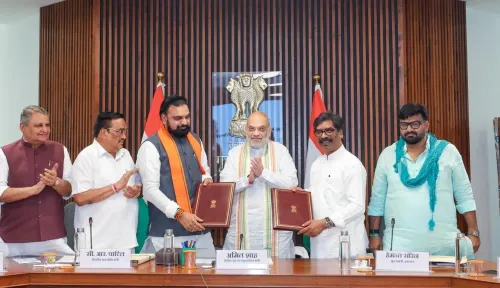
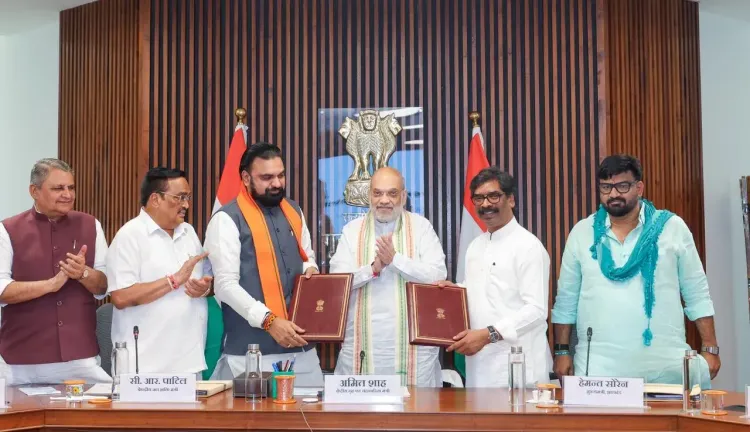
Bihar and Jharkhand signed a Son River water-sharing MoU on 31 August 2025 in New Delhi .
Bihar is allocated 5.75 MAF and Jharkhand 2.00 MAF , resolving a dispute that began when Jharkhand was created in 2000 .
The agreement stems from the 1973 Bansagar Agreement , under which undivided Bihar held 7.75 MAF of the total 14.25 MAF Son River allocation.
Home Minister Amit Shah , Jal Shakti Minister C.R.
Patil , and the chief ministers of both states were present at the signing.
The deal is expected to accelerate the proposed Son-Falgu river-linking project and boost irrigation and drinking water supply in drought-prone southern Bihar and Jharkhand.
Adequate Falgu River flow will benefit pilgrims at the annual Pitrapaksha Mela in Gaya .
A 25-year-old inter-state water dispute between Bihar and Jharkhand over the sharing of Son River waters was formally resolved on Monday, 31 August, with the two states signing a Memorandum of Understanding (MoU) in New Delhi. Under the agreement, Bihar will receive 5.75 million acre-feet (MAF) of water annually, while Jharkhand has been allocated 2.00 MAF.
Key Signatories and the Signing Ceremony
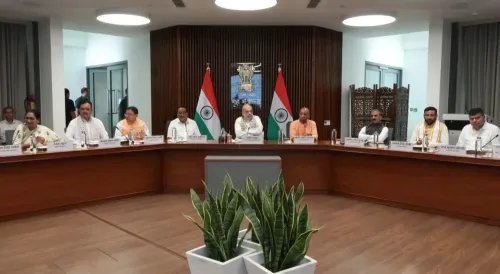
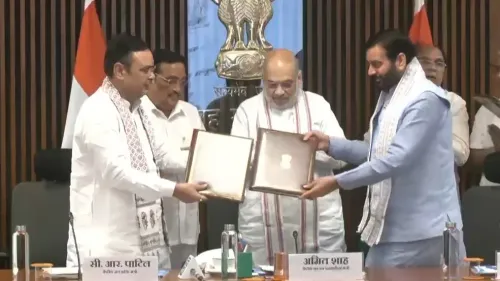
The MoU was signed in the presence of Union Home Minister Amit Shah, Union Jal Shakti Minister C.R. Patil, Bihar Chief Minister Samrat Choudhary, and Jharkhand Chief Minister Hemant Soren. Bihar Deputy Chief Minister and Water Resources Minister Vijay Kumar Choudhary was also present, along with senior officials from the Centre and both state governments.
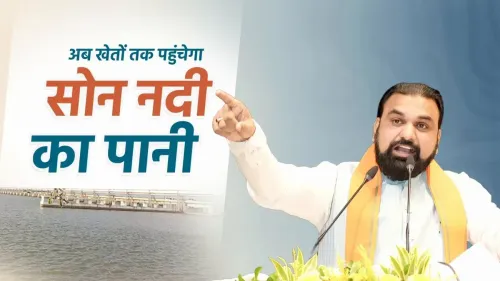
Describing the agreement as historic, Chief Minister Samrat Choudhary expressed gratitude to Prime Minister Narendra Modi and Home Minister Amit Shah, crediting the resolution to the Centre's initiative, sustained dialogue, and effective mediation.
Roots of the Dispute: The 1973 Bansagar Agreement
The origins of the conflict trace back to the 1973 Bansagar Agreement, under which the total 14.25 MAF of Son River water was divided among three states: Madhya Pradesh received 5.25 MAF, Uttar Pradesh 1.25 MAF, and the then-undivided Bihar 7.75 MAF. When Jharkhand was carved out of Bihar in 2000, no formal mechanism existed to split Bihar's share between the two successor states — a gap that fuelled over two decades of dispute.
Notably, significant momentum on the issue was generated during the 27th meeting of the Eastern Zonal Council, chaired by Home Minister Amit Shah in Ranchi on 10 July 2025. Subsequent rounds of technical and administrative discussions eventually produced a final consensus.
Impact on Irrigation, Drinking Water, and Development
The agreement is expected to deliver a substantial boost to irrigation, drinking water supply, and industrial development across the plateau and drought-prone regions of southern Bihar and Jharkhand. Improved water availability is likely to expand irrigation coverage and ease chronic drinking water shortages in both states.
Chief Minister Choudhary also noted that the settlement will accelerate plans for reservoir construction and the proposed Son-Falgu river-linking project, aimed at improving water utilisation across south Bihar, including Gaya. Adequate flow in the Falgu River is expected to benefit pilgrims visiting Gaya during the annual Pitrapaksha Mela, facilitating rituals such as tarpan and pind daan.
Wider Significance for Eastern India
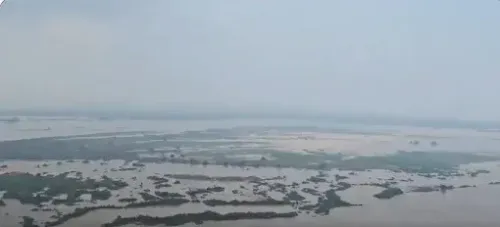
The Son River is one of the major southern tributaries of the Ganga, and its catchment area plays a pivotal role in the agricultural and economic activity of eastern India. Chief Minister Choudhary argued that the accord carries long-term importance not just for Bihar and Jharkhand but for broader water management and regional development across eastern India.
He added that the resolution of such a complex inter-state issue reflects the strength of cooperative federalism, and will prove beneficial for farmers, local communities, and future generations. With the MoU now signed, both states are expected to move swiftly toward operationalising the allocation and initiating linked infrastructure projects.
Point of View
But the harder work begins now. Allocating MAF figures on paper is one thing; building the reservoir infrastructure and operationalising the Son-Falgu link project — which affects millions of farmers and pilgrims — is another. The Centre's role as mediator through the Eastern Zonal Council is a textbook use of cooperative federalism, yet past inter-state water agreements in India have frequently stalled at the implementation stage. Whether Bihar and Jharkhand can convert this MoU into measurable irrigation and drinking water gains within a credible timeline will be the real test of this 'historic' accord.
NationPress
16 Oct 2026
Frequently Asked Questions
What is the Son River water-sharing MoU between Bihar and Jharkhand?
It is a formal agreement signed on 31 August 2025 in New Delhi that resolves a 25-year dispute over how to divide the Son River water share originally held by undivided Bihar. Under the MoU, Bihar receives 5.75 MAF and Jharkhand 2.00 MAF of the river's water annually.
Why did the Son River dispute between Bihar and Jharkhand last 25 years?
The dispute arose because the 1973 Bansagar Agreement allocated 7.75 MAF to undivided Bihar, but when Jharkhand was carved out of Bihar in 2000, no mechanism existed to split that share between the two new states. Negotiations dragged on for over two decades before the Centre facilitated a final consensus.
Who was present at the signing of the Son River MoU?
The MoU was signed in the presence of Union Home Minister Amit Shah, Union Jal Shakti Minister C.R. Patil, Bihar Chief Minister Samrat Choudhary, Jharkhand Chief Minister Hemant Soren, and Bihar Deputy Chief Minister and Water Resources Minister Vijay Kumar Choudhary, along with senior officials from the Centre and both states.
What is the significance of the Son-Falgu river-linking project mentioned in the agreement?
The proposed Son-Falgu river-linking project aims to channel Son River water into the Falgu River in south Bihar, improving water availability in the Gaya region. Adequate Falgu flow is also expected to benefit pilgrims who visit Gaya for the annual Pitrapaksha Mela to perform rituals such as tarpan and pind daan.
How does the 1973 Bansagar Agreement relate to the Bihar-Jharkhand water dispute?
The Bansagar Agreement divided the Son River's total 14.25 MAF among Madhya Pradesh (5.25 MAF), Uttar Pradesh (1.25 MAF), and undivided Bihar (7.75 MAF). The creation of Jharkhand in 2000 left Bihar's 7.75 MAF share undivided between the two successor states, which is the core of the dispute now settled by the 2025 MoU.