Kishau Dam MoU signed: Centre, 6 states end decades-long water dispute
Synopsis
A dam stuck in bureaucratic limbo for decades finally got its MoU — and the story behind it reveals how a BJP–Congress standoff over ₹800 crore nearly sank a ₹15,000 crore project. With the Centre now picking up 90% of the water component's tab and three downstream states splitting the disputed power bill, the Kishau Dam's path to becoming one of India's tallest is finally clear.
Key Takeaways
The Kishau Dam Project MoU was signed on 15 September 2026 between the Centre and six states: Uttarakhand , Himachal Pradesh , Haryana , Rajasthan , Uttar Pradesh , and Delhi .
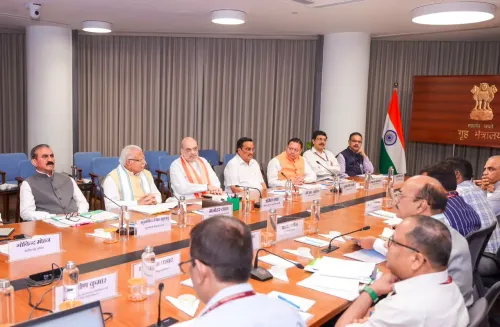
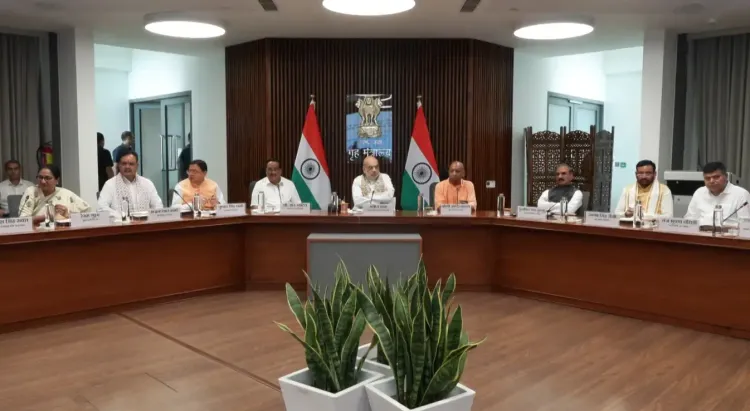
The agreement was chaired by Union Home Minister Amit Shah with all six state Chief Ministers present.
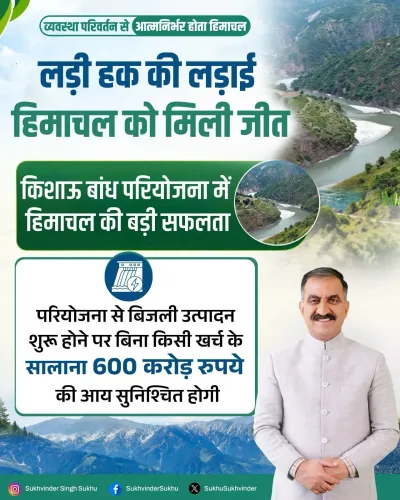
The deadlock centred on Himachal Pradesh's refusal to pay ₹800 crore toward the power component; resolved by having the Centre cover 90% of the water component and Delhi, Rajasthan, and Haryana splitting the ₹2,000 crore power cost.
The 236-metre dam on the Tons River will cover irrigation potential of 97,000 hectares and supply 517 MCM of drinking water annually.
Total estimated project cost is ₹15,000 crore .
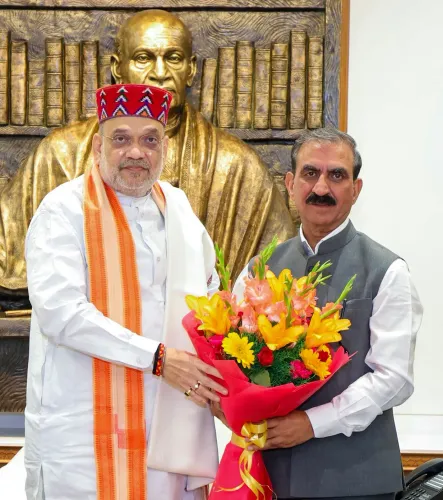
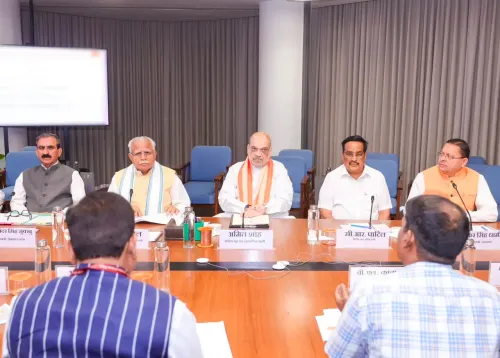
The Kishau Dam Project, stalled for decades over financial disagreements, moved decisively forward on Tuesday, 15 September 2026, as the Centre and six states — Uttarakhand, Himachal Pradesh, Haryana, Rajasthan, Uttar Pradesh, and Delhi — signed a Memorandum of Understanding (MoU) resolving a prolonged dispute over cost-sharing and benefit distribution. The agreement was reached at a high-level meeting in New Delhi chaired by Union Home Minister Amit Shah.
Who Was in the Room
The signing brought together the Chief Ministers of all six participating states: Pushkar Singh Dhami of Uttarakhand, Sukhvinder Singh Sukhu of Himachal Pradesh, Nayab Singh Saini of Haryana, Bhajanlal Sharma of Rajasthan, Yogi Adityanath of Uttar Pradesh, and Rekha Gupta of Delhi. Union Minister for Jal Shakti C.R. Patil, Union Home Secretary Govind Mohan, and senior secretaries of the Department of Water Resources were also present.
What Broke the Deadlock
The project had remained stalled primarily over Himachal Pradesh's share of the electricity generation cost. Under an earlier arrangement, the previous Bharatiya Janata Party (BJP) government in Himachal Pradesh had agreed to contribute ₹800 crore toward the power component. The current Congress government, citing the state's constrained finances, refused to honour that commitment — triggering a multi-year impasse.
The breakthrough came in June 2026 at a meeting also chaired by Home Minister Shah. Under the revised financial structure, 90 per cent of the water component's cost will be covered by the Centre as central assistance, relieving Himachal Pradesh of any financial liability on that front. The estimated ₹2,000 crore cost of the power component on the Himachal Pradesh side will now be jointly borne by Delhi, Rajasthan, and Haryana.
What the Kishau Dam Will Deliver
The proposed dam will be built on the Tons River, a Yamuna tributary, along the Himachal Pradesh–Uttarakhand border in Sirmour district. At 236 metres, it is designed to be among the tallest dams in India. The project envisions hydropower generation, irrigation potential covering approximately 97,000 hectares, and an annual drinking water supply of 517 million cubic metres (MCM) to the participating states. The total estimated project cost stands at ₹15,000 crore.
Political Reactions
Rajasthan Chief Minister Bhajanlal Sharma, speaking to reporters after the signing, framed the agreement as part of a broader pattern of water-sharing milestones under Prime Minister Narendra Modi's leadership. 'The people of Rajasthan are very fortunate, because as you know, water scarcity has been a major challenge in Rajasthan. Under the leadership of Prime Minister Narendra Modi, continuous agreements are being finalised — whether it is our ERCP, the Chambal-Kalisindh-Parbati link, the Yamuna water agreement with Haryana, the Narmada agreement among Gujarat, Madhya Pradesh, Maharashtra, and Rajasthan, or today's Kishau Dam agreement between Uttarakhand, Himachal Pradesh, Haryana, Uttar Pradesh, Rajasthan, and Delhi,' Sharma said.
What Happens Next
The MoU is expected to unlock implementation machinery that has been dormant for years. Notably, this agreement spans states governed by both the BJP and the Congress — a cross-party consensus that lends the deal added durability. The project's eventual completion would materially improve water security across a swath of north and northwestern India, a region that has faced recurring droughts and groundwater depletion. How quickly construction timelines and disbursements are formalised will determine whether this MoU translates into concrete progress or joins the long shelf of signed-but-stalled infrastructure agreements.
Point of View
A fraction of the total project cost, suggesting that cost-sharing formulae need to be locked in at inception, not renegotiated with each change of government. The Centre's decision to absorb 90% of the water component is a pragmatic fix, but it also sets a precedent: states may now price in federal bailouts when bargaining over shared infrastructure. The more durable question is whether a signed MoU translates into a funded, time-bound construction schedule — India's infrastructure graveyard is lined with agreements that never broke ground.
NationPress
15 Sept 2026
Frequently Asked Questions
What is the Kishau Dam Project and why is it significant?
The Kishau Dam is a proposed 236-metre concrete dam on the Tons River along the Himachal Pradesh–Uttarakhand border, designed to generate hydropower, irrigate around 97,000 hectares, and supply 517 MCM of drinking water annually to six states. At an estimated cost of ₹15,000 crore, it would be among the tallest dams in India once completed.
Why was the Kishau Dam Project stalled for so long?
The project was held up primarily by a dispute over Himachal Pradesh's financial share of the power generation component. The previous BJP government in Himachal had agreed to contribute ₹800 crore, but the current Congress government refused, citing fiscal constraints — creating a deadlock that lasted several years.
How was the Kishau Dam dispute finally resolved?
A revised financial arrangement brokered at a June 2026 meeting chaired by Home Minister Amit Shah allocated 90% of the water component's cost to the Centre as central assistance, removing Himachal Pradesh's financial liability. The ₹2,000 crore power component cost on the Himachal side will be jointly borne by Delhi, Rajasthan, and Haryana.
Which states will benefit from the Kishau Dam Project?
Six states — Uttarakhand, Himachal Pradesh, Haryana, Rajasthan, Uttar Pradesh, and Delhi — are signatories to the MoU. They will collectively benefit from hydropower, irrigation water, and 517 MCM of annual drinking water supply once the project is operational.
Who chaired the meeting where the Kishau Dam MoU was signed?
Union Home Minister Amit Shah chaired the meeting on 15 September 2026 in New Delhi, attended by the Chief Ministers of all six participating states and senior Union government officials including Jal Shakti Minister C.R. Patil and Home Secretary Govind Mohan.